For Children Taken from the Border to New York, a Maze of Agencies and Legal Hurdles
Gov. Andrew Cuomo and Mayor Bill de Blasio say they don't know how many children separated from their parents at the U.S.-Mexico border are currently being sheltered in New York.
The children are being sent to organizations that typically care for New York City’s foster children, many of them with serious emotional problems. On its website, Abbott House in Westchester County said that it’s cared for 600 unaccompanied children.
Some are cared for in group settings and others rely on individual foster homes. Cayuga Centers, whose East Harlem site Mayor de Blasio visited on Wednesday, has the largest federal contract to shelter children in New York State. It relies on foster families to care for the children. WNYC tried to speak to the organization, but it did not immediately respond to a request for comment. A flyer on Cayuga’s website advertises the federal foster care program for children coming from the border.
“Looking for bilingual families for home placements if you are over 18 and have sufficient income and space,” the flyer read. The organization is offering a stipend of $1,000, tax-free.
The state Office of Children and Family Services, which manages foster care statewide, said that it had no role in overseeing the children that were separated from their parents at the border. A spokeswoman said those children are not supposed to be co-mingled with children in foster care or the juvenile justice system because they are under separate contracts.
The children who come from the border are the responsibility of the Office of Refugee Resettlement (ORR), a part of the federal U.S. Department of Health and Human Services. That agency then contracts with local providers.
Gov. Cuomo complained that when kids are sent to facilities through ORR they are being sent with a federal gag order. The local providers cannot tell the state how many children they have or share details about them.
“We have agencies telling us they are getting frenetically contacted by HHS to find out what capacity the agency has,” Cuomo said during a conference call with reporters. “They are being sent children with no information. No evaluations and it's happening all across the state.”
Cuomo claimed he has the legal responsibility for the health and welfare of children within the state regardless of whether they’re citizens, and that he has a right to more information.
Meanwhile, the children have their own legal rights. They will eventually go to immigration court where judges will determine if they have a good enough case to remain in the United States or if they should be deported.
There is no guaranteed right to a lawyer for anyone in immigration court and several local immigration attorneys tell WNYC they are so busy they can't serve all the children who need them. But the Office of Refugee Resettlement does contract with Catholic Charities Community Services in New York to provide legal screenings for the children. Some wind up with free lawyers from Catholic Charities, while others find attorneys from various nonprofits or private law firms. Those who don’t have lawyers but are still in foster care get “friends of the court” from Catholic Charities, who sit with them during any proceedings before a judge.
Catholic Charities is used to working with the traditional unaccompanied minor: a teenager who comes alone to the southern border and is detained until he or she can be reunited with a family member in the U.S. But attorney Sophia Linarte says she and her colleagues at Catholic Charities are now seeing babies and toddlers. Linarte said the younger children in particular are very distraught.
“I certainly have seen children who are just besides themselves, just cannot handle what is happening,” she explained. “And it's very tough to see because we're a law office, and we're trying to provide legal assistance and help the children with their immigration matter. But certainly on a human level, you just have children who want to be with their caregiver.”
Linarte said the foster agencies appear to be doing a good job of helping the children stay in touch with their detained parents, while also connecting them with relatives in the U.S. who may be able to provide more long-term care. Many of the children want to go back to their home country.
“More and more we’re seeing that the little guys just want to be with their parent and sometimes that means that they request to repatriate,” she said. That’s possible when the parent has been deported. But while President Trump’s executive order says detained parents will no longer be separated from their children, there is no reunification policy for those already separated.
In these cases, she said, the attorneys try to represent the best interest of their young clients by getting them placed with other relatives in the U.S. She acknowledged it’s difficult having conversations about legal options with a client as young as three years old.
“It’s not a very sophisticated conversation at all. It’s more fact gathering at that point,” she said. “If the child is verbal my approach may be to get a sense of ‘do you know your mother’s name, do you know your father’s name, is this the person that you traveled with?’
“Because at this point, when we can’t represent someone in a legal capacity in immigration court, our focus may be to help out in family reunification and maybe provide the information to the stakeholders, the case managers in the hopes that it can facilitate a family reunification.”
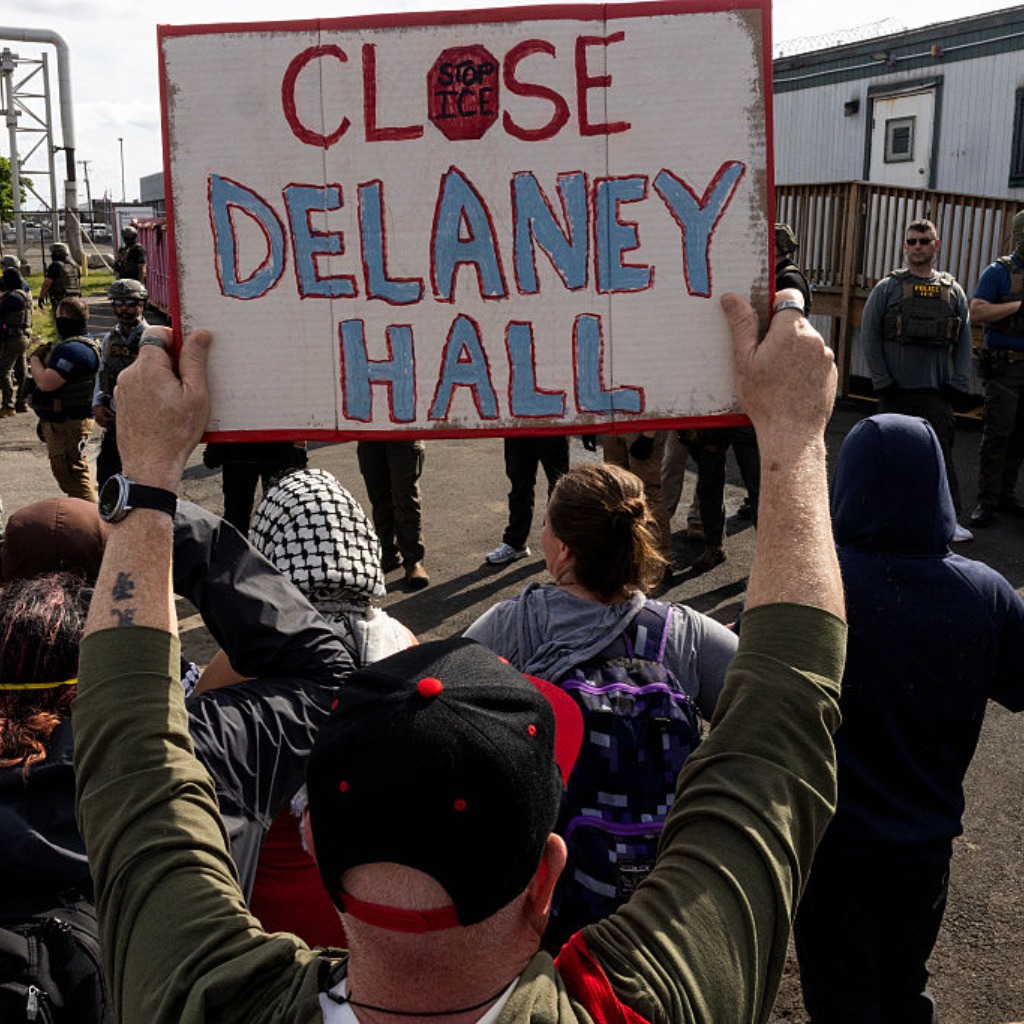
She said some children are very articulate about the violence they've seen in their native countries or the difficult journeys they’ve had to the United States. This is why she asks New Yorkers not to protest in front of airports or any agencies where the children are located. The sight of demonstrators and police officers is scary, she said.
“Not only have they been separated from the caregiver, but they’re in a strange place among strangers,” she said.

WNYC is funded by sponsors and member donations