10 Defining Moments In Prince's Career
Prince's sudden death caught us all by surprise, and while there is a natural tendency to rush to share memories and favorite moments and songs, sometimes it helps to take a moment and step back to look at the bigger picture. Because Prince was more than just songs - he was an important figure in the digital revolution and, like David Bowie before him, had a lot to offer to conversations about gender and sexuality.
And of course, there were the songs.
So after more than 35 years of twists and turns and surprises and contradictions, here are ten defining moments (for this listener, at least) from Prince's career.
Dirty Mind.
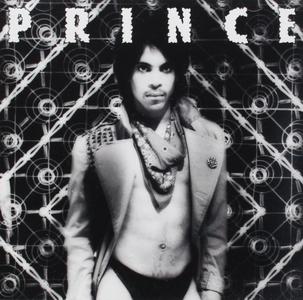
His music blurred lines between funk, rock, pop, and R&B. But his own image blurred lines too, and you don’t have to look any further than the cover of his third album, and probably his first genuine masterpiece, 1980’s Dirty Mind. Like the music within, the cover exudes sexuality. It’s a sexuality that evades terms like gay or straight – kind of like the character in the song “When You Were Mine,” who “never was the kind to make a fuss,” even when his ex-girlfriend’s other guy “was there/Sleeping in between the two of us.” And at a time when radio was fairly clearly split between stations that played black music (soul, R&B) and those that played white music (rock, country), his racial identity was equally ambiguous.
1999.
Released in 1982, at the dawn of the MTV era, this album’s title track obliterated the aforementioned divide between black and white, or pop and rock music. Who didn’t want to party like it was 1999? And all these years later, who still doesn’t? An essential dance track from an album that spawned several hits (“Little Red Corvette” was a radio and MTV smash and was his introduction to a much wider audience).
Masters and Slave.
Like many musicians who write their own material, Prince quickly found out that the standard record industry contract was anything but a blueprint for creative or commercial success. As a songwriter, you might own the copyright in your song, but the record company owned the master tapes of the recording. For Prince, an artist who was as self-contained as possible – playing all the instruments, singing all the vocals, producing and later controlling the distribution of his music – this was intolerable, and he would spend much of his career trying to fight the business model that had made the record industry the bloated financial behemoth it was at the time. “If you don’t own your masters,” Prince said, referring to his master tapes, “your masters own you.”
In 1993 Prince began appearing with the word “slave” written on his cheek – a highly public comment on what had been, up to that point, a very behind-the-scenes fight. This phase of Prince’s career is important both for wider business reasons (he led the way in fighting for artists’ rights), and because it had a direct effect on his career path, and on his listeners, as you'll see next...
The symbol.
In 1993, Prince changed his name to

Now You Hear It, Now You Don't.
You can hardly blame Prince for fighting so long and so publicly with the record companies; just look at the different fates of the Batman soundtrack (1989), and Planet Earth (2007). The Batman soundtrack was initially successful, but the rights were so complicated – both movie and record industries were involved, after all – that Prince had to sign over the publishing rights to his songs to get the soundtrack released. As a result, the songs were for many years missing in action as Warner Bros didn’t allow them to appear on later compilations. Contrast that with Planet Earth, a rock-heavy album that Prince gave away for free to readers of the UK newspaper The Mail On Sunday. As you might imagine, this did not go over well with Sony/BMG, the giant but tottering corporation that was distributing his music. But they were in no position to stop him. (Though they did somewhat petulantly refuse to distribute the record to stores in the UK.)
Sinead O'Connor and Tom Jones.
Prince was a masterful musician and an important figure in the music business. Neither of which would matter if it weren’t for the songs. Songs which were the launching pads not just for his career, but for several other artists as well. And two of the most famous are Sinead O’Connor, whose recording of “Nothing Compares 2 U” was a career-making move for her in 1990, and Tom Jones’ version of “Kiss,” done with the UK band Art Of Noise back in 1988. At that time, the Welsh pop star seemed to be well past his sell-by date, but his career was unexpectedly revived by this irrepressibly funky version of Prince’s song.
Radiohead's “Creep.”
Both the good and the bad sides of Prince’s struggle with copyright and intellectual property issues came to the fore here. At the Coachella Festival in 2008, Prince performed a cover of Radiohead’s early hit “Creep.” It was a compelling performance, and of course it was all over Youtube the next day. And then suddenly it wasn’t. Like the music industry he fought against so much, Prince had trouble figuring out where to draw the line on free music on the web. So no Spotify, no Pandora… which is fine; but also no fan videos online. He became notorious for vigilantly protecting his copyright and his image online. This created a fault line between him and some of his fans. In this case, though, the copyright for the song belonged to Radiohead, who were happy to allow the song back online, where you can now enjoy it both as a video with subpar sound and as an audio file that sounds pretty great.
“When Doves Cry”
But back to Prince’s own songs. This one is from Purple Rain, his ambitious, game-changing film and album from 1984. That was a literally defining moment for Prince – forever after, he would be associated with the color purple. But I would like to draw your attention to this song. You’ve heard it before, many times, since it became a huge pop hit. But here’s where the genius of Prince lies: this is in no way a pop song. I mean, just listen to it. An opening swirl of guitar leads to a drum machine that pounds ominously underneath a few short stabs of keyboard; then Prince comes in with a melody that is more chanted than sung. This is pop music? It is as stark and minimalist a song as Prince ever wrote, and while the vocal harmonies build up and the song reaches an almost choral finale, there is no concession made here to the demands of pop music. How do you make a pop song – a dance song – with no bass? Somehow Prince did it.
That guitar solo.
If you’re a Prince fan, you already know which solo I’m talking about. In 2004, at the Rock’n’Roll Hall of Fame induction ceremonies, Tom Petty, Steve Winwood, Jeff Lynne of ELO, and others launched into a moving tribute to George Harrison – a performance of his song “While My Guitar Gently Weeps.” About halfway through, the camera caught sight of another figure at the far edge of the stage: Prince, wielding a guitar, despite the presence of four other guitarists already playing. Three and a half minutes into the song, Prince begins unspooling a guitar solo for the ages. It’s clean, it’s virtuosic, and above all, it’s musical – full of emotion, or to put it better, a mix of emotions.
Super Bowl XLI.
And in 2007, the planet Earth decided that if Prince was gonna play the Super Bowl halftime show, the least it could do was cooperate. In what still ranks as one of the greatest Super Bowl performances ever (middling praise, I know, but you can only beat the competition in front of you), Prince did a collection of his hits and covers (I especially remember his version of Dylan’s “All Along The Watchtower”), culminating in a version of “Purple Rain” sung, through a haze of purple lighting, during a heavy rain. Because of the way the broadcast was mixed, you can’t really hear the crowd sing when Prince invites them to, but you can feel that something special is happening.

WNYC is funded by sponsors and member donations