The Popular Sound of Progressive Economics
This morning, The Brian Lehrer Show hosted Glenn Hubbard, the dean of Columbia Business School, to talk about economic inequality in America. It was presented as a counterpoint to yesterday's interview with economist Joe Stiglitz, who I admire and whose appearance was dissected by my conservative Its A Free Country colleague, Karol Markowicz. Given that Hubbard was once part of George W. Bush's economics team, I thought I knew how I'd react to him.
So I was surprised to find myself nodding in agreement as Hubbard spoke. In the course of his 20-minute segment, he agreed with Stiglitz on the fact that there is growing inequality…and in the opinion that this disparity is a problem. He said we shouldn't have supported the financial industry the way we did. He concurred with a caller that we shouldn't blame American workers who are "the most productive in the world." On regulation, he refused to reduce the debate to "more vs. less" insisting instead we should focus on "good vs. bad" and acknowledging there is good regulation He also opined that affluent citizens shouldn't receive as generous benefits from Social Security and Medicare.
I was expecting a declaration that "The business of American is business," a crusade against all taxes and an throaty embrace of trickle-down. Instead, by championing workers, supporting the role of smart regulation and acknowledging that wealth stratification is a problem… Hubbard sounded like he might have something in common with my liberal friends.
So the question is: Does he just share our rhetoric? Or does Bush's former economic adviser share progressive economic ideas as well?
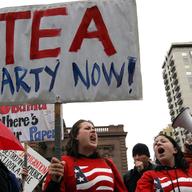
Hubbard isn't the only conservative voice singing a tune to which I can hum along. When the Tea Party rails against politicians being too cozy with bankers, I want to put on my tri-corn and join the rally.
It's when rhetoric turns to policy, though, that I realize we don't all agree. The Republicans refused to let tax cuts to the wealthiest Americans expire, and thus contributed to a gaping deficit they seek to close on the backs of regular Americans. Governors in Wisconsin, Michigan and Ohio race to strip rights and benefits away from workers, which will create a race to the bottom as our labor force competes for lower wages and fewer benefits. To me, these policies don't sound like championing the American worker, asking the wealthy to contribute or a concern for wealth disparity.
And it's not just Republicans who govern this way. President Obama was complicit in the extension of the Bush tax cuts for the rich. Governor Andrew Cuomo just ensured that New York's wealthiest residents would see a tax reduction while he's simultaneously cutting education, health and essential services.
Paul Krugman noted in his morning column that conservatives are pushing the idea that lower wages will lead to higher employment. While he successfully debunks that myth, he notes that Democrats aren't effectively pushing a progressive vision as an alternative: "The White House, in particular, has effectively surrendered in the war of ideas; it no longer even tries to make the case against sharp spending cuts in the face of high employment."
Progressive ideas and rhetoric appeal to the public: Make the banks pay their fair share; invest in American workers by investing in education and creating decent jobs; let's ensure strong regulations that bring transparency and accountability to our financial system, which will benefit everyone. These notions are so appealing that conservatives are grabbing hold of them.
Yet Democrats are too timid to really champion these ideas, run campaigns on them and turn them into policies. Instead, we appoint the head of GE to a critical role on creating jobs… then learn that GE is a better tax dodge than Al Capone. And Republicans use the rhetoric just long enough to distract the public from the fact they are united against any effort to make the rich pay their share.
Both sides voice concern about wealth disparity, but we allow the tax code to favor the top of the heap. Both sides say they don't want to blame workers, as we see workers' rights stripped, wages reduced and benefits slashed.
Progressive elected officials should take note - there's a reason why Bush's former economic adviser, Tea Party members and even the members of the new Republican House majority heavily lean on progressive rhetoric - because they know it sells.
But we now have to sell the policies, not just the words. We can't just fight for a compromise on which labor rights to strip; we need to push for the Employee Free Choice Act. We can't just settle for middle-ground on taxing the very wealthy; we need to start taxing dividends fairly, and tax the repatriation of profits American companies make overseas. We can't just rail against the fat cats on Wall Street; our Attorneys General can put them behind bars.
If the public likes how progressive ideas sound, they'll really like how progressive legislation feels - if we ever get the guts to make to turn these words into action.

WNYC is funded by sponsors and member donations