Four Years After Obama, Racial Attitudes Still Predict Votes
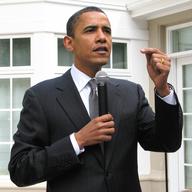
Democrats in the Mountain South registered their disapproval with President Barack Obama in primaries in Arkansas, Kentucky and West Virginia, where he failed to get approval from more than two-thirds of voters.
In Kentucky, “uncommitted” got more than 40 percent of the vote, and in West Virginia, a federal prison inmate claimed the votes of four in 10 Democratic primary voters.
These voters, of course, have never been a strong spot for Obama. The subtext, both in 2012 and in 2008, has been that race has played a major factor in these predominately white rural counties.
Most of the time it’s implied, but sometimes it punches through, like in these voter interviews I did in West Virginia in 2008.
Since the 2008 election, political scientists have been working to measure how much race is a driving factor when voters go to the polls.
But as Chris Cillizza at The Washington Post wrote this week, isolating the variable of just how much Obama’s race is the driver here is a dicey proposition.
“Figuring out how much of the anti-Obama votes in these southern and Appalachian state primaries is directly attributable to racism,” he concluded, “simply can’t be done.”
The proper ways to measure this are still fiercely debated, and there isn’t great data that drills down to particular states.
Some, though, are now saying with confidence that yes, racial attitudes have been a clear driver in moving white voters to the Republican side.
“Polarization of the electorate by racial attitudes was by far the highest in 2008 that we have on record,” said Brown University political scientist Michael Tesler, going back to when data collection started in 1988.
These measurements put voters on a spectrum of racial attitudes based on their beliefs about whether racial disparity in this country is based on institutional discrimination or individual characteristics like work ethic.
Then, the models control for ideology and political party to determine how much these attitudes correlate to candidate choice.
There are limits to these findings when it comes to making precise regional conclusions.
“The south has typically used racial conservatism in their vote choice more than the non-south,” Tesler said, but “we don’t have enough data to look at individual effects by state.”
And there haven’t just been clear trends when it comes to these broad, largely unspoken racial attitudes.
Tesler is currently researching the electoral impact of what he calls “old fashioned racism.”
To measure this, he is examining the correlation between party identification and opposition to interracial dating among white voters. That applies to a much smaller segment of the population than those who fall on the more conservative side of the racial attitudes spectrum.
About one in five white Americans report opposing or somewhat opposing interracial dating, and since Obama’s election, these voters are more likely to vote Republican for the first time.
“If you are one of these 20 percent who oppose interracial dating, you’re far more likely to be a Republican now,” he said. “It never correlated to party identification from 1987 to 2007, and then in 2009, it jumped up pretty big.”
Three-and-a-half years of governing have not shifted these dynamics. Tesler said the divisions on racial attitudes continue to closely correlate to the polarization around Obama.
“Racial attitudes continue to be a very profound predictor of how the public sees Barack Obama,” he said. “What’s remarkable is how stable the effect of racial resentment is in 2012 to where it was in 2008.”
Still, stability in radicalized opinions about Obama is one thing. Turnout and electoral results are something else entirely.
Tesler said it’s still too early to predict whether these liberal and conservative takes on race in America will be the same drivers to the polls as they were in 2008.