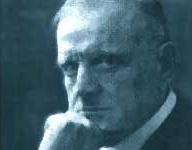
Sibelius Serenity
Evening Music | May 6, 2010
Jean Sibelius described his own Sixth Symphony as “pure spring water,” contrasting it to the cocktails served up by younger composers. Enjoy a long, cool swallow during our second hour . . .
Sibelius, who was born this day in 1865, is also the composer of our first work of the evening, “Mandolinato,” performed for us by pianist Havard Gimse. The Helsinki Philharmonic under Paavo Berglund will bring us the “transcendental serenity” of his Sixth about an hour later. Meanwhile, you won’t want to miss Trevor Pinnock and two other harpsichordists performing Bach’s Concerto for Three Harpsichords and Strings in C with the English Consort.
Sir Arnold Bax’s “In Memoriam” (subtitled ‘An Irish Elegy) and George Frideric Handel’s Trio Sonata No. 8 in G (at least, we think he wrote it!), we’ll hear Michael Tilson Thomas conduct the London Symphony in Stravinsky’s Symphony in C. Igor wrote the first two movements in 1938–39 while he was in France, and the last two in 1939–40 after he arrived in America, which became his new home after WW II made living in Europe impossible for him. Mozart wrote his “Linz” Symphony, No. 36, in a great hurry. He was visiting Count Thun in the city for which it is named when he got a date to perform there at the academy. Not having a symphony with him, he dashed one off in time and conducted it himself. Bravo, Wolfie! We hear Rafael Kubelik lead the Bavarian Radio Symphony Orchestra.
Then it’s time for a little more Sibelius: First, an Andantino for cello and piano, and then Piano Sonatines Nos. 1—3, performed as only he could by Glenn Gould.
Sibelius, who was born this day in 1865, is also the composer of our first work of the evening, “Mandolinato,” performed for us by pianist Havard Gimse. The Helsinki Philharmonic under Paavo Berglund will bring us the “transcendental serenity” of his Sixth about an hour later. Meanwhile, you won’t want to miss Trevor Pinnock and two other harpsichordists performing Bach’s Concerto for Three Harpsichords and Strings in C with the English Consort.
Sir Arnold Bax’s “In Memoriam” (subtitled ‘An Irish Elegy) and George Frideric Handel’s Trio Sonata No. 8 in G (at least, we think he wrote it!), we’ll hear Michael Tilson Thomas conduct the London Symphony in Stravinsky’s Symphony in C. Igor wrote the first two movements in 1938–39 while he was in France, and the last two in 1939–40 after he arrived in America, which became his new home after WW II made living in Europe impossible for him. Mozart wrote his “Linz” Symphony, No. 36, in a great hurry. He was visiting Count Thun in the city for which it is named when he got a date to perform there at the academy. Not having a symphony with him, he dashed one off in time and conducted it himself. Bravo, Wolfie! We hear Rafael Kubelik lead the Bavarian Radio Symphony Orchestra.
Then it’s time for a little more Sibelius: First, an Andantino for cello and piano, and then Piano Sonatines Nos. 1—3, performed as only he could by Glenn Gould.