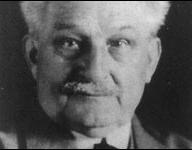
Janácek’s Memorial to a Czech Worker
Evening Music | May 6, 2010
Andras Schiff plays Janácek’s searing “Sonata I.X.1905,” written to memorialize a Czech worker killed by Austrian troops as he demonstrated in support of a Czech university for Brno.
Janácek’s sonata originally had three movements, but during rehearsals for its premiere Brno some weeks after the horrifying event, the composerevidently seized by fierce self-criticism at his white-hot reactionseized and burned the last movement. Later, he threw the two remaining movements into the Vltava River. Fortunately, the soloist had made a copy of these two movements, “Presentiment” and “”Death,” which Janácek allowed to be published. Imre Kertész asserts that “since Schubert, no one has spoken of death this way on the piano.”
Another not-to-be-missed work for piano is Norman Dello Joio’s Third Sonata, performed for us by Debra Torok, whose projected recordings of all of the composer’s piano works received his enthusiastic consent and cooperation. Dello Joio, who was born in 1913, continues to compose and contribute to the rich legacy of American 20th-century composers.
The Austro-Hungarian composer Carl Goldmark was born this day in 1830. A skilled violinist who eked out a living playing in theater orchestras, Carl was most famous for his operas. But the Violin Concerto, which we hear this evening in a vibrant performance by Joshua Bell, with Esa-Pekka Salonen conducting the Los Angeles Philharmonic, deserves wider exposure than it has received. Listen, and see if you don’t agree...