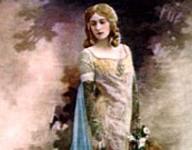
Pélléas et Mélisande
Evening Music | May 6, 2010
Debussy’s opera “Pélléas et Mélisande” premiered in Paris in 1902, with Mary Garden as Mélisande. We pay homage to that event and to the music in our second hour . . .
But first . . . Poulencs’s preference for wind instruments over strings when writing chamber works is evidenced in his Sextet, a work for piano, flute, oboe, clarinet, bassoon, and horn that took him seven years to perfect. Members of the Southwest Chamber Music Society play this alternately quirky and lyrical work to perfection.
Claudio Abbado leads the Berlin Philharmonic in music from Debussy’s “Pélléas and Mélisande.” Abbado has added material from the opera itself to an orchestral suite arranged by Erich Leinsdorf, to create the Concert Suite we hear this evening.
There was more to Gounod than composing opera, as we discover when hearing his Second Symphony in E-flat, John Lubbock leading the Orchestra of St. John’s, Smith Square. Gounod’s answer to a question about the secret of his art was, “Melody alone counts in music. Whether in the concert-hall or in the theatre everything is based on melody . . .”
Robert Shaw was born this day in 1916. His gift with choruses is legendary. In 1967, he became music director of the Atlanta Symphony Orchestra, which we hear him conduct this evening, along with a star-studded roster of soloists, including Benita Valente and John Humphry, in Schubert’s Mass No. 6 in E-flat.