Concern for Vulnerable Jamaica Bay Wetlands
Decades of development and pollution have taken their toll on the wetlands known as Jamaica Bay National Park. The tidal flats once were part of Brooklyn and Queens, but have been reduced to a narrow strip of marshy shore along the eastern coast. Now there's concern that erosion has left much of the area vulnerable to flooding. Reporter Ginger Otis has more.
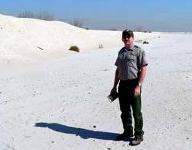
Reporter: There's a sliver of land on the east end of Brooklyn near JFK airport that sits in water -- part ocean, and part freshwater bay. It's a delicate estuary that houses and feeds thousands of animals and plants. Recently, it inherited a big pile of white sand from a team of Army Corp Engineers.
Taft: It strikes me as looking like the Sahara..it's very interesting, this open beach area.
Reporter: Dave Taft, a Ranger with the National Parks Service that oversees the bay, is baby-sitting the sand pile, until the Army Corp returns for it in the spring.
Taft: The high point is over here, we'll just climb up to the top [foot sounds in sand] You can see some Canada Geese have been tracking through the Sahara here…probably looking for water [laughs].
Reporter: The engineers spent the summer dredging the Rockaway Channel to construct the pile. They're going to use it to try and build up the dying marshlands along Jamaica Bay, which have been disappearing at an accelerated rate over the past 20 years. The erosion also is chopping away at the natural buffers protecting New York from big Atlantic storms.
Retired firefighter Dan Mundy, now a member of Ecowatchers, has been fighting to preserve the bay. He says the erosion loss is a public safety risk.
Mundy: If you take away these islands, that wave action, along shorefront parkway, and by Canarsie Pier, that wave action is going to take out shore front parkway, you have the Independent subway line, that marsh is gone, already, it's gone. Waves are going to be washing up on the subway tracks in the future, without this barrier. The infrastructure that's going to be lost is going to be great and costly to the city, sooner or later they're going to be exposed. very costly to try and correct that. Brooklyn, very vulnerable, borough of Brookyn, Queens. A lot of people and a lot of agencies will be affected by this as time goes by.
Reporter: Nobody's been able to pinpoint the cause of the accelerated erosion-it could be global warming, pollution, development, or all of the above. But everyone agrees city sewage is a major contributing factor. There's about one hundred million gallons of sewage and runoff dumped in the bay daily---it's treated, but still contains high levels of nitrogen. And when it rains, the century-old system gets so clogged, so fast, that the only solution is to open the pipes and let the effluvium flow--untreated--into the wetlands. That puts about a billion gallons of raw sewage flowing into the bay after every moderately hard rainfall.
The city is responding to the environmental crisis. It's working to install two large, underground containers to hold sewage overflow, and has promised not to develop some of the areas around the inland corners of the park. Len Houston, Branch Chief of the Army Corp of Engineers, applauds the local response, but says bigger restoration efforts can't wait.
Houston: Very big concern that if we spend too much time trying to figure out real reason, too late, try to restore as you go, so you have something worth saving.
Reporter: That brings us back to the big pile of sand, part of an experiment planned by the Army Corp of Engineers. Earlier this summer, while the pile was being built, another Army team was out collecting seed heads from the marshy spartina grasses. They got about a million. Those seed heads were shucked and sent to a greenhouse in Cape May, where they'll lie dormant in cold water until this spring. Then, engineers are going to cram the sand and the seeds into a big hose, and spray it over 70 acres of dying wetlands at Elder's Point in Jamaica Bay. They're hoping a new layer of sediment will take root and grasses will grow.
If the experiment works, they'll have found a way to build the badly-eroded marsh back to original size. But Houston is now worried that the money needed to complete the project may have disappeared. He's waiting for $16 million in Federal aid, but suspects that might get routed to the Gulf Coast.
Houston: The federal budgets are tight and now tighter, we realize why, we've had one or two projects slowed down already in fiscal year 05 that didn't proceed as quickly we would have liked, we are hoping the budget can work its way out. Want to help Mississippi, Texas, Louisiana and also help our bay in Jamaica.
Reporter: Meanwhile, Houston agrees that houses and infrastructure along the coast are more vulnerable to flooding. He says one good storm would put the Belt Parkway underwater, at least temporarily. The latest figures from his office show that the Jamaica Bay wetlands, once covering 100 square miles in Queens and Brooklyn, now cover 14 miles, with about 40 acres disappearing every year. If that continues, the Army Corp figures the entire eco-system will disappear in 25 years. For WNYC, I'm Ginger Otis.

WNYC is funded by sponsors and member donations