Thanks to Sandy, Wild Turkeys Roam Where Bungalows Once Stood
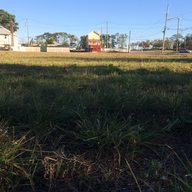
Bulldozed ground is distinctive: unnaturally flat and largely fallow. And it is now the must distinctive feature of a block in Staten Island that once bulged with 20 bungalows and the life of the inhabitants inside them.
Almost all of the people of Buel Avenue are gone now. In a place where the air once rang with post-Sandy defiance — "We're beach people," one resident said right after the storm. "We rebuild." — the wind blows across the leveled lots as a neighborhood gang of wild turkeys perambulates and pecks for seed.
The turkeys were there before the storm. But as residents have one by one conceded that their low-lying homes might get flooded again and again, and sold their homes to the state, the birds have gained more space to roam as each structure has come down.
Five years ago Sunday, Sandy delivered a devastating blow to a six-mile stretch of Staten Island shore front below the Verrazano-Narrows Bridge, three neighborhoods in particular: Oakwood Beach, Graham Beach, and Ocean Breeze, home of Buel Avenue. The New York State Governor's Office of Storm Recovery has spent nearly $200 million of federal funds to buyout 517 homes in those neighborhoods. Lisa Bova-Hiatt, the program's executive director, explained that the land will be left untouched. "Buyout properties must be kept as open space in perpetuity," she said.
On the single block of Buel Avenue that slopes downward between beach and swamp, 19 out of 20 homeowners have taken the buyout and cleared out. (The single home remaining is uninhabited.) Across all three of those neighborhoods, almost eighty percent of eligible residents have sold their homes at pre-storm prices and allowed their lots to return to nature.
But there are holdouts.
Vincent Errichiello has not only chosen to remain in Ocean Breeze, he's torn down his old home to rebuild bigger with money from the city's Build It Back program. "I'm very happy with the location," he said. "I grew up here in a house my father owned." His lot is a mere two blocks from Buel Avenue but on higher ground, which means relatively lower risk from future storms. (The state ranks "coastal risk" as moderate, high, and extreme. He's in the middle.) Still, his new home will be anchored in footings sunk deep into the earth, and his ground floor will be fourteen feet above ground.
Errichiello said those fortifications should be enough to keep his family safe, even from a storm the size of Sandy — though he doesn't think he will live to see another one like it. "When was the last time anything happened before like that — 60, 70 years ago?" he asked. "We'll be fine."

WNYC is funded by sponsors and member donations