Copland's Music for the Theatre
"You know as the years go on I am fascinated by the music of the 1920s, and the way that music, once called modern, seems to change as we change. Well that's inevitable of course, but in the 1920s things were so exuberantly radical, so almost simplemindedly revolutionary, that we can look back now and laugh at the things that horrified our grandparents, shocked them ever so seriously. Well it never stops, that shock aspect, it goes on today of course in music, but in the 1920s, after that first World War, the shock idea somehow hit an all-time peak."
This episode features several pieces from Aaron Copland, who Canby characterizes as "the dean of American musicians and composers." The first piece played was composed in 1925, when Copland was 25, and it exemplifies the reactionary spirit of post-war modern music and its uniquely American sensibility. Canby expounds on the anti-establishment tone embedded within the music: "isn't that a photograph of a time, a period, a person, as well as a piece of grammar? How could it be otherwise? And isn't it perfectly clear that that composer was, so to speak, thumbing his nose in all directions, musically? Can't you see the fuss that that music was intended to stir up and undoubtedly did?"
In addition to Copland, Canby plays selections from Robert Russell Bennett, "Five Studies in Jitteroptera" (violin and piano, 1940), Kurt Weill, "The Threepenny Opera," and other composers from the early 20th century.
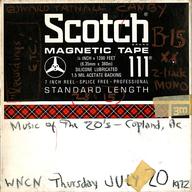
WNYC archives id: 58882

WNYC is funded by sponsors and member donations