As D.C. Transit Chief Steps Down, A Last Pitch for Longer Train Cars
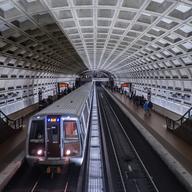
Richard Sarles, general manager of Washington D.C.’s Metro system, retiring in January. Before he goes, he wants to solve one of the transit authority’s most pressing challenges: over-crowded trains. With forecasts of increasing ridership, he says eight-car trains are the answer.
Only about one-third of Metro rush hour trains have eight cars as opposed to the usual six-car train that riders often say are packed during peak commuting periods. To run all eight-car trains by 2020, Metro needs $1.5 billion from the D.C., Maryland, and Virginia communities it serves.
“I would like by the time I leave to at least in principle have the jurisdictions saying we want to fund this,” Sarles said Wednesday.
The District and Virginia appear supportive of Metro’s eight-car train initiative. Maryland’s representative on Metro’s board of directors, Michael Goldman, was more lukewarm.
At a Sept. 11 board meeting, Goldman said the recent slight decline in rail ridership raises questions about the necessity of Metro’s planned fleet expansion.
“I've got to feel comfortable justifying that, that there is enough people who are going to be riding those eight-car trains,” Goldman said. “It just seems to be a heroic assumption that ridership would grow seven percent.”
Goldman did not respond to emails seeking comment on this story.
The funding decision will fall in part to whoever becomes Maryland’s next governor. That’s likely to be Lt. Gov. Anthony Brown, who holds a large lead in the polls over Republican opponent Larry Hogan in the race for governor. Brown’s campaign office declined to say whether the candidate would support funding additional rail cars, but released a general statement on transit.
“Anthony Brown supports strengthening mass transit infrastructure to boost our economy, but Larry Hogan would cut public transportation to the bone, costing Maryland thousands of good-paying jobs,” said campaign manager Justin Schall.
The longer railcars would require track power upgrades and rail yard expansions, which would cost a total of $1.47 billion. Each jurisdiction would have to provide between $30 and $100 million per year for the next six fiscal years starting with FY15, which is now in its third month already. The federal government generally does not pay for rolling stock.

WNYC is funded by sponsors and member donations