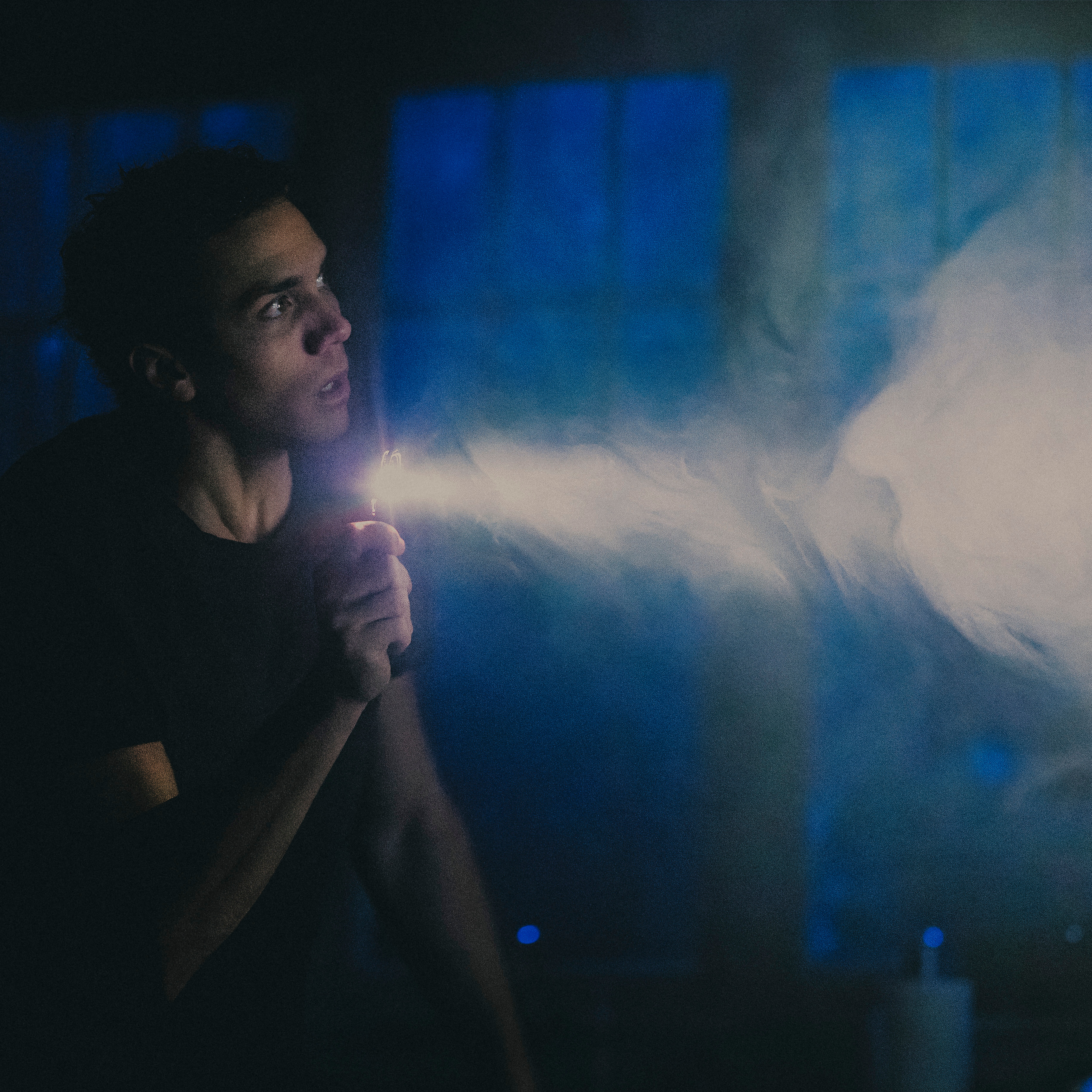
The Deaf West Style Production of 'Spring Awakening'
We'll discuss the new production of "Spring Awakening" with director Michael Arden, co-stars Marlee Matlin and Camryn Manheim, and interpreter Jack Jason. The musical is performed in the Deaf West style, simultaneously in American Sign Language and spoken English by a cast of 27. The production will be at the Brooks Atkinson Theatre through January 24.
The following transcript was provided by Deaf West
The Leonard Lopate Show
Spring Awakening
October 10, 2015
[Audio from the song “And Then There Were None” from Deaf West’s production of SPRING AWAKENING]
LEONARD LOPATE: The revival of Spring Awakening, the angst filled musical about adolescent sexuality and generational miscommunication, has returned to Broadway, but this time with a new twist that enhances both the visual production and its themes. Christopher Isherwood in the New York Times called this a “first rate production of a transporting musical.” It’s from Deaf West and incorporates 28 deaf and hearing actors who sign, sing, and share the roles. It’ll be at the Brooks Atkinson Theater on West 47th until January 9th of next year, and I’m so happy it brings director Michael Arden along with two of its stars, Camryn Manheim and Marlee Matlin, and Marlee’s long time interpreter Jack Jason, all here to talk about it. Welcome! Jack will be speaking for Marlee on the air. Michael, haven’t you worked with Deaf West before as an actor in Big River?
MICHAEL ARDEN: I have – in 2003 I did my first Broadway show with Deaf West in the Roundabout Theatre Company production of Big River, which was the story of Huckleberry Finn, and it was my first introduction not only to Broadway but to deaf culture in general.
L: How was it different from other things you were doing?
MICHAEL: It was unlike everything I had ever done and yet very similar. I sort of realized shortly after having to learn ASL for that project that the main goal of drama is to communicate, and so to sort of have to scale a bit of a wall in order to do that makes it all the more important.
L: Has everybody here made their debut with Deaf West?
ALL: I have!
MARLEE MATLIN (speaking through interpreter JACK JASON): This is the first time for me too! I’m a longtime supporter of Deaf West Theatre because I live in Los Angeles and most of my friends are part of the Deaf West Theater Company, and the founder Ed Waterstreet is a good friend of mine. So I’ve always been a person who supported Deaf West, almost every production that they’ve done. And it’s always been an inspiration to me, I’ve been moved by every production they’ve made because they incorporate both hearing and deaf actors and they use ASL, and I’m thrilled now to finally work with Deaf West in a production as well as with Michael and in a wonderful cast like Camryn Manheim.
L: And that is Marlee Matlin talking, actually –
MARLEE: [laughing] I don’t have that deep of a voice, I wanted to let your audience members know that that’s not me, that’s Jack.
L: The Playbill has a note in it about the Milan Conference. When did it happen and why is it significant to this production?
MARLEE: These two know more about it than I do…
MICHAEL: The Milan Conference took place in the 1880s in Milan, and it was a meeting of educators of the deaf from all around the world and they gathered to sort of decide curriculum and how to best integrate deaf students into society. It was decided at this conference – by actually almost all hearing delegates – that oralism, which is the use of forced speech, phonation, lip reading, things like that, was far superior to sign language and so all these educators left this convention and went back home and banned sign language and forced oralism upon students, many of whom this was totally wrong for. This was the beginning of what’s called, I think, the dark age in deaf history.
L: There’s a scene, a rather painful one in this production, where the teachers are forcing the pupils speak rather than sign. It’s really painful to watch.
MARLEE: It is, it is.
L: That’s Marlee speaking –
MARLEE: I was born hearing and I became deaf when I was 18 months old, and I remember going to school for the first time when I was 3 years old, I still recall very clearly. I wasn’t introduced to sign language until I was 5, but before then I remember the teacher only talking to me, forcing me to speak to the best of my ability, and then when I was 5 I was introduced to sign language because my parents realized that I needed more than just speaking, without being able to hear.
L: That they expected you to lip read, Marlee?
MARLEE: Well the instructors did – the instructors wanted me to speak as best as I could, so I recall just sitting on my hands, and when I first learned to sign, my world changed overnight.
L: Do you remember hearing?
MARLEE: No no, I don’t.
L: Was the character Moritz Steifel the key to incorporating the repression in the Milan era?
MICHAEL: Yeah, I wanted to find a way, without changing the text of the play, to convey and let the audience in on what was happening at the time for deaf students. So I thought, what better way than in this first classroom scene when the boys are having to recite their Latin than for the teacher to be forcing them to speak. And young Moritz Steife,l who is one of our leads and is a deaf character and actor in the show, he’s forced to speak and he’s having tremendous trouble with it – he’s played by this brilliant actor in our production, Daniel Durant, who is a profoundly deaf individual and a profoundly talented artist, and it’s incredible to watch him because he’s someone that oralism wouldn’t have worked for.
L: Amazing performance…
MICHAEL: If you would take Daniel and plop him in this time, he would’ve been what was called a “fail”, an oral fail, which was the term given to students who were sent to institutions, and you know, many of these kid who were fails, because they weren’t allowed to sign and weren’t necessarily equipped with the tools to speak and lip read and do that sort of thing, they were bereft of language, and I can’t imagine any worse crime against someone. So it’s interesting that that word “fail” later on is what leads to his demise.
L: Now Marlee, you speak so well, that’s certainly been an asset to you and your career. Was it difficult to learn when you were a child?
MARLEE: Unusually- I’m an unusual case because I loved taking speech classes, I have to say. I took private speech classes after school, and for some reason it was part of who I was. I’ve always had a big personality, I knew that I wanted to be something in my life when I grew up, so I knew that speaking was important as an asset to me, so I took advantage of my ability to speak.
L: Often in your career you’ve played characters who are the only deaf person in the room, and at times the room is the Oval Office. Is it fun for you to be in a cast with other deaf actors?
MARLEE: It is interesting for me. I’ve always been, as you said, in a hearing-heavy group of people and there isn’t much focus on my character, so much as being the only deaf person in the room, but in this cast it’s just a treat for me because it’s my language – I can communicate freely, fluidly, and just watch everybody, hearing people in particular learning our language, I’ve had now both worlds growing up and here I am doing it again.
L: Now Camryn you know how to sign, you know ASL, was that just coincidental to you being an actor?
CAMRYN: Yes, it was coincidental to me being an actor. I learned it in college because I needed to pick up a language and it just happened to really stick, and when I got out of NYU grad school I found myself somewhat fluent, and there was a need for “baby” interpreters. I never went through a serious interpreter program or got a certification, but there were a lot of jobs available to someone like me. So I spent years being a job coach where I’d go with young deaf people who are maybe getting a job at the post office or at the Essex Hotel – these are two great organizations that support big deaf populations and provide jobs for them – I would go with them and stay with them for two or three weeks and help them learn their job or craft or skill set and then I’d leave them. It was a great job and I met so many amazing people and of course because I was fluent I would also see everything that Deaf West did – I saw A Streetcar Named Desire and Pippin and everything like that through the years, and I was just a humongous fan of Spring Awakening. I saw it downtown on Skid Row in LA, then it moved to Beverly Hills, the Wallis Annenberg Theater…and I never do this because I always piss people off, I wrote a letter to probably 300 people – I know you’re looking at the list to see if I’m allowed to say that word [laughing] – and I don’t like to disappoint my friends so I wrote an email to 200 people and said, if there’s anything you have to see this year, its Deaf West’s version of Spring Awakening. And then shortly after it moved to Broadway I got a phone call from the lovely and talented Michael Arden and he asked me if I would come along, and it was a perfect storm for me; my second language that I love, New York City which has been the love of my life, and my Broadway debut. So it was a no brainer.
L: Is this the first production of Deaf West where there are hearing and deaf characters?
MICHAEL: I don’t think so, no. I know in some of the other musicals it sort of wasn’t made as much of a point as “this is a deaf character, this is a hearing character.” I really wanted to explore that more in this to actually highlight the people’s realities.
L: Now Camryn and Marlee, is it fair to say the adult characters like the ones you play are the bad guys in this play?
MARLEE: I don’t know if I’m necessarily a bad guy – would you say that, Michael? I don’t think I’m the bad guy. I think perhaps as a mother who really cares for her son and his well-being, I don’t think that Fanny Gabor is… I think she’s just looking out for his well-being and making sure with Herr Gabor that they get along well. And as I say in the line “room for independence, room to grow” and to explore himself in life…I’m really proud of my son so I don’t necessarily think I’m the bad guy.
CAMRYN: Well I think the play, the children’s point of view, is like they’re bad guys and repressing them and not providing information or anything –
MARLEE: But that’s not me, is it Camryn?
CAMRYN: I would say that out of all the groovy adults in the play, certainly Melchior’s mother is the most open minded and liberal minded.
MARLEE: Right, you’re right, correct, and I think she’s very supportive of even Moritz too in her way – like during the letter scene, I have no idea what’s being said by Mortiz behind me, that I’m not supportive in his point of view. Perhaps she doesn’t have the teen point of view and the teens look at the adults as typical teens do, and think “well they don’t support us.”
L: Whether they’re deaf or not.
MARLEE: Right, exactly – it doesn’t matter.
L: Are deaf people naturally good actors in that they’re used to using their whole bodies and faces to communicate?
MARLEE: You tell me, what did you think?
[Camryn laughing]
L: Well I think that it definitely works. What about you as a director, Michael, working with people who, obviously- you’re not doing the same sort of thing you would do if you had an all hearing cast?
MICHAEL: Definitely, I think I’m lucky enough to be working with fine actors across the board, hearing and deaf, and what’s wonderful is that I feel like a lot of the hearing actors in the company have learned a lot from using sign language and working with their deaf counterparts, because ultimately you have to involve so much more in your communication that just your voice when playing a scene with a deaf actor. It sort of forces you to awaken – no pun intended – the rest of your body and your face, and forces you to sort of engage your entire body, so I think all of the actors involved really took a step forward in their craft by doing this.
L: It’s complicated in this case because it’s a musical.
MICHAEL: Yes, definitely!
L: And there’s singing. Music and sign language seem to be –
MARLEE: I’m trying to sing every night but he [Michael] won’t let me sing…
[Laughter]
CAMRYN: I’m glad they turn off my mic because I do sing backstage and that would be really troublesome for the whole show.
MICHAEL: The adults don’t sing in our show.
L: Now Camryn, you wrote a TV movie for yourself called Kiss My Act, and Marlee played your good friend in it.
MARLEE: That’s correct.
L: You write the role for her?
CAMRYN: Absolutely, I have of course loved Marlee for as long as forever. She was a kind of hero to me for sure and I tried to make sure that our paths crossed as many times as possible, we’ve done charity events together –
MARLEE: Well we worked together on “The Practice” and we both were the ones who got to be the first ever in television history to do an entire scene where there were no captions, no voice, done entirely in sign language, because both of our characters signed to each other in complete silence. That was the first time that was every done on television.
CAMRYN: And just a bit of trivia, Marlee got an Emmy nomination for that amazing scene that we did, and it was quite a privilege to be a part of that television history.
L: Hasn’t Jack been working as your interpreter, Marlee, since Children of a Lesser God?
MARLEE: A little after we finished principal photography, so 30 years this year.
L: So how did you, because you’ve been together for a long time, how did you end up meeting and realizing that you wanted to work together?
MARLEE: Well we met back then on the corner of 42nd and 9th, I was there hooking on the corner… no I’m just kidding – [laughing]
L: She said that?!
JACK: She did say that, yes, I often have to say things like that not realizing until I’m done what I just said.
MARLEE: No, I had just moved here after principal photography for Children of a Lesser God, and my boyfriend at the time didn’t have the time to be around New York City with me so he sought out an interpreter for me, and it just so happened that Jack was at NYU as PhD student. They called, he answered, and the rest is history.
L: And Jack is it true that she first asked you to go shopping, you took her Trump Tower?
JACK: I was told to keep her busy by taking her shopping by her boyfriend at the time and I didn’t know who she was really, I thought she was a movie star and had the ability to shop, so I took her to Trump, and Trump was too pricey or wasn’t her style, and then I took her to Bloomingdale’s, and it was too visually overwhelming, and then I took her to Macy’s and she was like “Oh this is Marshall Field’s in Chicago!” where she’s from. And then we hit it off. I was only 19 years old at the time, I was only 19, Marlee just said.
MARLEE: Jack also has deaf parents, so sign language is his first language.
L: But that wasn’t your last experience with Donald Trump, he was your boss on “Celebrity Apprentice.”
MARLEE: Yes, that is correct.
L: Jack, didn’t Trump also predict a great future for you and ask for 25%?
JACK: That was kind of a joke – this is Jack speaking – he liked to say that on the show that people get 25% of everything they do after “Celebrity Apprentice” because he likes to take credit for that and that’s just his character, it was interesting.
L: Now Camryn, you got a role on “Law & Order” because you could sign, so this has helped your acting career.
CAMRYN: Yes it certainly has, when I was just fresh out of NYU grad school I didn’t have an agent but I was working at the New York Society for the Deaf at the time, and the people at “Law & Order” went to the New York Society of the Deaf and asked, do you have any actors who know sign language? So without an actual agent the interpreting service that I worked for, that agency got me my first acting job and I think I got my first SAG card from it.
L: Just one more thing before you leave, Marlee, you were on “Dancing with the Stars,” right?
MARLEE: I was.
L: How did you follow the beat?
MARLEE: Well, people thought I’d be feeling the vibrations because I couldn’t hear them, but really I just had a great dance teacher, a guy by the name of Fabian Sanchez and he patiently worked with me. I have a very good internal sense of rhythm – and maybe it’s because I was born hearing, I’m not sure – but for some reason I could feel in the back of my head, I could feel the I knew rhythm inside of me and I worked 9 hours a day learning the steps. I learned the steps to the best of my ability and every week in front of 24 million people I danced live. I don’t know how I did it backwards and in heels but I did, and I told everyone (I injected humor in it) and I said “Read my hips” and it worked, for 6 weeks
L: Now Michael, this run is only until January 9th –
MICHAEL: January 24th
L: Oh, it’s been extended!
MICHAEL: Yes it’s been extended, we were lucky enough to fit into an open slot in a Broadway theater, Broadway theaters are very hard to get.
L: And the Brooks Atkinson is a wonderful theater.
MICHAEL: It’s a wonderful, beautiful theater. I’ve had the chance to work there for a number of times and it’s a nice size, no matter where you’re sitting in the house you feel sort of immediate to the production and we’re there through the 24th of January.It’s just the limited run, who knows what will happen after that.
L: You might take it on tour?
MICHAEL: You know it’s my hope that as many people as possible see this, I think it’s really important that kids are not only exposed to the story but to ASL and to what Deaf West does so beautifully.
L: My thanks to all of you, Michael Arden, Camryn Manheim, Marlee Matlin, and Jack Jason.
MARLEE: Everyone needs to see this – I just want to reiterate this, this is not a deaf production, this is for everyone to come to see, both hearing and deaf worlds together and it really is an amazing cast and I’m really honored to be working with each and every one of them!
L: Well it was a hit in the first production –
MICHAEL: It won 8 Tony Awards, including Best Score, Best Book, Best Direction…
L: Some people are saying this is making more sense for this show.
MICHAEL: Well, God bless those people.
L: Spring Awakening at the Brooks Atkinson Theater on West 47th, thank you all so much for coming by!
ALL: Thanks for having us, thanks so much.
[Audio from “Mama Who Bore Me” from Deaf West’s production of SPRING AWAKENING]