Walter Cronkite
Conversations: 1967, 1971 & 1973
The 1967 Interview
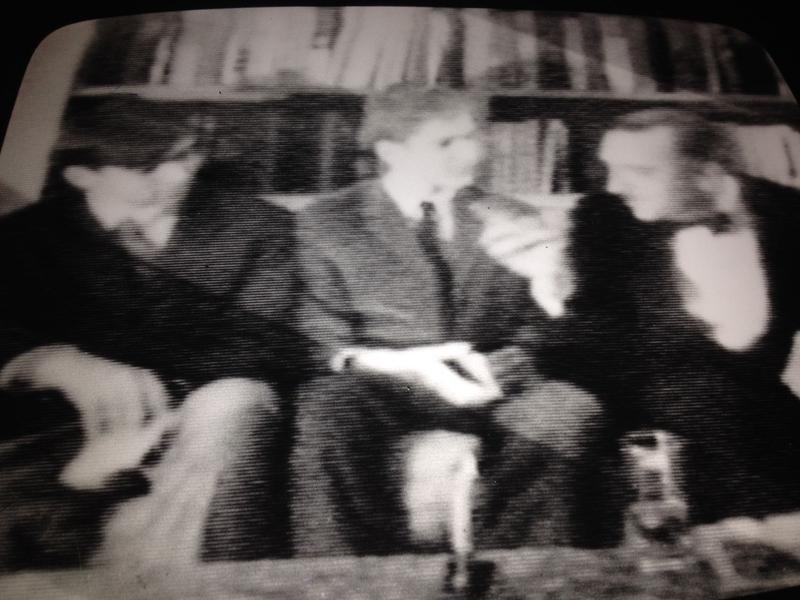
This discussion contains guest commentary that is of historical and journalistic importance. The interview fits into a continuum of events relating to the Vietnam War and the Presidency, and is unique for the date on which it transpired, in the midst of these seminal, nationally significant events.
In November, 1967, General Westmoreland returned from Vietnam to report to President Johnson, Congress and the American people that the War was turning in the US’s favor and was winnable.
On December 29 of that same year, my close friend, Sherwin Harris, and I interviewed Walter Cronkite at my home. During the dialogue, Mr. Cronkite made two unequivocal statements, and elaborated on each, making them detailed and intractable:
1. The news coverage on Vietnam is "just what we should be getting."
2. The journalist must never make editorial remarks because, although the professional newsman is capable of doing twenty-five minutes of hard-hitting reporting and then shifting to insightful editorial, the American public isn't sophisticated enough to appreciate that professionalism, and thereby will equate editorial with news, therefore that conflation must never occur. He elaborated, stating that instead, you turn to commentator Eric Sevareid, and thereby make the distinction clear.
Commentary
The following month, January, 1968, Cronkite held meetings with Richard Salant, President of CBS News. In a stunning decision, they determined that since Cronkite was the "most trusted man in the country," it was imperative that he go to Vietnam and assess the state of the conflict. This contravened the notion expressed to me that we were getting good coverage on Vietnam.
Cronkite returned from that exploration disbelieving the picture Westmoreland had presented. On February 27, 1968, following a shortened national newscast, Walter Cronkite, after clearly labeling his forthcoming remarks as punditry, performed what was the most famous commentary in television history, in which he told viewers that the most America could hope for in Vietnam was stalemate.
Bill Moyers, who was watching the broadcast with President Johnson, reported that Johnson retorted afterwards, "If I've lost Cronkite, I've lost Middle America."
Thus Cronkite has been widely regarded as influential in Johnson's decision, and televised address in March, stating that he would not seek nor accept the Democrat nomination in 1968.
In sum, Cronkite's beliefs about Vietnam news coverage and about editorial commentary, were upended; and the actual status of the War was plainly pronounced, undercutting the President who was counting on a win.
Two and a half months after the Johnson announcement, Robert Kennedy, who had sought to replace him, was dead.
Behind the Scenes
At 1AM, as the party which had enabled our video recording above converged on the living room, calls for Walter to 'striptease' mixed with the music of Robert Allen, the pianist-composer.
As light applause and Walter's name and the words 'striptease' continued, the piano music shifted to a 'bump and grind'. Cronkite, in tuxedo, slowly removed his bow tie and began to dance to the music. He removed a shoe or a button at a time, jacket, socks, cuff links, and pants 'til he was dancing to whoops and laughter and light clapping and the country's most trusted man was clad only in red polka dotted boxers.
The 1971 Interview
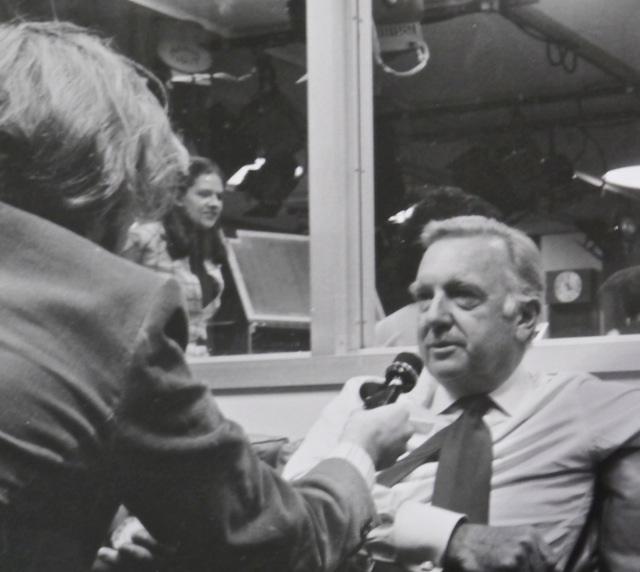
Cooper asked whether Cronkite was ever overwhelmed by his influence on public awareness. Cronkite acknowledged that he's constantly aware of what you might call ‘power' when one watches the mail flow. We're not overwhelmed by it, though it's a frightening knowledge.
Cronkite states that people who insist on getting away from the news are not abdicating their responsibility as a citizen. I do that myself. I go out on our sailboat and don't even turn on the radio. Then when I get back, there's an awful lot of stuff I have to catch up on. I don't think that's escapism. To take a permanent leave from the news, that I would decry.
As Managing Editor he takes responsibility for all of the Evening News. "Certainly no words go out that I haven't seen, and most of which I've written." He doesn't profess that everything is completely objective. But he thinks the mark of the professional journalist is to put aside his prejudice and bias, and "I think in that respect we keep our standards exceedingly high.”
The 1973 Interview
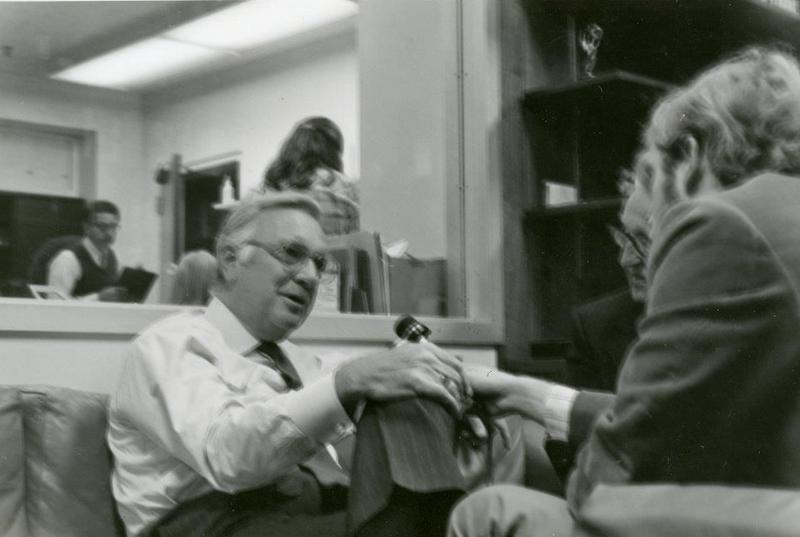
Journalist Walter Cronkite ranked by national polls as America's most trusted public figure, views the newsman's rights and responsibilities and assesses "establishment" attitudes toward the press. In a brief perusal, Mr. Cronkite compares the effectiveness of the news media--radio, television, and print ---and supports their aim of public awareness.
_______________________________________________________________________________________________________________
The Douglas P. Cooper Distinguished Contemporaries Collection (1967-1974) contains rare interviews with influential writers, statesmen, artists, songwriters, journalists and others who have left their mark on our culture.
The Origins of The Cooper Collection

WNYC is funded by sponsors and member donations