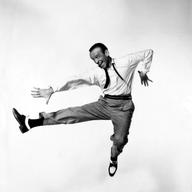
Fantastic Fred
Gene Kelly once stated that "the history of dance on film begins with Astaire." He later added that Astaire was "the only one of today's dancers who will be remembered.” He wasn’t far off. In 2016 alone Astaire’s influence could be seen from Hollywood to Broadway, including in the critically-acclaimed La La Land, whose director, Damien Chazelle, paid homage to the great performer through dance sequences that mirrored Astaire’s most memorable scenes. The 2016 Broadway revival of Holiday Inn featured a star of the High School Musical franchise, Corbin Bleu, in Astaire’s famous role. A New York Times article gushed over the influence Astaire has had on Bleu’s career up to this point. But this Astaire obsession isn’t anything new. In the decades since Astaire, the most innovative performers have looked to Astaire as the exemplary talent, someone who captured many of the intangible qualities that performers seek. Why all the acclaim for Mr. Astaire? Was the Golden Age of Hollywood not filled to the brim with exceptional talent? They were.. But Fred Astaire had a particular combination of stylistic traits that held him one above the rest. Let’s take a closer look at a few of the things that made Astaire sparkle:
Versatility
Although mostly known for his tapping, Astaire wasn’t contained by one style. You can see his influence on a range of notable dancers, including Baryshnikov, Balanchine, and even Sammy Davis, Jr. If you watch his movies closely, Astaire displays a gift for tap, ballet, and ballroom, all guided by fundamental guidelines of elegance, agility, and precision. In fact, Astaire was so focused on precision, he was a burden to some, particularly those he worked with. He insisted on perfection when it came to dance numbers, and he would spend a copious amount of time rehearsing to make sure that every step was just right. So, it makes sense that 30 years after his death, dancers are still drawing from Astaire’s trademark moves. One of Astaire's most famous scenes is this number from the 1937 film Damsel in Distress.
The Gimmick
When it came to choreography, Astaire knew how to pack a punch. Always cognizant of the viewer’s experience, Astaire would often add theatrical elements to his dance numbers—as though singing, acting and dancing weren't flashy enough. In Swing Time, he twirls about with his own shadow; in Royal Wedding, he dances on the ceiling.
Charisma
Astaire’s prominence in film was a result of his ability to communicate emotions vividly on screen, which was all the more easily achieved when he was dancing with a partner. Astaire often had notable chemistry with his on-screen romantic interests, the most famous of whom was Ginger Rogers. A gifted dancer in her own right, Rogers was an additional weapon in Astaire’s arsenal of talents. She always made him look good. Watch Rogers and Astaire in Swing Time.
The Magic Number
Astaire also had an impressive way with numbers. Active for over 76 years, he performed 31 roles on the silver screen between 1933 and 1968, leaving an unprecedented mark on the film industry. With his exceptional ability to breathe life into choreography and music, Astaire became such a staple of the MGM film circuit that the Academy Awards created a special honor to recognize his trailblazing work. Watch Astaire’s legendary precision at work in these side-by-side performances of “I Wanna Be A Dancing Man,” from the documentary That’s Entertainment! III.
Urban legend has it that the man who watched Fred Astaire’s first screen test only commented "Can't act. Can't sing. Balding. Can dance a little." Thankfully, the world got to watch Astaire develop over a 76-year-long career that defied that analysis in every way possible. Happy Birthday, Fred Astaire, we tip our hats to you!

WNYC is funded by sponsors and member donations