The High Bridge Spans Centuries, a River and the Lives of Two Little Girls
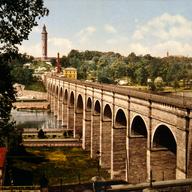
On Tuesday, city officials gathered in the middle of the High Bridge to crow about its revival as an elegant connection between the rocky heights of Manhattan and the stone shoulders of the Bronx.
"This is almost like the Eighth Wonder of the World!" exclaimed Manhattan Borough President Gale Brewer, carried away by the moment and the view of the Harlem River more than 100 feet below.
The High Bridge was re-opening after 40 years of moss-gathering and neglect, an ignominious shuttering to the public and, at one point, near-demolition. Almost $62 million has been spent to give the former aqueduct a makeover. Now, bicyclists and pedestrians can once again use its herringbone-brick path to travel its quarter mile and get to the other side.
In attendance was a third grade class from Sacred Heart School in the Bronx, which is only a short walk from the bridge. Mia Starsalis, who at age 7 was 160 years younger than the structure on which she was standing, beamed as she took in the view. " I saw two ducks earlier," she confided. "And I saw the train tracks and the cars in the street and a lot more other things."
In her fondness for this spot in the sky between populous cliffs, Mia was unknowingly echoing the sentiments of a little girl from the previous century: Lynn Barrett, who began visiting the bridge in the early 1940s. Lynn grew up in the same Bronx neighborhood as Mia. Between their girlhoods, the bridge's fortunes rose and fell, and rose again. (Full disclosure: Lynn Barrett, now Lynn O'Grady, is my mom.)
Use the player to hear Lynn and Mia talk about the bridge and what it means to them — and to hear Bronx Borough Historian Lloyd Ultan describe the bridge's early days as a tourist attraction, as well as its service as the key link in the city's first serious water system, which helped turn cholera-plagued Manhattan into the thrumming heart of a modern, semi-sanitary metropolis.

WNYC is funded by sponsors and member donations