Why Aren't Festivals Showcasing More Female Musicians?
In the year of Beyonce our Lord, female fronted acts represent some of the biggest acts around. The three highest-selling albums of 2014 include female acts: the soundtrack to Frozen, Beyonce, and Taylor Swift's 1989. And from the big-time chart-toppers like Meghan Trainor, Iggy Azalea, Nicky Minaj all the way to beloved mid-level stars like St. Vincent and FKA twigs to upstarts like Perfect Pussy and Courtney Barnett, female artists are as diverse and successful as ever.
So why is there such a glaring disparity between female pop success and female festival headliners?
This is something that was brought up again earlier this year when Coachella unveiled its latest lineup. You can’t even tell that women regularly top the Billboard charts from this year. Among the over-160 artists appearing at this year's festival, only 26 female-fronted acts are on the bill. And while the festival will feature FKA twigs, St. Vincent, Alabama Shakes, and Florence and the Machine, among others, the lineup has some glaring omissions: Where is Sleater-Kinney -- who returned after a nearly 10 year hiatus with No Cities To Love, its highest charting album to date? But more, according to Slate’s recent article, “The Coachella Festival Is Still A Boys Club,” female-fronted acts represent only around 16% of the festival’s lineup over Coachella’s 16 years.
Music critics like Ann Powers have been discussing this for quite some time. Pent up frustration triggered by Slate’s empty female fronted Coachella lineup poster fueled the #Brochella hashtag last month.
Re. the stuff circulating about how few women perform at Coachella -- think about the pseudo-generic image of the rock artist. #male
— annkpowers (@annkpowers) April 25, 2013
@coachella y'all really missed the mark on female performers this year. nicki minaj & lana del rey both had big releases. #brochella
— Laura Colvin (@colvinlaura) January 12, 2015
But it’s not just Coachella. Shannon Carlin of Radio.com cites that no solo female artist has ever headlined Bonnaroo in the festival’s 12 year existence. And while Sasquatch features Lana Del Rey as a headliner, it seems that the New York's Governor’s Ball is leading in female representation: Lana Del Rey (again) and Björk make up a sizable number of female artists on their lineup.
If festivals can include women, then why don’t they? Theories involving festival genre, name recognition, and booking agencies abound. Slate's Forrest Wickman mentions Bonaroo as a festival “formed out of the male-dominated music scenes of jam music.” Another possibility is the use of “Dad rock” bands like AC/DC to appeal to boxset buying older men with plenty of money for concert tickets and artist memorabilia. Booking agencies have also been blamed for testosterone heavy lineups as well. The boutique booking agency The Windish Agency is a perennial darling of Coachella, with over 30 artists performing at this year’s festival. A small number of booking agencies are responsible for the bulk of Coachella artists, which means that the festival’s lineup is only as diverse as the booking agencies.
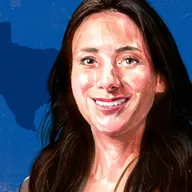
To get to the bottom this, Soundcheck reached out to Katie Presley, a writer for Bitch Media and NPR Music currently based in Austin, Texas, who called Lollapalooza “Dudefest Midwest” way back in 2011.
Imade Nibokun: Why do you think men dominate major music festivals?
Katie Presley: It's a symptom of the same codified sexist thinking that Mitt Romney revealed in his "binders of women" speech, and Microsoft and Twitter CEOs have also both used to account for having no female executives. It's the idea that, of the available pool, the best were selected, regardless of gender -- i.e., "Hey, it's not my fault the best musicians were all men! It's not my fault the best executive candidates were all men! We looked at everybody, and simply picked the best!"
What that thinking doesn't take into account is that the pool of candidates for a position, whether its on the lineup at a festival, or on a politician's administration, has been championing men all along. The few women that get through have already come up against loads of systemic, sex-based biases. Whether it's less advertising, less control over image, a smaller advance, more pressure to look or sound a certain way, there are any number of reasons female-fronted bands might flounder early in their careers, and never even get to a point of being considered for a festival. Sexism has influenced their growth well before the phase wherein [male] executives at a large booking agency decide whether they're headliner material.
IN: Festivals seem to be moving towards fans with disposable income (read: older, white men). Why is this the case?
KP: I suspect [what's] at play here is a change in festival culture toward headliner-based money-making ventures, instead of discovery-based lineups. More and more, shows are built around ever-more expensive tickets, with bills that include as many huge acts as possible. The enormous cost of bringing in several superstars takes away from the money spent on A&R, in which folks are dedicated specifically to finding less-known acts that have smaller or no label connections, and are at the beginning phases of their careers.
Due to systemic deprivation of big-label resources, as mentioned above, more of the bands that are in this crucial early stage are female, queer, or POC-centered. And because Coachella and Lollapalooza and Fun Fun Fun Fest and Sasquatch and Bonnaroo are more interested in shelling out for headliners, the smaller potatoes bands stay underground and never get discovered, because there's no money left to fund searching for them.
IN: What festivals are doing a good job including female, queer, and POC-centered bands? How do they do that?
KP: There are a few queer-centric festivals here in Austin that are great and growing: GayBiGayGay -- which takes place right after SXSW -- Stargayzer, which just started last fall, and OUTsider Fest, which is brand new and happening for the first time. They all have radically inclusive lineups, and are designed to amplify voices mainstream festivals usually eschew.
The most optimistic thing I can say about the state of big festivals is that the void of diversity is a great planting ground for starting new projects. Progressively-minded industry folks, whether they're musicians or executives, have a great opportunity, and certainly a waiting audience, to start new festivals from scratch. There's that perfect Toni Morrison quote: "If the book that you want to read doesn't exist, you must write it." If you're not seeing the bands you want to see represented onstage, start your own festival!

WNYC is funded by sponsors and member donations