Are ‘Rocket Billionaires’ the New NASA?
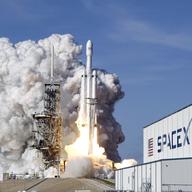
In February, the billionaire Elon Musk took a big step toward his goal of a manned mission to Mars: His aerospace company, SpaceX, launched a rocket into space carrying a huge payload — including his red Tesla Roadster, complete with a spacesuit-wearing dummy named Starman in the driver's seat — and two booster rockets used in the launch successfully flew back to earth and landed to be used again.
The launch was considered a huge success, and is the latest in a series of rocket tests and missions by private space exploration businesses founded by entrepreneurs and billionaires. That list also includes Amazon's Jeff Bezos who runs his own aerospace company, Blue Origin. This new breed of space explorers have big dreams, including a future where humans live on the Moon and other planets or in space stations that orbit the Earth.
The rise of these private rocket businesses comes as NASA ended its shuttle program in 2011 and has seen funding cuts over the years.
With these changes and new innovations, what does the future of space exploration look like, and how much will it be shaped by these idiosyncratic billionaires looking to solve problems in a very different way than the Cold War-era NASA program?
This week on Money Talking, Charlie Herman speaks with Quartz writer Tim Fernholz, author of the new book “Rocket Billionaires: Elon Musk, Jeff Bezos and the New Space Race.”