She Researches the World Without Leaving the Upper West Side
In 1826, at a meeting of the French Academy of Sciences, the French naturalist Geoffroy Saint-Hilaire presented a mummified crocodile as evidence of a controversial claim he had made several years earlier.
Saint-Hilaire said the mummy proved his hypothesis that two distinct species lived along the Nile, not just one, as previously thought. While the Academy was convinced by his presentation, his theory never caught on.
Until five years ago, when Dr. Evon Hekkala proved him right — without ever having to step foot in Africa.
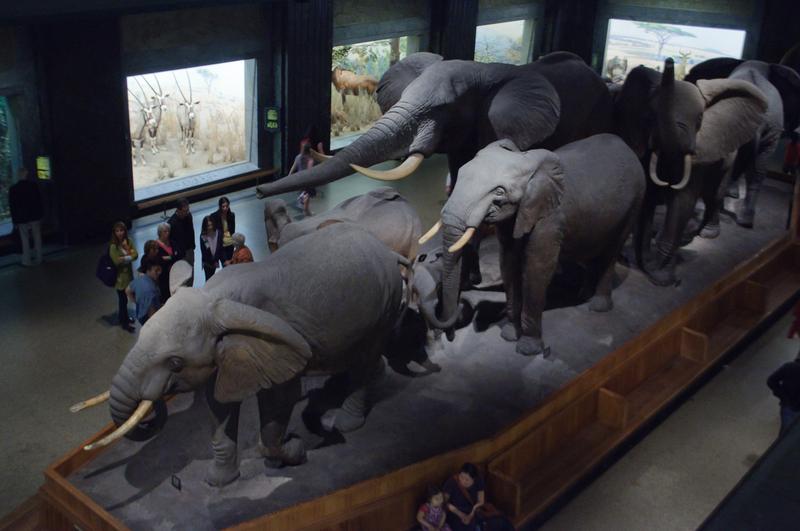
Instead, the conservation geneticist from Fordham University does much of her research on Manhattan's Upper West Side, in the back rooms of the American Museum of Natural History. While taxidermied skins are placed in the dioramas that visitors see, the skeletons and other materials that once belonged to these animals are kept in drawers in these back rooms.
"There is an extraordinary set of specimens behind the scenes that nobody sees," Hekkala said.
Through DNA analysis and other methods, little bits of tissue on these bones give Hekkala clues about what the animals encountered in their environments.
"It's a time capsule of that community and that organism at a moment in time," she said. "We can look at things like stable isotopes. We can look at levels of mercury. We can look at genetic connectivity of that individual with other members of the community. We can look whether or not other members of that species have been able to move across that landscape in a way that's different now."
That information does more than just illuminate a time past. Hekkala says understanding how different animals adapted — or failed to adapt — is important to make decisions about conservation.
"We can look from the past to now and use it as a stepping stone to think about the future," Hekkala said. "That's something you could never do without these materials, these dioramas and these collections."
Want more? Ed Yong wrote a great piece on Hekkala's work for The Atlantic.
Hypothesis is written and produced by Alec Hamilton and edited by Matthew Schuerman. Sound design and engineering by Liora Noam-Kravitz. Original music by Josh Burnett.
Got an interesting science story? Tweet us! @wnyc #hypothesis

WNYC is funded by sponsors and member donations