[Politics in music]
This episode is from the WNYC archives. It may contain language which is no longer politically or socially appropriate.
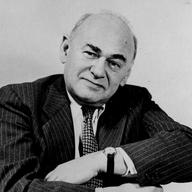
George Seldes begins by clarifying a point from a previous episode about there being a 'party line' in music composition. He's confused as to how there can be such a thing. He can see it in painting. But with music, with all its abstractions, this seems difficult to put in a formula. Seldes talks about Dmitri Shostakovich. In 1948, the composer was accused of writing music that reflected formalism with bourgeois influences. "Music was directed against the people."
This gives Seldes pause. He can't explain it, doesn't understand it. Shostakovich apologized. Seldes discusses the Soviet Union where there is a union of composers which controls music. Shostakovich published an article in Pravda denouncing this union and calling for an effort to reflect the truth of life in music. Any attempt to stifle discussion will fail because it contradicts the call of the 20th Congress which permits freedom of discussion. Shostakovich says that the people who have been running music often present naive demands on composers. They don't understand a composition's significance is not definable by its external proportion of sadness and cheerfulness; is defined by the pathos of feelings expressed in it.
Seldes goes on to discuss the Soviet educational system and the teaching of mathematics.
Audio courtesy of the NYC Municipal Archives WNYC Collection
WNYC archives id: 70501
Municipal archives id: LT7297