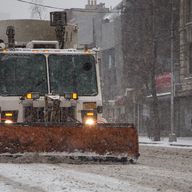
Road Salt Has a Larger Impact Than Just Melting Snow
Since the start of winter, New York City has spread about 200,000 tons of salt on city streets to keep them clear of ice and snow. But when everything melts, that salt can do some serious damage to the streets, pipes, soil and rivers around the city.
A new study published in the Proceedings of the National Academy of Sciences surveyed the salinity of hundreds of rivers around the country, including the Hudson and the Passaic. According to ecologist Eugene Likens, who co-authored the study, waterways in the northeastern United States are getting saltier and more alkaline at a rapid pace, thanks in part to the salt used to melt snow.
"That salt gets dissolved in the water and moves away from the road and infiltrates into the soils and ultimately ends up in the groundwater," Likens says.
Once it washes away, all that salt doesn't vanish. It can stick around in the soil, causing the ground to erode faster. It can make the rivers themselves saltier and more alkaline, which kills some fish and plants. It can also just stay on the roads or seep into pipes, contaminating and corroding them.
Unfortunately, while there are more eco-friendly alternatives to road salt, they tend to be higher cost and less effective. New York City Sanitation Commissioner Kathryn Garcia told WNYC that the agency is constantly experimenting with other means of snow removal, and has tested everything from brining the streets with saltwater to spreading beet juice around. However, she says they have yet to find anything that works as well as regular rock salt.

WNYC is funded by sponsors and member donations