Listen to Bob Dylan's New Album
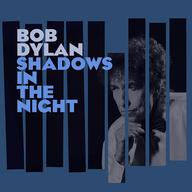
This month, Bob Dylan released an album of standards titled, Shadows in the Night. The album is a compilation of songs performed by Frank Sinatra throughout his career. One important thing to note about this project: Dylan is not trading in his leather jacket and cowboy hat for a black-tie, a top hat and tails. Dylan is being Dylan.
This truth is evident in his song choices. Shadows in the Night is a selection of Sinatra tunes interpreted by the Bob Dylan we have come to know and love – and as it turns out, it’s not terrible. This may be because the album does not feature the upbeat tunes that are profoundly tied to Sinatra, an important choice for Dylan's voice and performance.
The record possess a certain theme within the leitmotif of Sinatra; saloon songs. These songs are often simple arrangements played by a small group or band that have the power to put listeners into sentimental moods. Not all of the songs on the album were written as saloon songs, yet Dylan and his five-piece band take this approach on each track. The songs are sung softly and roughly, with knowledge and understanding bursting through every verse and lyric.
Take “What’ll I Do,” a song written by the great Irving Berlin in 1923. Sinatra recorded it twice – in 1947 for Columbia and in 1962 for Reprise. Sinatra sang this song much differently in his later years. As he aged, the sadness and longing that encompass the lyrics throughout the song are heightened. Dylan, too, approaches the song with the baggage of love and loss as he masterfully guides the listeners through it with a voice of sorrow and pain. Dylan channels a bit of Sinatra as he stretches syllables to share the emotion of the lyric. This works beautifully for “What’ll I Do,” as the pain of each word is emphasized.
However, this method does not work as handsomely with every song. When employed for “Some Enchanted Evening,” the beauty of the song dissipates. Yet Dylan cleverly uses this Rodgers and Hammerstein show tune from the 1949 play South Pacific, to tell a different story from the soft romantic one told by Sinatra in 1949. He turns this helplessly romantic number into a song about life’s lessons, as he hollers; “Never let herrrrrrrrrr goooooohhhhhh.”
Dylan heeds this advice as he sings “Stay with Me,” perhaps the most interesting song on the album. It was not an obvious pick from the Sinatra songbook, but a wise choice. Like the lyric, this song sticks with you as you leave it behind. It stays in your head, like “Girl from the North Country” or “Blowin’ in the Wind.” Though he did not write it, the song is essentially Dylan. He takes a lesson from Sinatra by masterfully interpreting the lyric to become a different kind of author.
Dylan is not only learning from Sinatra with this album; he is teaching. Dylan has the ability to reach curious listeners who are looking to discover an American legend who has explored multiple genres – from folk music with Times They Are a-Changin’, to rock with Highway 61 Revisited, and the blues with Modern Times. Now with Shadows in the Night, listeners will be introduced to an entirely new genre of music: The Great American Songbook. This is not just an album dedicated to Sinatra and the music he sang, but to a genre that should be interpreted by new voices for generations to come.
Our very own champion of the songbook, Jonathan Schwartz, joined Brain Lehrer on WNYC to speak about the album. When responding to Lehrer’s first question; "how much are you swooning and how much are you cringing?" Jonathan responded simply: “There’s no cringe here at all.”
So Jonathan doesn't dislike the album, but does he enjoy it? He does. Jonathan attests that the album “really moved” him. Throughout the interview, he shared great insight on Shadows in the Night which included this quote, “One wrote his songs… Frank was an interpretive singer … this is a time when Dylan becomes an interpretive singer like Sinatra and he interprets beautifully.” Just how beautiful can a voice like Dylan’s share these songs? You will just have to discover for yourself.

WNYC is funded by sponsors and member donations