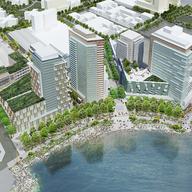
Queens Development Could be Test of New Affordable Housing Policies
Astoria Cove in Queens is the first development deal crafted under Mayor Bill de Blasio's new policy that will require developers to build affordable housing, called mandatory inclusionary zoning. The provision will demand that developers build affordable units if they require a zoning change.
"Astoria Cove will be the first development in this administration where affordable housing is required in order for the project to move forward," said City Planning spokesman Peter Schottenfels.
The luxury high rise and retail development on the Queens waterfront will include a school, supermarket and five residential towers made up of 1,723 apartments, 20 percent of which will be required to be set aside as affordable housing, as part of the city's inclusionary zoning policy. The policy is expected to one day become mandatory. The City Planning Commission also demanded that at least 10 percent of the affordable housing be designated for low-income households — that is, a family of four that brings in between $41,951 and $67,120 per year. All the affordable units would have to be distributed throughout all of the project's proposed five residential buildings.
According to modifications, the massive 1.762 million square foot project is also one of the first that would allow the City Planning Commission to demand more affordable housing units be built if the developer ends up receiving public subsidies.
But so far, the project's developer, Alma Realty Corporation hasn't received any subsidies.
“This project is viable based upon the 20 percent affordability the city has asked for and is being built without any public subsidy," said Alma manager John Mavroudis.
The firm has been open to the city's other requests, including building the school and saving room for open space and waterways.
"Additionally, there is no so-called ‘poor door’ and importantly, amenities of the project are being made available to all tenants and not just for market-rate apartments,” added Mavroudis.
Despite that, Queens Borough President Melinda Katz recommended that the project be turned down, in part because of the affordable housing.
"The projected rents for the proposed affordable housing would still be higher than what current local Astoria residents, who will bear the brunt of the impacts of the proposed project, could afford to pay," wrote Katz in her recommendation to the local community board.
The developer could still receive a tax abatement and not be required to build more affordable units.
If the Planning Commission approves of the proposal, it will head to the City Council for a vote. Some council members are expected to demand the Queens development include even more affordable housing.

WNYC is funded by sponsors and member donations