Trump Administration Is Ending Temporary Permits for Haitians
The Trump administration said Monday it is ending a temporary residency permit program that has allowed almost 60,000 citizens from Haiti to live and work in the United States since a 2010 powerful earthquake shook the Caribbean nation.
The Homeland Security Department said conditions in Haiti have improved significantly, so the benefit will be extended one last time — until July 2019 — to give Haitians time to prepare to return home.
"Since the 2010 earthquake, the number of displaced people in Haiti has decreased by 97 percent," the department said in a press release. "Haiti is able to safely receive traditional levels of returned citizens."
Advocates and members of Congress from both parties had asked the Trump administration for an 18-month extension of the program, known as Temporary Protected Status. Haitian President Jovenel Moise's government also requested the extension.
Amanda Baran, policy consultant at the Immigrant Legal Resource Center, called the termination of the status a "heartless decision" and said the Trump administration has no plan in place for the U.S.-born children who may now lose their Haitian parents and caregivers to deportation.
An estimated 5,200 Haitians in New York state are TPS holders and they have about 1,900 U.S.-born children, according to the Center for American Progress.
While Haiti has made advances spurred by international aid since the quake, the Caribbean nation remains one of the poorest in the world. More than 2.5 million people, roughly a quarter of the population, live on less than $1.23 a day, which authorities there consider extreme poverty.
Supporters of TPS point out that Haiti depends heavily on $1.3 billion in annual remittances from Haitians who live and work in the U.S., and that money is crucial for Haiti's recovery. They also said the vast majority of TPS recipients work and contribute substantially to New York and New Jersey's economies.
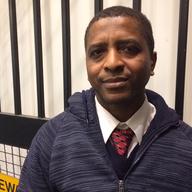
Gerald Michaud, who works as a wheelchair attendant at LaGuardia Airport, said he sends money every month to seven family members and friends, and several others who have medical issues or are financially struggling — about 13 people in all — on an $11 hourly wage.
He feels responsible for them, and is scared of not being able to provide for them.
Critics of TPS point to the very name of the designation, Temporary Protected Status, and argue that many of the recipients have been here since the 1990s. Which isn't unlike what some immigration rights activists say.
"These are people who are in our communities," said Anu Joshi, the director of immigration policy at the New York Immigration Coalition.
"They've lived here, some of them for decades," she said.
She said it's "foolish" to expect them to return to their homeland, given the unsafe conditions in Haiti and other TPS nations. Most would most likely remain in the U.S. illegally, she argued, as had happened with thousands of immigrants from Liberia, Guinea and Sierra Leone after their TPS status expired earlier this year.
In a November 14 letter to Secretary of State Rex Tillerson and Elaine Duke, the Acting Secretary of the Department of Homeland Security, members of the De Blasio administration wrote, "We are gravely concerned about the possible termination of TPS for Honduras, El Salvador and Haiti, which would risk tearing apart many families and endangering thousands of U.S. citizen children, to the detriment of the safety and well-being of New Yorkers."
The letter was signed by Benita Miller, Executive Director of the New York City Children's Cabinet, a multi-agency initiative representing two dozen agencies.
A November report by the U.S. Conference of Catholic Bishops also pushed for an extension of TPS, based on an on-the-ground assessment of Haiti.
The delegation "found no evidence of capacity to provide large-scale reintegration services for repatriated nationals with TPS."
"Consequently," the report continued, "provision of TPS continues to be essential to the safety of Haitian nationals currently protected in the U.S., necessary to foster Haiti’s tenuous stability, and key to protect the progress being made by the nation. At this point in its recovery, a decision to terminate TPS for Haiti would be both premature and inhumane."
Although he's scared of losing his legal status, Gerald Michaud occasionally takes a philosophical view. Before Monday's decision, he thought there was still a chance President Trump would hear him telling his story on the radio, and choose to extend TPS.
"From your mike, I can touch somebody," he said. "I can touch the president to thinking about people [who have] TPS."
"Because this is our place. This is the place we live in."

WNYC is funded by sponsors and member donations