Uncertainty Surrounds Upcoming Marijuana Vote in Trenton
New Jersey could become the 11th state to legalize recreational marijuana.
Or not.
It all hinges on whether Gov. Phil Murphy can get buy-in from several legislators who have not yet committed to voting for the measure to legalize adult-use cannabis. A vote is scheduled for Monday on the two companion bills in the state Senate and Assembly. 21 votes are needed in the Senate, and 41 in the Assembly.
As of Thursday, Murphy was still short in both chambers.
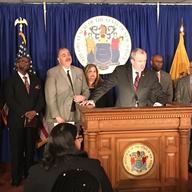
At a press conference at his office, the first-term Democrat said he didn't want to name the legislators he's cajoling behind the scenes, or specify the number of votes he needs as the March 25th vote approaches.
But he said he's working on it.
"This is still going to be very close. We’re not there yet. I think we’re making progress," Murphy said, adding that Senate President Steve Sweeney and Assembly Speaker Craig Coughlin are also talking to their members. Neither attended the governor's press conference.
"I’ve spoken to almost everybody. I’m starting to call people in Pennsylvania. I’ve run out of people to call in New Jersey," Murphy joked.
But he also hoped to send a message to uncommitted legislators by enlisting the help of civil rights advocates and black clergy. Murphy campaigned on a promise to make cannabis legal primarily as an issue of social justice, and each of the dozen black pastors and civil rights leaders flanking the governor talked about elements of the bill that deal with related issues, such as marijuana arrests.
Citing figures from the local chapter of the American Civil Liberties Union that blacks in New Jersey are at least three-times more likely to be arrested for low-level marijuana offenses than whites, they said legalizing weed would help to narrow the racial gap in marijuana arrests. Murphy has argued that legalizing cannabis is the right thing to do, but some legislators have said that it will only lure kids into thinking using marijuana is safe, and could potentially lead young people to use more dangerous drugs.
The bill, if passed, would make it legal to carry, use or buy up to an ounce of marijuana. Roseanne Scotti, state director of the Drug Policy Alliance, said the current law has lead to 32,000 arrests a year, with the vast majority consisting of black and brown men.
Both Murphy and several of the black leaders acknowledged the bill was imperfect as a measure for compensating black and brown communities for the losses they say they have suffered as a result of the high level of arrests, like men unable to find work or housing as the result of their criminal records.
Rev. Charles Boyer, of the civil rights group Salvation and Social Justice, said the bill lacks a robust and overt commitment to investment in black communities because it does not dedicate a portion of the tax revenue that the state will collect on marijuana for communities of color.
Boyer said he and other civil rights leaders will continue fighting for such funding, but that their priority is getting the law passed.
The marijuana industry, which is predominantly white, has been pushing aggressively for the bill to pass, and the opportunity to grow, cultivate and sell weed in New Jersey.

WNYC is funded by sponsors and member donations