How a Brooklyn center is speaking to the past, present, and future of Crown Heights
New York City is known for its iconic cultural institutions like the Met and MOMA, but it's also home to many neighborhood gems. WNYC's Community Partnerships Desk is highlighting some of these treasures across the five boroughs. In this segment, we pay a visit to a center in Crown Heights, Brooklyn that's built around one of America's first free Black communities during the 19th century.
The transcript of this segment has been lightly edited for clarity
Dr. Raymond Codrington:
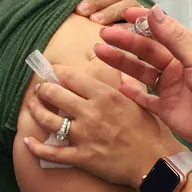
I'm the president and CEO of Weeksville Heritage Center. And I've lived in Brooklyn for 17 years. Weeksville Heritage Center is both a historic site as well as a cultural institution. Weeksville was the second-largest free Black community in the pre-Civil War era. We have houses from the mid-1800s in combination with a very contemporary arts, education, and culture building, as well as a beautiful green space. What you're able to learn about Brooklyn history, about Brooklyn's Black history, about free Black communities is actually incredible. And then, for the same institution to be able to offer contemporary arts, culture, and education programming, it's very unique. We also have an opportunity to meet the community's needs in different ways, and engage the community in different ways, whether that be acting as a polling site, COVID vaccination, and flu vaccination site. It's always been a place where the community has sought refuge. The neighborhood is changing, so I think for us, we're thinking about ways in which we can create more access. As people become displaced, as fewer Black spaces exist, you know, people are being pushed out. So, I feel Weeksville can be that resource. You can come back, you can come home, you can have a space where you can experience firsthand Black history, art, culture, education, in a safe space. For me, Weeksville is not only changing, but it's also reflecting the very reasons that it was created, and that was to allow access to create a safe space and an oasis for Black folks.