What Christie May Not Want to Admit: He Had Success with Obamacare
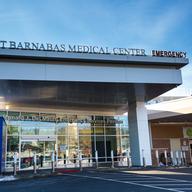
Business is booming at the emergency room of St. Barnabas Hospital in Livingston, NJ, yet the waiting room is empty.
“There definitely has been an uptick each year in volume,” said Christopher Freer, the head of emergency medicine.
He is proud to show off those empty seats in the waiting room. The ER is busy enough that there are patients on gurneys being treated in the hallways — but there isn’t a single person in the waiting room. That’s because Freer has a nurse stationed at the front door. She looks a bit like a restaurant greeter, with a podium and a clipboard.
“So the anxiety of someone walking in with chest pain and someone asking him what kind of license, registration, is not what we want to do,” Freer said.
The increasing number of people coming to the emergency room is partly due to Obamacare, because 880,000 more people in New Jersey became insured. The largest share of that number are low-income people who now qualify for Medicaid.
That’s where Gov. Chris Christie comes in. After the Affordable Care Act passed, most Republican governors said they wouldn’t opt into the voluntary expansion of Medicaid, even though the federal government would pay for 90 percent of the extra cost.
“Medicaid is pretty well expanded in our state already because of the legacy of previous democratic governors," Christie told Fox and Friends in July 2012. “So I don’t think there’s a lot more for us to do in New Jersey in that regard.”
But six months later, squeezed between his ambition to run for president and re-election in a majority blue state, he bucked his own party and took the money. There are now more than half a million poor people who gained access to healthcare in New Jersey.
“It was a very big move,” said Joel Cantor, director of the Rutgers Center for Health Policy. “Expanding Medicaid has been huge for this state, enfranchising hundreds of thousands of people and helping to finance our healthcare system more robustly and more stable than it had been in the past."
Cantor praises Christie for adding access to healthcare for the poor and for doing a good job of implementing Obamacare.
“He probably personally doesn't believe in it and has said in public that he thinks that the Affordable Care Act had some really bad things in it, but it was implemented very competently here. So maybe on the down low, but it was good work, good government," Cantor said.
The health insurance exchange is more robust than in many states, in part because New Jersey has a strong regulatory system, Cantor said.
Even if Christie has been loathe to admit that Obamacare was good for New Jersey, the expansion of Medicaid gave him his best shot at redemption. In February 2016, he returned from the New Hampshire presidential primary with his White House ambitions shredded and hounded by the Bridgegate scandal.
But he turned his attention to the opioid epidemic, and worked almost exclusively on it. It was a good time to be working on the problem in New Jersey, because half a million low-income people were added to the Medicare rolls, and many of those people were now able to get treatment for drug addiction. A wide spectrum of people who work on recovery say that was the game changer in New Jersey.
Christie also gets credit for expanded access to Naloxone, which can save the life of someone overdosing, and for signing the Good Samaritan law, which encourages drug users to call for help without fear of arrest when a friend is overdosing.
“Personally, I believe his heart is in the right place,” said Alan Oberman, the CEO of the John Brooks Recovery Center in Atlantic City. “He's been more proactive in addressing addiction issues than pretty much any governor in recent history.”
St. Barnabas Hospital is just down the road from where Christie grew up. It’s got one of the largest emergency departments in New Jersey, with more than 100,000 patients a year. Even though Livingston households have a median income of 145,000, the hospital serves many people from low-income Newark, East Orange and Irvington.
Chris Freer, the director of the ER, says the way the hospital now handles drug overdoses is part of a sea change in treating addiction. Now, a recovery coach is called to the ER when an overdose patient is treated. These coaches are people who have struggled with addiction and have been clean and sober for four years. They are on call 24 hours a day.
Freer says the recovery coaches break down barriers and help patients move toward treatment in a way doctors can’t.
“Now we're re-educating ourselves,” he said. “You know this is like a diabetic patient who ran out of their insulin and is coming in with high blood sugar. It's a disorder."
Freer says the ER is also reducing the amount of opioids they prescribe, to prevent addiction.
The recovery coaches and prescription rules aren’t Christie ideas, but he has toured the state for almost two years, listening to what is working and championing those ideas.
Gov. Phil Murphy won’t focus on addiction in the singular way Christie has, but he does support funding addiction services. At the new governor’s inauguration on Tuesday, he praised Christie’s work on addiction and said he was committed to continuing the work.
That’s about as far as the agreement between the old and new governor goes. Murphy said he’ll restore Christie’s funding cut of Planned Parenthood. And unlike Christie, he’ll defend Obamacare — it’s something he talked about at almost every campaign stop.
“We have to do everything in our power to push back against this wrong-headed president, wrong-headed leadership in Congress,” Murphy said.
One way he might do that would be to pass legislation to replace the federal individual mandate that was undone by Republicans in Washington. That would keep the young and healthy in the insurance pool.
Joel Cantor at Rutgers says if Murphy can do that, then maybe he could take a crack at another huge problem — New Jersey has the highest cost of medical care on the planet.
“Addressing that is a political minefield,” Cantor said. “No governor has done it. But if you ask anyone in business who has to pay premiums, it's a serious problem and it needs to be addressed.”

WNYC is funded by sponsors and member donations