World's Largest Vertical Farm Comes to Newark
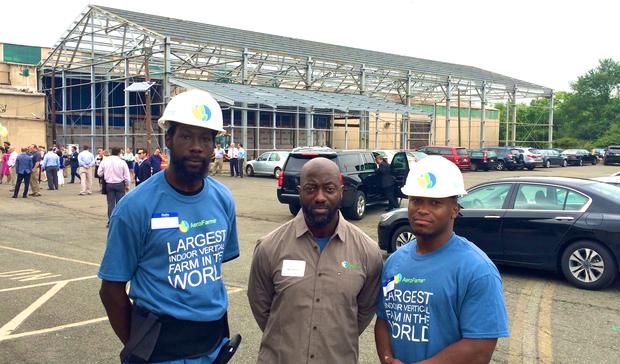
Newark’s Ironbound district made its name as one of the largest metal manufacturing hubs in the world. Now the Ironbound will play host to the world’s largest vertical farm, which is expected to produce two million pounds of fresh vegetables a year.
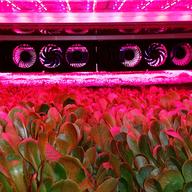
AeroFarms, the company that operates the vertical farm, uses what is called aeroponic technology, where a nutrient-rich mist is sprayed over beds of leafy greens like kale and arugula. Plants grow indoors without soil, and so the farm escapes the contingencies of fickle weather and arid dirt. Vertical farms also use 95 per cent less water than field farms and year-round production allows them to conserve resources.
“A vertical farm is nothing more than a multiple-story, high-tech greenhouse,” said Dickson Despommier, a retired environmental studies professor at Columbia University who is widely considered to be the inventor of the vertical farm.
Goldman Sachs and Prudential have invested most of the $39 million needed to get the project off the ground. AeroFarms has already built two vertical farms in the city of Newark: one at Philip’s Academy Charter School, where students grow their own cafeteria food, and one in a former downtown nightclub.
The new Ironbound project has resulted in 78 new jobs, both skilled and unskilled, though only half have gone to Newark residents. Nevertheless, they are all well-paying blue-collar jobs with benefits that have been a boon to a city with twice the national unemployment rate.
“Where we work, you can just pick out a leaf and eat it because there’s no pesticides in it,” said Sayyid Johnson, a 21-year-old native of the Ironbound who attended East Side High School. He has worked at AeroFarms since March, harvesting crops and collecting plant data. “You can just pick out a leaf and eat it right after you harvest. It’s awesome.”
AeroFarms is hoping to sell their greens to local Ironbound restaurants and a variety of local retailers, including the soon-to-be-built Whole Foods in downtown Newark. Growing food close to the consumer is another key advantage that has popularized vertical farming in recent years.
“They’re in the Ironbound district, and they’re going to serve a lot of those restaurants that are very popular already,” said Despommier. “Those restaurants will become even more popular when the word gets out that what they’re serving has been grown right next door to where they are.”
Another urban farming company, Las Vegas-based 10 Mile Farms, is setting its sights on New Jersey’s largest city. They are planning on selling produce primarily to high-end establishments in the New York City area, with a portion sold at a discount to the Newark community. Food from those vertical farms is likely to find its way to the plates of urban gentrifiers, rather than residents who live in poverty. Urban real estate is expensive, and so vertical farms often have to sell pricey produce to high-income consumers just to break even.
But the rent is still relatively cheap in Newark, and its multiple transportation hubs make it the ideal place for this kind of venture, said Aerofarms. They expect to be profitable within the first year of operations.
The city is in the middle of a new wave of development, spurred by former mayor Cory Booker and hailed by the city’s current mayor, Ras Baraka. Teachers Village, a mix of sustainable apartments, shops and schools has breathed new life into downtown Newark. It was developed by the same company, RBH Group, that is spear-heading the Aerofarms project. A new Whole Foods market will soon open in an old department store complex on Broad Street.
Additionally, Baraka announced this week an innovative bike-building program that will bring together Newark police officers and teenagers, who will build bikes to give away to city youth.

WNYC is funded by sponsors and member donations