Weekly Music Roundup: Lampchop, Keb’Mo’, and Agnes Obel
This week, new releases by singer-songwriter Lambchop, bluesman Keb’Mo’; art-pop purveyor Julia Holter, Danish singer and pianist Agnes Obel, and singer Matt B.
Lambchop Release “Punching The Clown”
Lambchop is essentially the work of Kurt Wagner, who formed the band in the 90s and has been the only consistent member over the years. Like colleague Justin Vernon and his band Bon Iver, Wagner has managed to clear a space for himself in a crowded singer/songwriter field through a mix of folk intimacy, elliptical lyrics, and a recent series of recordings that used hazy electronics to alter his vocals. But Lambchop never had the crossover success of Bon Iver, and the new album, Punching The Clown, is unlikely to change that. Its charms are many, but they are quiet, occasionally strange and unsettling. Justin Vernon plays banjo, Wagner sings and plays guitar, and the sound that gives the album its emotional depth is the choir that provides the backing vocals, which give some of the songs an almost church-like call-and-response feel. The single “Weakened” is a good example: it starts as a small set of solo musings, picks up an occasional bit of harmony singing along the way, and by the end has become a gently psychedelic swirl of communal singing, slightly undercut by the woozy electronic processing. Its meaning may be elusive, but it clearly means something.
Keb’Mo’ Has New Reasons To Sing The Blues
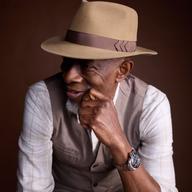
The veteran bluesman Keb’Mo’ (born Kevin Moore) has brought the blues to Carnegie Hall, The White House, and The Glastonbury Festival. But despite all of his success, including five Grammys and a host of other awards, Keb’Mo’ has found new reasons to sing the blues on his new album The Breakdown. It chronicles the dissolution of his marriage and his open heart surgery in 2024. (The album credits include the team of doctors that saved his life.) Much of the album is in the classic blues format – Moore singing and playing the guitar; but one of the standout moments is a wry little tune called “They Don’t Make ‘Em Like They Used To” which features the jazz/pop vocal group Take 6. The title suggests a cranky old man whining about how the songs of his youth were better than all the crap they play on the radio today, but it turns out, this is potentially even worse: it’s about women – how “they got college educations/and they ain’t gonna fix no dinner for you.” And his conclusion? “Women want justice/they want equal pay/times’a changin’/you better know how to cook.” Take 6 sound like they’re totally in on the fun, adding handclapped rhythm to their backing vocals.
Agnes Obel’s New Beginning
Danish singer and pianist Agnes Obel, based in Berlin, has built up a sizable following with a series of recordings that blend dream pop, minimalism, and chamber music. Since releasing her last album, Myopia, in 2020, Obel has become a mother, and her new album, coming next month, was inspired by that experience and by writer/philosopher Hannah Arendt’s idea of “natality” – the capacity of people to undertake new beginnings. So The Meaning Of Flowers will be more atmospheric, and the new track “Laymelli” trades the piano’s sharp attacks for the synthesizer’s flowing, floating textures, over a downtempo electronic beat. Like the video, where a camera seems to be forever moving through the leaves on a tree without ever arriving anywhere, Obel’s lyrics never land anywhere definitive, suggesting rather than telling us what they mean.
Matt B Meets His Nigerian Family – Both Literal and Musical
Grammy winning singer Matt B (Matthew Benson) has just put out Alkebulan III, the follow up to the album that won him that Grammy (Best Global Music Album). Like its predecessors, this is music that blends R&B, orchestral music, and the popular Nigerian music style known as Afrobeats. Alkebulan is an indigenous name for the African continent (the name Africa came from the Romans), and unearthing African history was a big part of this project. Like many Black Americans, Matt B knew little about his family history past the point where his ancestors were enslaved and brought to the States. So he teamed up with Ancestry to go to Nigeria and meet members of his extended family – there’s apparently a documentary about his journey coming out soon. While there, he took the opportunity to record with some Nigerian (and some other African) musicians as well, including the Kabusa Oriental Choir, who join him to good effect on the album’s opening track, “At The End of The Door.” While some of the album is in Nigerian Standard English, some of it is in English pidgin, and this song seems to be largely in Igbo, which is the language his family speaks.
Julia Holter Picks Up A Thread From Her Last LP
Materia is the name of the new album by Julia Holter, the acclaimed LA-based creator of art-pop projects that have seen her move into the world of contemporary classical music at times. But “Materia” is also a track on Holter’s last album, the 2024 release Something In The Room She Moves. This new album features “Materia 2” and “Materia 3,” essentially extensions or out-and-out recompositions of the earlier song. Much of the album exists in a netherworld between pop and ambient post-classical music. “Materia 2” sets up a chilly programmed groove, and sets about muddying the sonic waters with clarinet (NY dynamo Chris Speed) and layers of Holter’s distant-sounding, ethereal vocals. Devra Hoff’s fretless bass acts as a sonic link between the acoustic and electronic textures, and keeps the whole thing grounded.