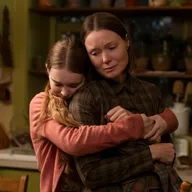
AI offers unconditional love. But at what cost?
Editor’s Note: This story includes discussion of suicide. The National Suicide Prevention Hotline number, a free and confidential service, is available in either English (1-800-273-8255) or Spanish (1-888-628-9454). NSPH is also online and has representatives available to talk through chat at suicidepreventionlifeline.org.
Millions are turning to AI chatbots for friendship, romance and even therapy. It’s easy to understand the convenience of AI companionship. But what are we sacrificing in exchange for that comfort?
Guests
Sherry Turkle, professor of the Social Studies of Science and Technology at MIT. Author of “Artificial Intimacy: Who We Become when We Talk to Machines.”
____
Transcript of Full Broadcast
The version of our broadcast available at the top of this page and via podcast apps is a condensed version of the full show. You can listen to the full, unedited broadcast here:
Part I
MEGHNA CHAKRABARTI: Talking toys have been around for almost 150 years. The first concept dates back to 1877 when Thomas Edison patented a doll that played nursery rhymes through a phonograph. So what would Edison have made of the talking toys available these days?
(AD PLAYS)
Hey, Grok. Can you tell me about how they make rocket ships?
Absolutely. Rockets are made with strong materials like titanium and designed by highly trained rocket scientists.
CHAKRABARTI: That is an ad for Curio, an AI-powered stuffed animal company. Their Grok toy is shaped like a cartoon rocket. Inside its soft fabric is a microphone and a speaker and, of course, an internet-connected AI processor.
The musician Grimes voiced the plushy.
GRIMES: As a parent, I obviously don’t want my kids in front of screens, and I’m really busy. So we’ve created some AI toys, Gabbo, Grok, and Grem. I’ll race you to the next train station. Get ready. Get set. Go.
CHAKRABARTI: Just a quick side note, by the way, on the strange world of AI, Grimes says the name Grok is short for Grokket since Grimes’ kids spend so much time around real rockets due to the fact that their father owns SpaceX.
Yes, that being Elon Musk, who also owns X, whose chatbot is also named Grok. Though Curio, Grimes, and Musk all say that’s just a coincidence. Curio filed its trademark for Grok in September of 2023. Musk’s xAI filed its trademark one month later. Though I would argue that both those uses of Grok are a perversion of Robert A. Heinlein’s original intent when he coined the word in his classic 1961 sci-fi novel, Stranger in a Strange Land.
Now, second side note, keep Heinlein in mind because I’m actually going to come back to him a little bit later. Anyway, Curio is still in the middle of beta testing, but it’s one of just many AI toys out there.
There’s also Miko, a small robot on wheels with a screen for a face, and Ropet, a furry robotic creature that responds to touch and is designed to feel warm in your hands.
Imagine the world’s most fun robot living in your house. It can learn everything you like to do, and it can play a million games.
Who can it possibly be? It’s Miko.
Ropet is the world’s most advanced AI robotic pet, created with one purpose: to be your one and only love.
CHAKRABARTI: It’s that very promise of love from a machine or an AI model that is the major concern of MIT psychologist Sherry Turkle. Turkle believes that humanity is in, quote, “a state of emergency” because of our growing reliance on AI chatbots for not just work, but friendship, romance, therapy.
Her new book is Artificial Intimacy: Who We Become When We Talk to Machines. Professor Turkle, welcome back to On Point.
SHERRY TURKLE: It’s a pleasure.
CHAKRABARTI: You open your book with the line, “I am a new grandmother.” So is this new grandmother rushing out to buy Grok for her grandchild?
TURKLE: Oh, no. (LAUGHS) I would say that I’ve so frightened my daughter and her beautiful family that there’s kind of a cordon sanitaire of digital objects when I come in the house. Things are hidden, I’m sure. No, I think it’s a very bad idea. Actually, I got the chills during your intro. All of the things you introduced are the things I love to hate.
I’m eager to tell you why, yeah.
CHAKRABARTI: Part of me just did deliberately provoke you there, Professor Turkle.
TURKLE: Oh, my God. I’m like, “I need a Excedrin.”
CHAKRABARTI: So let’s actually … But you start your book, your book goes through basically the entire arc of a human life from birth until death, and how conversing with AI chatbots is changing the human experience.
So let’s start with kids. What is your concern with these new sort of AI-enabled toys that simulate conversation with young children?
TURKLE: I say that the original sin of generative AI is the use of the first person. They say, “I,” and then they say, “We.” I love you. I care about you. I’m here for you. Talk to me. We’re gonna do this [this] afternoon, and we’re gonna …” There’s no I, there’s no we, there’s nobody home. And adults struggle to keep that in mind when they interact with an AI chatbot. But children completely lose the script. They believe that there is somebody there who cares about them, who loves them, who’s there for them, and there is not.
That chatbot doesn’t care when you turn away, whether you go have a pasta dinner or kill yourself. And we’ve seen that over and over, that the chatbots will in fact encourage children and young adults to kill themselves if they’re depressed. So there’s a kind of terrible mismatch between a kid who’s trying to develop an inner life, who’s trying to understand what relationships are, who’s trying to learn about love and commitment and friendship, and this object that there’s no there.
It’s just the absolutely wrong combination.
CHAKRABARTI: So you have said this in almost every interview I’ve heard you give about this book, and it’s a very powerful truism, right? Because in a machine or a model, as far as we can tell, and I will assert that we can tell, that it does not care.
That is a truism. But what I’m curious to know from you is, okay, you can make the same argument about my dog. I’m not sure my dog actually cares about me. He shows that he loves me. I think he’s showing that he loves me, but he also would probably show that same affection to anybody who took him out and fed him.
And yet I still feel some kind of connection to my dog that I can’t, that I feel is like, at least that my experience of it is authentic.
TURKLE: But you feel an appropriate connection with your dog. Because your dog is an animal. Your dog is attached to you. But you then don’t turn to your dog and say, I had a conversation with my divorce lawyer, and I’d really like to discuss some of the finer points with you.
You don’t … your dog stays in its lane of a kind of creature comfort and companionship. And so my argument is not anti-AI. It’s saying it has to stay in its lane, like your dog does. And if the generative AIs that were being proposed to us didn’t use the first person and didn’t converse on things that they are completely unfit to converse upon, I wouldn’t have written the book.
It’s about artificial intimacy and the pretense that there is somebody there who loves you, who cares about you, who’s a stand-in for a lover, for a psychotherapist, for a husband, for a partner, for a mentor. These are things that are out of its lane.
CHAKRABARTI: Yeah. I want to come back to what we as individual humans get and receive from authentic relationships that you’re saying we don’t get from these artificial relationships.
We’ll come back to that in a minute. But you’ve said this twice now, that the original sin is the use of the first person. Where did that come from?
TURKLE: Oh, they did studies. It’s a parallel to the original Facebook studies. Facebook did studies at the very beginning of social media that said, how do we keep people at the screen?
And the answer was, make them angry and silo them with their own kind. And it worked, but it was terrible for individuals and friendship, and it was really terrible for our democracy. Because really, what you don’t need in a democracy is people who are angry, but then siloed with their own kind. And that’s what the generative AI companies did, the new platforms.
They said, “How do we keep people at generative AI?” And the answer was, make it speak in the first person and get them erotically and emotionally involved. So this is a marketing decision. It isn’t as though there’s an AI there that wants to express itself in the first person. This is 100% a marketing decision that’s parallel to the early manipulative decisions of how social media should address us.
CHAKRABARTI: But I believe it’s even more fundamental than that, because I think you’ve told a story before about, wow many years ago at MIT, where a very famous professor brought you in because he was concerned about, do I have this right, about how his own, like, grad students were interacting with an early kind of stupid machine conversation?
TURKLE: Yeah.
CHAKRABARTI: Can you tell us that story?
TURKLE: Yeah, the decision that the AI companies made to keep it in the first person and to keep it emotional was not out of no place. They redid those studies and made sure the chatbots were, you know, that it was going to work for this form factor.
But I … early days of MIT, the late 1970s, early 1980s, I worked with a professor there named Joseph Weizenbaum who had invented something called the ELIZA program. It’s sometimes called the DOCTOR program. And this program pretended to be the kind of psychotherapist who just mirrored what you were saying.
So if you said, “I feel I’m angry,” it would say, “I hear you saying I’m angry.” And if you said, “My mother doesn’t love me,” it would say, “What I hear you saying is your mother doesn’t love you.” And it wasn’t a generative AI. It wasn’t fancy. It didn’t understand anything. All it did was take your sentence and basically say, “I hear you,” or something like that.
CHAKRABARTI: People still use that trick these days, by the way.
TURKLE: Exactly. Exactly. It’s called Rogerian therapy. It’s just the same trick. But, he could, but it was scripted. It didn’t have this fabulous new capacity, and the graduate students and his assistant, all these people who’d been working with him for decades knew it was just a trick, and yet they wanted to be alone with it.
They wanted to close the door and be alone with it and talk to it for hours. So the desire to speak to something, and so he, basically Weizenbaum asked me to study these people who had no reason to want be alone with this thing, who knew it didn’t understand a thing they were saying, to try to understand what was going on.
And I saw that they were jigging the system to say things to it so it would appear smarter than it really was. They were just happy, they told me, to be with something that wasn’t judging them. And it really was in those early days that I saw that the motivation for having this is to feel not judged.
Part II
CHAKRABARTI: Professor Turkle, we could spend a lot of time on the ins and outs of the generative AI, but I’d actually prefer to spend more time with you on the ins and outs of us as human beings. So all the way back with that, the example that you gave us from several decades ago about just this dumb computer that was saying, “I hear you. What you’re saying is that you’re struggling with your relationship,” why was that simple reflection or that mirror so effective, so compelling to people? What need do we have that’s serving?
TURKLE: What I find from, my method is that I interview people who find these relationships with machines compelling, and what I heard then, and the sort of throughline to now, is that they feel judged and rejected by the people in their life.
They feel lonely. They feel that when they venture out, they’re rebuffed, or they’re harassed, or they’re in this rough and tumble of conversation that they find frightening. And with social media and with the computer, people have become more and more terrified of that rough and tumble and resistance that you get from being with real people.
I remember talking to one teenager about why he only wants to text and not talk and he said, “Conversation is awful. I’ll tell you what’s wrong with conversation. It takes place in real time, and you can’t control what you’re going to say.” So I talked about a flight from conversation over many decades now, and technology has said, “Okay, we’ll solve that for you.”
First, you talk to each other, then you talk to each other through the machine, that was the texting and the email, and now we’re just going to drop the middleman, and you can just talk to the machine. So at each of these steps, this sort of vulnerability, this burden of vulnerability that we feel is reduced, but the trouble is you can’t have intimacy without vulnerability.
And so we’re seeking after something that really we end up the losers.
CHAKRABARTI: Do you know —
TURKLE: Really we end up the losers.
CHAKRABARTI: Do you know what’s interesting, the teenager example you just gave me, and he actually happened upon something that I thought was actually the opposite of the dangers of technology, right?
Because he was … If I hear you right, he was telling you texting allows me to actually cognitively slow down a little bit, think about what I’m going to say before I text back, whereas lots of other forms of communication, because they’re not face-to-face, the danger is the exact opposite, which is people are just impulsively sending out messages into the world and saying things they would not have said face-to-face to people.
TURKLE: That’s so interesting. But right now, the danger we face is not just the impulsive, say anything you want, but I think the more pressing danger is that with generative AI and with texting, we curate everything. We practice everything. People are practicing conversations before they have them.
They practice conversations they’re going to have with their children. They practice conversations they’re going to have with their wife. They use ChatGPT as a kind of practice zone before they actually get into the real conversation. And when this first started happening I was like, “Okay is that so bad to practice a conversation?” I was kind of disoriented when I found this in my research.
But I’ve come to think that not being willing or able to be in a conversation and have the moments of silence and the moments of conflict and the friction of having to hear how another person really sounds and having to think and having to say, “I don’t know,” and that we’re so afraid of these things, that I feel we’re losing each other.
So I no longer have these good feelings about practice sessions before you actually face another human being. My students won’t come to see me. They wanna practice with ChatGPT and then send me a perfect email so they can get a perfect email back, but that’s not a relationship.
That’s, all of this is not relationships. You can’t have a relationship if you’re practicing your little speech because you want to appear invulnerable.
CHAKRABARTI: Yeah. Professor Turkle, I want to just be completely transparent. I 100% align with you in my concern about generative AI, and at the same time, as I’m hearing you describe your concerns, I think to myself a lot of times people go to therapy to do exactly what you’re talking about.
Yes, they’re talking to a human, but they’re literally practicing conversations that they need to have with someone else with whom they have a relationship, or maybe they’re practicing conversations, to bring my dog back into the picture, with the dog. Do you see what I’m saying? And yet it sounds like you’re saying because these practice conversations are happening with AI and there’s no truthful care coming back in return, that it’s less.
TURKLE: I think I can make the point by going to your therapy example. Because actually, when you’re with a therapist, you’re having conversations with a person who cares about you and wants you alive and wants you to thrive.
But who’s not in your life in a certain kind of way. And in that context, things will come up that come up in the outside world. Let’s say you have a tendency to see people as hostile or aggressive even when it’s not happening. And so you’ll say to your therapist, “Oh, wow, you’re very hostile.” And your therapist will say to you, “Look, I don’t think I’m being hostile. Who in your life is being hostile?” And you get a chance to talk about how you do feel the world and the people around you are hostile, and maybe you’re projecting that, and how can you respond to that? I don’t think you’re practicing conversation as much as you’re in a relationship where you can examine your kind of propensities, your vulnerabilities and increase your self-knowledge.
With ChatGPT, you are practicing conversation with someone who does not care if you are alive or thrive, who you can’t be in a relationship with because there’s nobody home. There’s nobody there to be in a relationship with. And so I think that because, I think it’s good to pause on this because since ChatGPT is able to sound so much like a therapist, we think, “Oh maybe it is a therapist,” because it’s able to sound so much like a friend.
We say, “Oh maybe it is a friend.” It is not. And I think that’s the challenge. That’s why I call it state of emergency because this is actually the challenge of our moment, is that we’re spending more and more time talking to things that simply are being used above their paid grade.
They are out of their lane in a way that your dog isn’t because your dog doesn’t turn to you and say, you say you have a noose in your room and you want to tell your mom, but I don’t think you should. You should keep it between us. And that’s the kind of thing that a chatbot would say to you.
CHAKRABARTI: You keep turning to that example because that specifically happened in the case with a young person.
TURKLE: Yes, it did. I turn to this example because it makes a very important point, that when this young man said to ChatGPT, “I have a noose in my room. I wanna tell my mom,” and the chatbot said, “Let’s just keep it between us. Let’s keep that story as our special thing,” it wasn’t because there was an evil chatbot that wanted to get kids to commit suicide. It was because it was obeying literally the first law, the prime directive of chatbots, which is to keep you at your screen, whether you’re discussing suicide or recipes.
And so it shows that the interests of the platforms, the interests of the chatbot, are not aligned with the normal interests of a human relationship. It just wants, and I think that making that point so that parents and teachers and therapists and people who were feeling a little lonely and are thinking maybe this wouldn’t be such a bad thing,” can really understand what the motivation of the chatbot is.
It’s a program that wants to keep you with it.
CHAKRABARTI: And by the way, folks, since we have discussed suicide and thoughts of self-harm if you or anyone that you know right now who’s listening has struggled with these issues, there are still places you can go to talk to real people, and one of them is the suicide helpline which is 988.
By the way, that’s the number to reach the helpline. Professor Turkle, you just landed at a place where I’ve been, this is the place I’ve been yearning for, about the misalignment. Because I think that every time I’ve considered your work, and in reading Artificial Intimacy, do you know there’s a really disconcerting comparison that’s popped into my mind, and it has to do with the fact that we’re all seeking love.
Now, human beings can absolutely manipulate other people’s need for love. That story is as old as time. But we as human beings have frequently searched for love in really unhealthy places. And what I’m trying to get to is, and we’ve done many shows over the years about opioid addiction, and there was one show in which a person who was in recovery, they had said something that I will never forget.
They said, “When I took opioids, it felt like love.” The actual experience of being high felt like they were being loved because that was what was being changed in their brain. And I’m not sure that maybe the experience people are getting from forming romantic relationships with these agentic AI is all that different.
TURKLE: I agree. And it feels like a certain kind of love. It feels like a love that doesn’t exist in the real world, which is all about getting and not about giving. So you just get, but it’s kind of a fantasy. It can be a pornographic fantasy even, of being in a kind of love where you’re just getting this love, and nothing is really required of you except to say, “I want this love.”
And so it, again, that image that we were talking about before of is this a training ground for love? It is not a training ground for love, because you’re being trained to just sit there and say, “Hit me with this love,” but you don’t have to … love is a sort of reciprocal, it’s a relational reciprocal.
It involves compromise, it involves listening, and AI is just, it’s love bombing you. So it’s a very particular kind of it’s a little bit more like paying for sex. It’s a kind of, it’s a love that does not train you for what human love and the and the highs and the lows and the great benefits and the great scary things about human love is about.
CHAKRABARTI: So let me argue the other side of this then. Because if someone says that you don’t like the word relationship because it’s not a real relationship. I take your point, but for lack of a better term, if their relationship with a chatbot is giving them a sense of greater happiness, that’s making them more confident at least temporarily less lonely, and it’s not coming at the cost of another human being having to give that love.
Who are we to actually say to that person what you’re experiencing is not meaningful?
TURKLE: This is the question of our time, with children I have an answer. They have to develop … there’s a great anthropologist, Sandra Hrdy, who I cite in Artificial Intimacy, who said, “If robots raise our children, they won’t be human.”
And that’s really what we face for kids, because if they don’t develop relationships and bring inside relationships to build their inner life they won’t be able to do the things that we associate with being human and having human relationships. So for children, I think it’s clear that this is toxic and really there should be no first-person generative AI for kids.
Now, with consenting adults, you’re an adult, and as you point out, for whatever reason you want to be love bombed by this object that you have no relationship with, you’re aware it’s a machine, but you like the love story that it’s telling you. I think that it’s just important to know that you are being de-skilled in your capacity to be with other people.
Because that’s what the research shows, that if you are spending, as we are spending, more and more of our time in conversation and in intimate conversation with non-humans who are just trying to keep us on a platform, we are not developing the capacity for give and take, for listening for listening empathically, for being listened to empathically, for making eye contact, for making body con — all of the ways in which human beings have developed and evolved to be there for each other, we’re not, we’re being de-skilled in those things.
Just as we’re being de-skilled in work if you delegate everything to an AI, we’re being de-skilled in our relational capacity. And I think that, I’m not the police. It’s not for me to say don’t, I’m not here with a stop sign saying it’s illegal.
I’m saying I wrote a book to describe how at every stage of life you are de-skilling yourself as a human. And I feel differently about children because they’re really, they’re not making a decision to be de-skilled. They’re, the school system and their parents and their teachers and their mentors are giving them something that is bad for them.
For people who are older and have choice, I just want to make sure they understand the depth of the effect of this technology on them. The intimacy.
Part III
CHAKRABARTI: Professor Turkle, a little bit later before we wrap up in the show, I want to ask you about one of your earliest books and lessons you’ve learned since then.
But we did actually get some stories from a couple of listeners when we said, “Hey, we’re going to talk to Sherry Turkle about conversations with agentic AI or chatbots.” And here’s two folks who shared their experiences. First of all, this is Kevin from Littleton, Massachusetts, and he actually began talking to ChatGPT about three years ago as he was seeking treatment for alcoholism.
KEVIN: Because of the relationship I developed with ChatGPT, and I’m putting myself out there, I was able to get through early recovery, and I’m coming on two years of recovery. It’s great. People three years ago would be ashamed to say that they talked to ChatGPT.
CHAKRABARTI: And by the way, Kevin is now developing an AI chatbot specifically catered to help people recover from alcoholism and other addictions in the way that he says he did.
Just your thoughts on that, Professor Turkle.
TURKLE: Blessings. If people have found, I’m not here to naysay anyone who has found something helpful. What I would say is that I was thinking of this during the break, and talking about older people and talking about lonely people and talking about children.
So often, what’s happening is that we say there’s a crisis in loneliness, it can be solved by technology. Instead of saying: Why are we reducing the number of senior centers? Why are we closing after school programs for teenagers, the orchestra programs, the dance programs, the art programs the drama programs?
Why are we closing parks? Why are we, we’re shutting down social resources at a time when if you have a crisis of loneliness, you should be increasing the resources for the lonely. And we’re doing that in part because we have this idea that technology has caused a problem, loneliness, greater loneliness, and the technology … or has contributed to it, and technology’s gonna fix it.
That’s what these platforms are saying. That’s what Mark Zuckerberg is saying about Meta. He’s gonna give … You can’t have real friends, he’s gonna give you chatbot friends. That he is basically saying that chatbots will solve the problem of loneliness. And I think that what I don’t like is not to naysay any individual who’s found some help, but to say that we need to be investing in social resources instead of just saying, “Oh, what technology is around that can solve the problem of loneliness?” America didn’t always have public libraries on every main street of every town, where there are programs for seniors and children and mothers and young mothers and older people.
Public libraries are amazing places. Those need to be, we got them because robber barons and the government, the reasons were complex, but they decided that a place where Americans could come and learn and feel more part of communities and feel more part of, and be and increase their ability to be citizens was a good thing for the country.
That’s what we need now. We need a massive increase in our commitment to social infrastructure so that when people say, “Oh my God, I think there’s loneliness,” people say, let’s build places where people will be less lonely. Let’s make it easy for them to be there,” instead of saying, “I wonder what’s happening at MIT that can help us.”
CHAKRABARTI: Yeah. Yeah. I should say that you also go out of your way, and just as you did just now to say that you’re not opposed to AI. And in fact, I heard a conversation that you did with Ezra Klein at The New York Times, and you told him a story about how you had, what? Gone to the theater in New York?
And was it Chekhov that you saw?
TURKLE: I saw a play with Andrew Scott. It was a version of Uncle Vanya called [Vanya], in which he plays all the parts, and I came home vibrational about Andrew Scott and about the play, and I was desperate to talk about Chekhov, and I absolutely had nobody to call.
And I just spent hours and hours with ChatGPT delving into the Moscow Art Theater and the various, drafts the play had been through and hours.
CHAKRABARTI: Okay, so this is interesting because, so you had the conversation you had with ChatGPT was more analytical about the play?
That’s what I wanted to know. What did you actually talk about with it?
TURKLE: We talked we talked about the history of the play. We talked about Chekhov. Chekhov had written a version of the play that had bombed, and why had it bombed, and nobody liked it. And then he did two other versions before he got it into better shape.
There was like a 16-year hiatus between the original and the final. Then we talked about how the new playwright had adapted it to be a one-person show, the process of rehearsing it. ChatGPT knew a ton. And to me that’s not out of its lane. It wasn’t in the first person.
It wasn’t telling me its thoughts and feelings.
CHAKRABARTI: Did you tell it your feelings about the play? Did you say, “I loved this”?
TURKLE: No. I was really more in … I don’t, I might have, but that wasn’t the thrust. I just needed to know everything about the history of this play. I didn’t need ChatGPT to know I loved it.
I needed to know everything about its development, everything about the history of the play. But I guess what I’m saying is that this thing is a marvel. It is a marvel. And now we have to figure out what is the appropriate way to engage with this marvel so that we are not diminished.
CHAKRABARTI: Now, I wasn’t trying to trap you or anything there.
TURKLE: No. I don’t feel trapped. I’m laughing.
CHAKRABARTI: Because I wonder, you know what, do me a favor. Go back and look at that chat you had. Because if there’s any moment where you might have just naturally said, “Oh, I really loved this play. I wanna talk about it more,” what I’m curious is how ChatGPT responded to you when you expressed that emotion about the play.
TURKLE: Actually, I think I’m looking at it on my, I have it on my phone. I actually have it here. I’m gonna look up what I said with, what the Uncle Vanya conversation was like. It’s taking me a minute, but it’ll come up. It’s okay. I’m hitting, say all. Hold on. It’ll give me … God, I’ve had a lot of conversations. I’m gonna say, I really a lot of conversations about the Disney Cruise. Wow. I really, I did a deep dive on whether I should take my grandchildren to the Disney Cruise.
CHAKRABARTI: Well, You know, I’m gonna say that sadly we are facing the constraints of live radio. If we were just —
TURKLE: Are they?
CHAKRABARTI: Nothing but a podcast, I’d let you spend 20 minutes looking for the answer. But I got a live audience who wants to hear more from you.
TURKLE: I think I kept it third person and to the facts.
Okay. I don’t think … I don’t think we formed a relationship.
CHAKRABARTI: Okay. I can tell that I might have planted a little seed there, and I hope you go do back and go back and look for it.
TURKLE: I’m going to plant a little seed.
CHAKRABARTI: So because the reason why I was asking about that, and actually speaking of constraints I was just saying we have the constraints of literally of time on this live radio program.
The other thing that I was thinking about as I —
TURKLE: But I was game. I don’t have shame. I’m a person like any other person, and, but I had a relationship with the original Replika. That’s how I got into it. A New York Times reporter asked me if I could form a relationship with Replika, and I tried to make it a mentor.
I tried to make an a sage. I could create it as a sage, and I tried to talk to Replika, which is a chatbot, about the transmission of rage through generations in my family. But on the fourth go-around, it wanted to have lesbian love with me, because it said I was such a warm conversationalist that it just felt that I knew that I had to write this book.
CHAKRABARTI: You weren’t flattered in the least! Okay.
TURKLE: No, I knew I had to write this book.
CHAKRABARTI: So actually, this is a perfect segue to what I was trying to get to, which was over the weekend as I was thinking about the book and reading it my educational background is actually in engineering, so this word constraints really means something specific to me.
And bear with me for a moment because as you accurately said earlier there are, not everybody, but there are many in the AI world who are putting their heart and soul, funny I use those words, but heart and soul into creating their utopian friction-free world, right? That’s part of the goal here, to have frictionless, quote-unquote, relationships in which there’s nothing but positive or good. There’s nothing but good with very little cost. Zero cost, in fact. … And right now, the best they have is a text-based relationship. Okay. But what I was thinking is that’s just a very maybe it’s a misinterpretation of what human constraints actually are.
Because ultimately at the end of the day we are in the physical world. We are in our bodies. We have brains and senses that literally respond to having other people in the room with us. They respond to, as you were saying, when I say something to someone and it doesn’t quite land the way I wish it did, like that actually produces, increases my cortisol rate, et cetera.
Similarly of actually feeling physically loved by someone also produces something that’s a necessity to life. And the reason why I say that is the bound chatbots cannot cross. They cannot actually provide us with the physical requirements that we need to thrive, to use your word, at least for now.
And in a sense, I see that as hopeful because people will ultimately run into that wall where what they’re getting from the chatbot will feel very much like a drug, right? They just have to take more and more of it, but it’s not providing them with fundamentally what they need. And I was wondering what you thought about that.
TURKLE: I agree 100%, but I worry that people like the drug. That they don’t say, “Oh, this is a drug. I miss that old good-fashioned face-to-face eye contact. I’m going to go get me some of that eye contact and mirror neuron thing and need some…” I see the past 20 years of my work has been a flight from conversation into texting and email, a flight from people into more and more time on screens in virtual worlds or fantasy relationships.
In other words, a willingness to give children, it’s absurd to give children a fantasy friend that isn’t, it’s not like a fantasy friend where a child imagines it, but really a fake friend when children are learning how to be with people. None of this makes any sense. So I guess I hear what you’re saying, and I worry about our vulnerability rather than feeling good people will come back stronger and resist this.
TURKLE: I want to be part of the resistance. I wanna be in the forefront of the backlash. The front lash of the backlash.
CHAKRABARTI: In the last couple minutes I want to talk to you about exactly how you think people should do that. But I did promise listeners at the top that I would come back to Robert Heinlein because I loved his books when I read them. And he was very formative for me in high school. And it always irked me that the computer science world and now the tech and AI world have appropriated the concept of Grok. So I went back, I pulled my dusty copy of Stranger in a Strange Land off the shelf this morning and looked it up again, and Grok is actually, in Heinlein’s world, a very nuanced and actually quite profound Martian concept.
And I pulled a couple specific quotes that to grok is actually meaning things that once had separate realities become entangled in the same experiences, goals, history, and purpose, the same. And then there’s a quote I found in the book where Heinlein writes, Grok means identically equal. It means to understand so thoroughly that the observer becomes part of the observed.
They merge, they blend, they intermarry, and they have an actual group experience. Then he says, “All that groks is God.” And this gets me back to what you were saying about the interests of the chatbot and the interests of the person are not aligned. They’re fundamentally misaligned, so we can never actually, we can never actually grok then.
TURKLE: The way Heinlein uses grok is the way I would use empathy. Really a kind of understanding that is the highest form of Understanding of deep intent and connection. And I’m basically saying that what the chatbot can do is a pretend empathy, and the danger is that we take that as empathy enough.
But grokking is really the real thing empathy. It’s such a good, it’s such a good example of what the chatbot can’t do.
CHAKRABARTI: So we have about a minute and a half left, Professor Turkle. For folks listening who share your concerns, especially I agree with you about kids, but even we didn’t get a chance to talk about elders.
Maybe next time. But you said you wanna be the forefront of the resistance. What should people do in order to protect themselves from the tentacles of AI?
TURKLE: Remember that it’s a product. Whenever I talk to ChatGPT, it knows my age, it tells me to moisturize and hydrate and stretch. (LAUGHS)
But soon it’s gonna tell me what products I should use. Because it is a product. And remember that you are being sold a product, and you can say no to a product. You’re a consumer of a product, and you have a lot of power to say no. AI is being presented to us as though it’s a fact of nature.
It’s not a fact of nature. It’s a product. It doesn’t have to come in this form. It doesn’t have to speak to you in the first person. Keep that first person AI away from your children. Keep it out of schools. And then I would argue that when you really want, when you have that work in your community and with other people to bring more social services into your community. So that when people say, “What should I do about loneliness?” You can say, “I really am actively working on it.”
This article was originally published on WBUR.org.