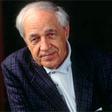
Born in 1925, he studied piano as a boy before moving to Paris in 1942, where he studied at the Paris Conservatory with Messiaen, Andrée Vaurabourg, and René Leibowitz. In 1946, he became music director of the Renaud-Barrault Theatre Company, founding 7 years later the contemporary music concert series at the Petit Marigny Theatre, which became renown as the influential Domaine Musical.
During the late 1950s, he gave courses at the progressive Darmstadt summer school and then at Basle University , while continuing his work both as composer and conductor. He was a visiting professor at Harvard University in 1962-63 and, in 1976, was appointed professor at the Collège de France, a post he held until retirement in 1995.
In 1967, Mr. Boulez became principal guest conductor of the Cleveland Orchestra, later accepting the positions of chief conductor of the BBC Symphony Orchestra and music director of the New York Philharmonic. One year later, in 1972, he accepted the invitation by the French President to create and direct the Institut de Recherche et de Coordination Acoustique/Musique (IRCAM), the computer-music research center in Paris. And he then founded the Ensemble Intercontemporain.
Widely regarded as one of the leading interpreters of the Second Viennese School composers-Schoenberg, Berg, and Webern-he also performs and records much Wagner, Mahler, Stravinsky, Bartók, Debussy, Ravel, and Messiaen. He has conducted Parsifal and The Ring in Bayreuth , Bartók's Duke Bluebeard's Castle at the Aix-en-Provence Festival, and an award-winning Pélleas et Mélisande in Cardiff . Until 2002/2003 Pierre Boulez held The Richard and Barbara Debs Composer's Chair at Carnegie Hall where he conducted an exclusive series of concerts with the Ensemble Intercontemporain.
A renowned composer, music theorist, and teacher, much of his influential writing is available in English, including Boulez on Music Today(1971), Notes of an Apprenticeship (1968, republished in a new translation in 1991 as Stocktakings from an Apprenticeship), and Orientations(1981).