State Grants Waiver Allowing Black to Serve as Schools Chancellor
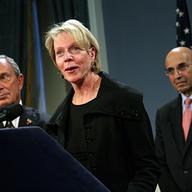
State Education Commissioner David Steiner has granted a waiver allowing Hearst Magazines chair Cathie Black to serve as the city's next schools chancellor.
The 12-page decision notes that under state law, candidates for a school superintendent's post who lack specific education credentials can be granted exemptions by the education commissioner if they have "exceptional training and experience."
With respect to Black, Steiner wrote that there are many strengths in her leadership experience "that would qualify her for certification in these challenging times."
He added, "Throughout her extraordinarily successful career in publishing spanning more than 40 years, Ms. Black has demonstrated superb leadership vision and managerial skill."
Steiner also said Black had demonstrated "a skill critical to the Chancellorship, namely the ability to lead a large multi-faceted organization confronting enormous challenges and complexities." He called her an "effective communicator able to engage diverse stakeholders towards implementation of her vision." And he said she has "substantial experience with managing limited resources and making difficult financial decisions."
Steiner's decision was made after Mayor Bloomberg amended his request to appoint Black by adding a chief academic officer to work on all matters of education policy and instruction. Steiner had indicated he would not approve of the unconventional choice of chancellor without this new position. An advisory panel he assembled voted down the mayor's initial request for a waiver last Tuesday.
The commissioner seemed pleased with Black's proposal to elevate deputy chancellor Shael Polakow-Suransky to the new position. Suransky has 15 years experience in the city schools and is currently working on ways to implement new state standards in math and reading. He also leads the department that provides A-through-F letter grades to the city's more than 1600 public schools.
Steiner wrote that Polakow-Suransky "has a distinguished record of teaching and leadership service" and possesses "deep knowledge and experience in the areas of curriculum and instruction" -- areas lacking in Black's own resume. He also noted that despite supporting diversity initiatives as a Trustee at the University of Notre Dame, IBM and Hearst, Black's own record "lacks specificity" about her understanding of "the needs of diverse student populations and communities in the public school setting."
Mayor Bloomberg issued a statement saying Steiner's decision "was the right one for our kids and our schools." He called for putting politics aside in the interests of the children, and said she would be meeting with parents, teachers and elected officials and community leaders in the weeks and months ahead.
The decision followed weeks of controversy over the mayor's pick of such an unconventional chancellor. A group of teachers and parents organized an online petition opposing Black that was signed by more than 13,000 people. Several state and city politicians spoke out against Black, saying she wasn't qualified. But Black was supported by many business leaders who praised her leadership and by three former mayors who said it's the mayor's right to pick the chancellor.
Meryl Tisch, chancellor of the State Board of Regents, said she hopes critics of Black's appointment back down. Some have said they want to explore legal actions.
"If you care about the families who are served by the system and the communities in which these schools operate, then you would have wanted to have drawn to as rapid a conclusion as possible," Tisch said.
Although the mayor ultimately got his way, political observers say his reputation was tarnished by the fight. They say Black is starting her job having to convince the public that she's really right for the job. Pedro Noguera, a professor of sociology and education at New York University, says Black's credibility suffered because of the controversy over her experience.
"It would really help if the mayor would allow Ms. Black to speak to the public," he said. "And start speaking publicly about what she sees, what her vision is, how she will approach some of the challenges facing the schools."

WNYC is funded by sponsors and member donations