Shrink the Second Avenue Subway? Not so Fast, Say Mayor and Lawmakers
Mayor Bill de Blasio and about a dozen state and city lawmakers are putting pressure on the MTA to restore funding for the Second Avenue subway.
The MTA slashed $1 billion from its capital budget for the project last week, an amount that would have paid for digging the tunnel north from the Upper East Side to 125th Street in East Harlem. The agency said the decision was a practical one because it would not have been able to award that contract within the capital program period, which ends in 2019.
Last week, de Blasio reluctantly accepted the MTA's rationale for the cut. But on Tuesday, he revised his position.
"We were all surprised to hear some of the changes around the Second Avenue Subway, and I think that’s a conversation that must continue," he said. "I think that has to be reconsidered to make sure that everything is being done to move phase two — despite the challenges and the complexities — to move phase two as quickly as it can be done."
City Council Speaker Melissa Mark-Viverito, unaware of the cut when she was asked about it last Thursday, also came out against it.
"It’s not acceptable," Mark-Viverito, who represents East Harlem, said. "We’ve been talking. I’ve got some next steps.”
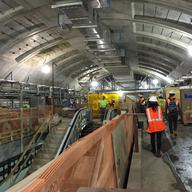
The first segment of the Second Avenue Subway, which runs from Midtown to the Upper East Side, is fully funded and is scheduled to open at the end of next year. The MTA last week left untouched another $535 million that will be used in the coming four years for preliminary work on the second phase. On Tuesday, in response to calls to restore more funding, MTA Chairman Tom Prendergast said the agency would do as much as possible.
"We have committed that if we can speed up the schedule to begin tunneling the East Harlem phase sooner, we will pursue a capital program amendment to do so," he said in a statement.
At a separate news conference Tuesday at 96th street and Second Avenue — where the first segment of the line would end — about a dozen state and city lawmakers also voiced their disapproval for the move.
"What we're asking for is the relief that this community deserves," said State Assemblyman Robert Rodriguez, a Democrat who represents East Harlem. "The economic opportunity, the transit equity, and to make sure that we don't stop at 96th Street, that we keep going north."
The MTA Capital Program Review Board, a panel made up of members appointed by the legislature as well as by the governor and mayor, is expected to vote on the MTA's capital budget later this month. Lawmakers expressed hope that they could restore funding before then.
"The MTA has an awful lot to get through before they actually see the approval of their MTA capital plan in a budget vote," state Sen. Liz Krueger, another Democrat from the area, said.
State Assemblyman Keith Wright, a Harlem Democrat who sits on the capital program review board, did not attend the news conference. But he said through a spokeswoman that he would consider his veto power "if the capital plan shortchanges northern Manhattan residents."

WNYC is funded by sponsors and member donations