Bad Boys of Modern Music
Evening Music | May 6, 2010
One of them was so far ahead of his time that his masterwork created riots in Paris and New York (and no it’s not Stravinsky!). The other was a controversial figure who is chiefly remembered for his orchestral arrangements of English folk music. One of them settled into a comfortable living writing film music. The other one had his notorious life made into a film. Tonight we celebrate the birthdays of two of the “bad boys” of modern music...
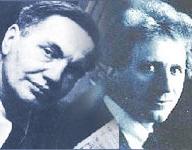
Born within twenty years of each other (on today’s date), composers George Antheil and Percy Aldridge Grainger both led interesting and controversial lives. We’ll begin our evening with Percy Grainger’s “In a Nutshell Suite,” a combination (and re-orchestration) of four of his folk music–inspired works. Simon Rattle and the City of Birmingham Symphony Orchestra do the honors. Although Grainger is known mostly for cataloguing and arranging English folk music, he was in actuality quite an innovator in his music, being the first composer to use mechanical taped sounds; introducing jazz and improvisatory elements into his music and experimenting with orchestral forces. His personal life was rather unusual as well, due to his unusually “close” relationship to his mother, his interest in sadomasochism and his eventual suicide in 1961 (the biographical film “Passion”, about Grainger’s life was released in 1999).
Our other birthday celebrant, George Antheil, started his career as one of the first notable innovators in 20th Century music, but eventually ended up as a composer of Hollywood film scores. His interests reached far and wide (he even received a patent in 1942 along with Hedy Lamar for a way to broadcast secret messages on radio that many years later became the basis of today’s wireless networks). The self-proclaimed “bad boy” of modern music, his “Ballet Mécanique” (1924) was written for a percussion orchestra of three xylophones, four bass drums, and a tam-tam; two "live" pianists; seven electric bells, a siren, three airplane propellers; and 16 synchronized player pianos. It proved so controversial at its 1926 premiere that it wasn’t performed in its full orchestration again until 62 years later, in 1989. Later on tonight, we’ll hear a “recreation” of that infamous moment in musical history as Maurice Peress leads the New Palais Royale Orchestra (and other required resources, including airplane propellers) in a performance of the original version. Put up your tray tables and fasten your seatbelts; it’s going to be a wild ride!
Born within twenty years of each other (on today’s date), composers George Antheil and Percy Aldridge Grainger both led interesting and controversial lives. We’ll begin our evening with Percy Grainger’s “In a Nutshell Suite,” a combination (and re-orchestration) of four of his folk music–inspired works. Simon Rattle and the City of Birmingham Symphony Orchestra do the honors. Although Grainger is known mostly for cataloguing and arranging English folk music, he was in actuality quite an innovator in his music, being the first composer to use mechanical taped sounds; introducing jazz and improvisatory elements into his music and experimenting with orchestral forces. His personal life was rather unusual as well, due to his unusually “close” relationship to his mother, his interest in sadomasochism and his eventual suicide in 1961 (the biographical film “Passion”, about Grainger’s life was released in 1999).
Our other birthday celebrant, George Antheil, started his career as one of the first notable innovators in 20th Century music, but eventually ended up as a composer of Hollywood film scores. His interests reached far and wide (he even received a patent in 1942 along with Hedy Lamar for a way to broadcast secret messages on radio that many years later became the basis of today’s wireless networks). The self-proclaimed “bad boy” of modern music, his “Ballet Mécanique” (1924) was written for a percussion orchestra of three xylophones, four bass drums, and a tam-tam; two "live" pianists; seven electric bells, a siren, three airplane propellers; and 16 synchronized player pianos. It proved so controversial at its 1926 premiere that it wasn’t performed in its full orchestration again until 62 years later, in 1989. Later on tonight, we’ll hear a “recreation” of that infamous moment in musical history as Maurice Peress leads the New Palais Royale Orchestra (and other required resources, including airplane propellers) in a performance of the original version. Put up your tray tables and fasten your seatbelts; it’s going to be a wild ride!