The Music of Gabriel Fauré
Evening Music | May 6, 2010
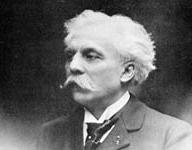
The music of Gabriel Fauré begins and ends this evening’s music programming. The lovely “Papillon,” played by cellist Heinrich Schiff and pianist Samuel Sanders starts us off.
The high spirits and humor that characterize Hugo Alfven’s “Midsummer Vigil” delineate its programmatic content, which tells the story of a bunch of young people on their way to a midsummer dance. Drinking, brawling, and dancing vie with the romantic theme of a couple stealing away for some private moments of love before they return to the dance. Perhaps that couple is a portrait of Hugo and Maria, the woman with whom he had just fallen in love before sitting down to composed this Swedish Rhapsody No. 1. Neeme Jarvi conducts the Royal Stockholm Philharmonic.
César Franck’s “Variations symphoniques,” played this evening by pianist Jorge Bolet and the Concertgebouw Orchestra under Riccardo Chailly, is a product of the composer’s later years, one in which his musical mastery and invention is on display in an unbroken swirl of varying moods.
Fauré’s “Cantique de Jean Racine,” written for a school competition when he just twenty, was dedicated to Cesar Franck. More than just an exercise, it demonstrates how much the young composer had gleaned from his study of the masters of the past. The text, obviously, is drawn from the writings of Racine.
The high spirits and humor that characterize Hugo Alfven’s “Midsummer Vigil” delineate its programmatic content, which tells the story of a bunch of young people on their way to a midsummer dance. Drinking, brawling, and dancing vie with the romantic theme of a couple stealing away for some private moments of love before they return to the dance. Perhaps that couple is a portrait of Hugo and Maria, the woman with whom he had just fallen in love before sitting down to composed this Swedish Rhapsody No. 1. Neeme Jarvi conducts the Royal Stockholm Philharmonic.
César Franck’s “Variations symphoniques,” played this evening by pianist Jorge Bolet and the Concertgebouw Orchestra under Riccardo Chailly, is a product of the composer’s later years, one in which his musical mastery and invention is on display in an unbroken swirl of varying moods.
Fauré’s “Cantique de Jean Racine,” written for a school competition when he just twenty, was dedicated to Cesar Franck. More than just an exercise, it demonstrates how much the young composer had gleaned from his study of the masters of the past. The text, obviously, is drawn from the writings of Racine.