The Father of Russian Music
Evening Music | May 6, 2010
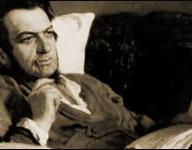
Mikhail Glinka’s “Gran sestetto originale,” which he wrote while staying in Milan, reflects the enthusiasm felt by the “Father of Russian Music” for Italian compositional style.
The Moscow String Quartet is joined by pianist Tigran Alikhanova and double bass player Rifat Komachkov in an exhuberant account of the Glinka “Original Sextet.”
Listening to Beethoven’s Seventh Symphony is an exhilarating experience, since this work is so charged by a persistent rhythmic idea that permeates all four movements and a bright A-Major key that is darkened by alien keys of C and F—but that is musicology talking; Sir George Solti and the Chicago Symphony Orchestra demonstrate to our ears how great a work this is.
Another symphony from almost 30 years earlier, Luigi Boccherini’s Symphony in A, opus 37/4, shows how much Haydn influenced this Italian who lived so much of his life in Spain, and whose Spanish wife regularly received scores for the latest Haydn compositions. Conductor Adrian Shepherd and his group Cantilena elicit all the wit and good humor of this delightful work. Leonard Bernstein and the New York Philharmonic bring us Debussy’s “Jeux,” his last orchestral work, written for a ballet by Nijinsky based on a tennis-party scenario. A tennis ball falls onto the stage, chased after by a young man with his racket at the ready. Two girls appear and begin to dance, watched by the tennis player, who persuades one of the girls to dance with him. The other girl starts to leave, but is caught up by the dancing couple in a whirl of ecstacy that another bouncing ball interrupts. The dancers flee. The music winds down . . .
The Moscow String Quartet is joined by pianist Tigran Alikhanova and double bass player Rifat Komachkov in an exhuberant account of the Glinka “Original Sextet.”
Listening to Beethoven’s Seventh Symphony is an exhilarating experience, since this work is so charged by a persistent rhythmic idea that permeates all four movements and a bright A-Major key that is darkened by alien keys of C and F—but that is musicology talking; Sir George Solti and the Chicago Symphony Orchestra demonstrate to our ears how great a work this is.
Another symphony from almost 30 years earlier, Luigi Boccherini’s Symphony in A, opus 37/4, shows how much Haydn influenced this Italian who lived so much of his life in Spain, and whose Spanish wife regularly received scores for the latest Haydn compositions. Conductor Adrian Shepherd and his group Cantilena elicit all the wit and good humor of this delightful work. Leonard Bernstein and the New York Philharmonic bring us Debussy’s “Jeux,” his last orchestral work, written for a ballet by Nijinsky based on a tennis-party scenario. A tennis ball falls onto the stage, chased after by a young man with his racket at the ready. Two girls appear and begin to dance, watched by the tennis player, who persuades one of the girls to dance with him. The other girl starts to leave, but is caught up by the dancing couple in a whirl of ecstacy that another bouncing ball interrupts. The dancers flee. The music winds down . . .