50 Years After the Riots, a Newarker Looks Back on his Decision to Stay
On July 12, 1967, a black cab driver was pulled over and arrested after passing a double-parked police car in Newark's Central Ward. The white police officers beat the driver, John Smith, before bringing him to the police station, where he was charged with tailgating. When a rumor mistakenly circulated that Smith had been beaten to death, an angry crowd gathered outside the police station and began to throw bottles and rocks at officers exiting the building.
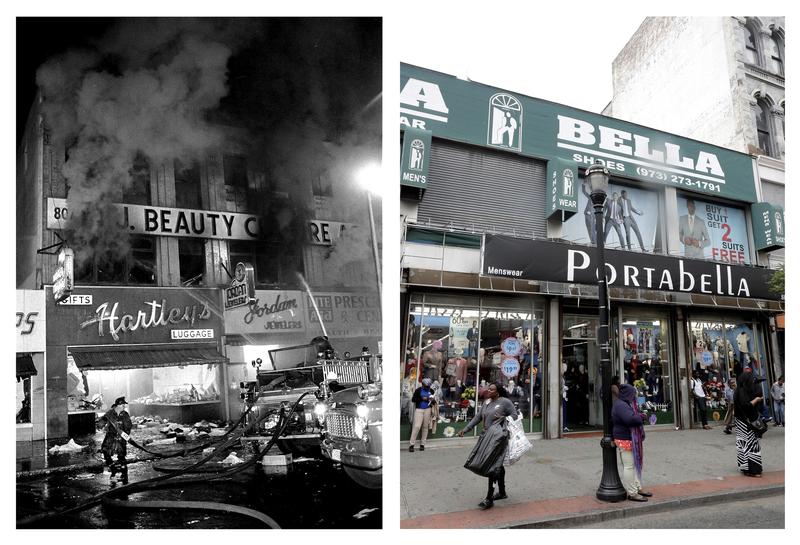
What followed were four days of rioting, looting and violence. The National Guard was called in. When all was said and done, 26 people, mostly black, were dead. More than 700 were left injured and around 1,500 were arrested.
Fifty years later, the impact of the riots is still being felt in Newark. Tens of thousands of people fled the city in the years following the riots, including the vast majority of Newark's white population. What had been a slow-but-steady decline in the city's economic vitality in the post-war years accelerated — and the national media began to portray Newark as a portrait of urban decline through much of the 1970s and 80s.
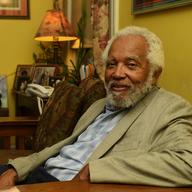
Junius Williams was a young activist and second-year law student when the riots broke out. He moved to Newark just a few years before, after the famed political activist Tom Hayden urged Williams to focus his civil rights organizing efforts in the city.
Williams didn't participate in the riots, but he had what he describes as a near-fatal encounter with police when he and his friends were pulled over while driving around the city on the second night of the riots. Police searched the car, only to find some of William's law books in the trunk.
"[The sergeant] said...let them go, they're law students and even though he was in charge, he had to say it three times," said Williams. "They wanted to kill us. There's no doubt in my mind that they wanted to kill all of us."
Large swaths of Newark burned down that week, but it only made Williams more determined to rebuild and mobilize the community. And Williams didn't just decide to stay, but to raise his family in Newark.
In part two of our series, The Newark Riots at 50, we'll hear from Williams' two daughters, who grew up in the years after the riot, when the crack epidemic took its toll on a rebuilding city.
Click on the listen button above to hear Rebecca Carroll's interview with Williams. Radio producers Joseph Capriglione and Annmarie Fertoli contributed to this report.
The audio version of this story has been corrected to change an error. The officers in the Newark Police Department are not majority white, but the agency is disproportionately white as compared to the population of the city, according to analysis by FiveThirtyEight.com.

WNYC is funded by sponsors and member donations