Afghan Muslim Community Hesitant to Comment on Imam’s Arrest
New York, NY —
As US Marshals fly terrorism suspect Najibullah Zazi to New York City, to face charges of conspiring to blow up bombs, another man caught up in the investigation of Zazi is free on one and a half million dollars bail. Queens Imam Ahmad Afzali faces a charge of lying to authorities investigating the alleged terror plot. Officials believe he may have tipped off Zazi to the probe. WNYC’s Ailsa Chang spent a day in Flushing to find out how the imam’s Afghan Muslim community felt about his arrest. She found few willing to talk.
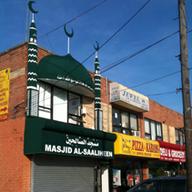
REPORTER: Masjid-al-Saaliheen is a mosque on the top floor of red brick building, next door to a pizza and kabob shop, and across the hallway from a 24-hour car service.
Imam Afzali reportedly delivered Friday sermons at this mosque months before his arrest. I waited outside the door as the first set of evening prayers ended, and asked worshippers as they left if they ever knew Ahmad Afzali. Again and again, people kept telling me they never heard of him, or that they never heard any of his sermons or that they just didn’t want to talk to me.
WORSHIPPER: So kindly, if you wait downstairs, and whatever person is in charge, he will talk to you.
REPORTER: I asked to see the president of the mosque.
WORSHIPPER: Yes, if you wait downstairs, I will direct you to him.
REPORTER TO WORSHIPPER: Oh, so he is here today? Okay, okay, I’ll be downstairs.
REPORTER: No one came to meet me outside. One after another, the worshippers left, dodging my microphone and telling me too many reporters have been hovering around their mosque this week.
WORSHIPPER: Everybody’s coming, the TV people, everybody.
REPORTER: No one at the Islamic funeral home in Woodhaven where Afzali worked wanted to talk either. Or the neighbors there. Or any of the worshippers at another Flushing mosque where Afzali often visited.
KUBY: When something like this happens, there’s a tremendous fear that goes through the community, and the fear manifests itself in silence.
REPORTER: Ron Kuby is Afzali’s defense lawyer.
KUBY: “Don’t say anything. Don’t talk to anybody. Don’t make yourself noticed.”
REPORTER: Kuby says Afzali had tried to set an example for his community after 9/11 by cooperating with law enforcement for years. If you got nothing to hide, he would say, help the authorities. Kuby says that’s why his client contacted Najibullah Zazi, who was charged yesterday with conspiracy to use weapons of mass destruction. Now that the imam’s been arrested for his connection to the case, Kuby says he’s not surprised other Muslims are afraid to talk.
KUBY: Many Muslims don’t trust the authorities, period. It is extremely difficult to breach that gap. And some people have been able to make those inroads, and the imam was one of those people who was able to act as a bridge between these two very different groups with very different traditions and histories.
REPORTER: And now, given what has happened, do you think that trust has been injured?
KUBY: I think that trust has evaporated for anybody who knows anything about this case. And this is why lawyers such as myself always tell my clients, “Shut up.” Don’t talk. Because the more you talk, the more likely it is they will be able to find somebody who says that something you said is a lie.
REPORTER: But Mohammad Razvi doesn’t believe the imam’s case will stop Muslims from cooperating with the police. Razvi is a Muslim activist who’s been a liaison for law enforcement since 2002. He says the Muslim community’s relationship with the police is strong, and the NYPD’s Community Affairs bureau has made a real effort to reach out to Muslims.
RAZVI: I don’t feel this is going to affect the core relationship between the community members and the law enforcement. I think it’s going to bring us back to the table and see how we can better train our members on what are the steps they have to take, they should have taken.
REPORTER: He says the police should have trained Afzali more before they asked him to help. Even Kuby agrees his client could have used a little more direction from the NYPD before they asked him to get information from anyone.
KUBY: He’s not a junior FBI agent who’s graduated from Quantico! He’s not working from a script provided.
REPORTER: But training community sources isn’t enough. That’s what Nicholas Casale says. He’s a retired detective with the NYPD and former deputy director of counter-terrorism with the Metropolitan Transit Authority. Casale says the best way to gather intelligence is not to get more community sources like Afzali, but to integrate more Muslim officers into the NYPD.
CASALE: They know the language. They understand the culture. With the NYPD, they live in the community. They practice the religion. And they have the grit and finesse to get things done. The best source of information comes from the officer or the agent who infiltrates an organization.
REPORTER: Back at Masjid-al-Saaliheen in Flushing, the worshippers say they’re tired of all the people trying to get information this week. Mohammad Dahr says he just comes here to pray, and Afzali’s arrest has re-tainted a community still recovering from the aftermath of 9/11.
DAHR: I feel that we’re being harassed because the people coming here and standing outside like, you know, we’ve done something. So now people are starting to get a little bit, you know, they don’t feel secure. They don’t feel like America belongs to them anymore.
REPORTER: Dahr takes my phone number and says he’ll do his best to get someone from the mosque to call me back. But, he says, no promises.

WNYC is funded by sponsors and member donations