Group Calls Attention to NYC's Speeding Epidemic
New York, NY —
The speed limit on city streets is 30 miles an hour. But you wouldn’t know it watching the cars zoom down Webster Avenue in the Bronx or East Houston Street in Manhattan. A study out today finds 39 percent of drivers regularly speed on certain problem streets, and pedestrians and cyclists are paying the price. WNYC’s Ilya Marritz has more.
NORVELL: 33, 32...
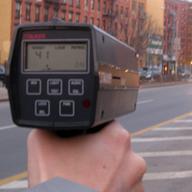
REPORTER: Wiley Norvell from the group Transporation Alternatives is standing on the edge of East Houston Street, pointing a gray plastic traffic gun at the oncoming cars and vans. What he sees in the monitor appalls him.
NORVELL: 45, 35...
REPORTER: A new study by Transportation Alternatives found that speeding is pervasive on those city streets with the highest number of accident, like East Houston Street, with 561 traffic related injuries over ten years.
NORVELL: Not a single car going the speed limit in that entire group.
REPORTER: That’s a pattern Transportation Alternatives found in all five boroughs. Up to 60 miles per hour on Hylan Avenue in Staten Island, where data collectors clocked speeds of over 60 miles an hour, and watched a sedan crash into a tractor trailer making an illegal right turn. But it was this stretch of road that caught their attention.
NORVELL: We were really shocked at what we found on Houston. Turned out to be one of our most dangerous locations in all five boroughs. Fully 70% of drivers going above the speed limit.
REPORTER: Norvell says even cars going just 40 miles an hour are much more likely to kill pedestrians. Paradoxically, the most accidents occur not when traffic is heavy, but when it’s light.
NORVELL: This part of Houston here is actually not a very congested part of Houston. This is where you make great time. If you’ve ever been in a taxicab cutting through the east village at 2 a.m. on a Saturday morning this is your best bet, this is where you can rattle off at 40 or 50 miles an hour.
REPORTER: Which is exactly what cab driver Suryenda Kumar likes about East Houston Street.
KUMAR: If you don’t drive like this, you cannot drive in New York City.
REPORTER: To Kumar this open stretch of road is the taxi driver’s reward for putting up with traffic jams most of the day, and he says cabbies are watching out for pedestrians.
KUMAR: If they see somebody in front of their car they just press brake and stop their car. They how to control their cars.
REPORTER: But neighborhood people like James Rodriguez say crashes happen all the time.
RODRIGUEZ: Car flips, people getting hit by cars, all kinds of things like that.
AUSTIN: I won’t cross here, if I cant help it I don’t.
REPORTER: That’s Roxanne Austin. She says she prefers to cross the street with a crossing guard on duty, even when she’s not picking up her granddaughters from school.
Transportation Alternatives is calling for traffic calming measures, like reducing the number of lanes at intersections. The Department of Transportation has started doing that at several locations in the city.
But Wiley Norvell sees another obstacle to slowing down traffic.
NORVELL: We have no baseline data. Traffic crime in New York City is not monitored.
REPORTER: The Police Department keeps a close eye on the number of violent crimes committed, like burglaries and assaults, but when it comes to traffic violations:
NORVELL: We don’t know the speeding rate in New York City. We only know how many tickets we give out for it.
REPORTER: The Police Department says last year that number was 80,000, and that it brought fatalities down.
Both the Police and Transportation Alternatives support the idea of setting up traffic cameras to record the license plates of speeding vehicles.
But to do that, the city needs permission from the state legislature in Albany, where a bill to allow traffic cameras has been stuck in committee for four years. For WNYC, I’m Ilya Marritz.

WNYC is funded by sponsors and member donations