A Look At New York World’s Fair on its 60th Anniversary
A new exhibition at the Queens Museum marks 60 years since the 1964–1965 New York World’s Fair, and explores its cultural and political legacy. Assistant Director of Archives and Collections Lynn Maliszewski, discusses the new show “A Billion Dollar Dream: The 1964-1965 New York World’s Fair on its 60th Anniversary,” on view through July 13.
WNYC is funded by sponsors and member donations
Top Stories From Gothamist
Congestion pricing takes a toll on South Bronx air quality, report finds
This column originally appeared in On The Way, a weekly newsletter covering everything you need to know about NYC-area transportation.
Sign up to get the full version, which includes answers to reader questions, trivia, service changes and more, in your inbox every Thursday.
The Bronx just can’t catch a break.
A new analysis published this week by Columbia University researchers found that air quality has worsened in parts of the South Bronx near highways since the MTA’s congestion pricing program went into effect in early 2025.
The pollution uptick in the Boogie Down was predicted four years ago in the transit agency’s environmental review of the Manhattan tolls, which warned that truck traffic in the borough could increase as drivers circumvent the congestion charge.
[object Object]But the new study, which is still undergoing peer review, shows for the first time that the tolls may be harming some of the city’s poorest communities.
The Columbia researchers analyzed two years of data from 19 air quality sensors around the Bronx. Four of those sensors, which were near expressways, “exhibited significant increases” in fine particulate matter, according to the study. Two others, including one in a community garden, saw decreases in pollution. The remaining sensors didn’t clock a significant shift in air quality.
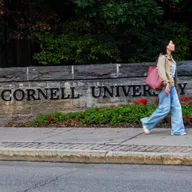
The findings add a wrinkle to a Cornell University study released last year, which found that overall air pollution in the New York City region dropped as a result of the tolls.
“We knew this data was going to be hard to hear,” said David Rosales with the group South Bronx Unite, which has partnered with Columbia University for a decade on air quality research. “Since congestion pricing, air pollution in our community has increased, statistically significantly increased, according to the data.”
The risk of additional air pollution in parts of the Bronx hits hard: The borough’s residents suffer from some of the highest rates of asthma in the country.
After Bronx leaders raised concerns over the tolling program’s potential effect on air pollution, the MTA pledged $70 million in mitigation measures for the borough. The agency provided funding for things like asthma programs and the electrification of diesel-burning refrigeration trucks at Hunts Point Produce Market.
Those initiatives are still being rolled out while the study shows the South Bronx’s air pollution has worsened.
“Mitigation can't be adding a Band-Aid onto a wound that's already infected,” said Rosales. “Right now, people in the South Bronx can't breathe. They're going to the emergency room because of asthma. And so mitigation, in our opinion, doesn't justify burdening our community.”
The drop in air quality is the latest slight to Bronxites.
Subway riders in the borough were miffed last year when they learned the MTA had allocated more than $10 billion to modernize aging subway signals, but none of the upgrades would come to Bronx tracks.
The MTA also snubbed the Bronx four years ago by declining to extend the planned Interborough Express line there, a longtime goal of regional planners.
The MTA’s Penn Access project, which aims to bring Metro-North service to Penn Station along with four new stations in the Bronx, is years behind schedule due to a scheduling feud between the New York transit agency and Amtrak.
MTA officials noted that since congestion pricing went into effect, daily traffic on the Major Deegan and Cross Bronx expressways declined by nearly 10,000 and 11,000 vehicles, respectively. They also blamed last year’s Canadian wildfires for worsening air quality.
The congestion tolls are a boon for the city's transit system. The revenue from the program finances $15 billion in MTA infrastructure upgrades, including the addition of several new elevators at Bronx stations.
MTA Chair Janno Lieber pointed to the program’s positive effect on the city’s overall air quality, and said he was working to help address the air quality concerns in the South Bronx.
“Reducing air pollution has always been one of the core goals of New York’s congestion pricing program,” Lieber wrote in a statement. “The data shows it’s already succeeding, and now we’re taking the next step by using revenues to fund additional improvements for Bronx residents.”
Eric Goldstein, an attorney with the Natural Resources Defense Council, said the findings pushed by the MTA and the Columbia researchers can both be right.
“The overall story of congestion pricing is such an affirmative one in terms of air quality, congestion, pollution and health of the mass transit system,” said Goldstein. “But that doesn't mean that there might not need to be some small mitigation measures added to the South Bronx if in fact it turns out that there are some additional pollution burdens that can be traced back to diversion of traffic through congestion pricing's program.”
NYC transportation news this week
[object Object]The “super speeder” crackdown. New York Assembly Speaker Carl Heastie said state lawmakers have agreed on a deal to require the owner of any vehicle that racks up 16 or more speed-camera tickets in 12 months to install a speed-limiting device in their car. This so-called super speeder measure is expected to be included in a final state budget agreement, which is now five weeks late.
One train from New Jersey to Long Island? The federal takeover of the Penn Station renovation project is opening up the possibility of creating a unified regional transit system.
Free buses for all vs. discounted transit for the needy. The nonprofit Citizens Budget Commission says in a new report that the money required for Mayor Zohran Mamdani’s free bus plan would be better spent expanding fare discounts — on buses and subways — for low-income New Yorkers.
PATH fare hike. The cost of a single ride went up this week, from $3 to $3.25. Bundles of 10 trips, 20 trips or 40 trips on TAPP cards will also cost more, increasing from $2.85 per ride to $3.10.
Now-empty Spirit Airlines terminal. What will happen to LaGuardia Airport’s Marine Air Terminal, the Art Deco masterpiece that security line haters appreciated for its dainty size?
Pedicab enforcement. Midtown business groups are pushing for an overhaul of the city’s pedicab industry in order to protect tourists from being ripped off.
Is Mamdani the city’s first “bike mayor?” He’s not only pushing to expand the city’s network of protected bike lanes — the 34-year-old democratic socialist has also made biking around town a seemingly genuine part of his political identity.
[object Object]Curious Commuter
Have a question for us? Use this form to submit yours and we may answer it in a future newsletter!
Question from Colin in Brooklyn
If I don't have a credit card (or have maxed out my accounts!) but I do have $3 in cash, can I take the train? How does that work now that the MetroCard is gone?
Answer
If you have a physical OMNY card, you can load it up with cash at the new vending machines inside subway stations or at the MTA’s retail partners. The MTA is currently selling physical, reloadable cards at machines for a $1 surcharge. So to ride the subway, you’d need $4. The machines also sell single-use fare cards for $3.50. The long and the short: You’ll need a couple of quarters on top of your $3 cash if you’re paying for a single fare.
Paramount's wartime film shoot to disrupt Manhattan Chinatown traffic on Mother's Day
Mother's Day in Manhattan's Chinatown and the Lower East Side will be busier than usual this year.
Paramount Pictures is staging a film production with military vehicles and prop weapons in Lower Manhattan throughout the day, according to public notices.
People could be stopped on the sidewalk during stunt sequences. There will be traffic diversions at the busy intersection of Bowery and Canal Street, complicating access to the Manhattan Bridge.
A second shoot will happen at the Brooklyn-bound outer roadway, pushing Brooklyn-bound traffic to the lower roadway for at least three hours. And Paramount will hold parking on more than a dozen blocks.
The shoot is scheduled for Sunday from 4 a.m. to 8 p.m., according to the notices, which were posted in English and Chinese on lampposts across the affected blocks.
Separate towing warnings list the name of the project as “Little Falls.” A listing on castingnetworks.com describes the production as a feature film and seeks “military types” for the Mother’s Day shoot.
The plans have drawn concern from some Chinatown residents, who say they were caught off guard by the timing and wartime imagery on a holiday when families typically gather at neighborhood restaurants.
Paramount Pictures did not immediately respond to a request for comment, nor did a locations department contact listed on the flier.
Under city rules, notices for filming don’t go up until about 48 hours before filming. That's meant to help minimize the chance that a shoot will draw larger crowds, according to the Mayor’s Office of Media and Entertainment.
The agency coordinated closely with the production, community stakeholders and city agencies for months to “minimize disruption and ensure the operation is conducted safely and responsibly,” Commissioner Rafael Espinal said in a statement.
“The production has also worked with several local Chinatown businesses and organizations directly as part of the shoot,” Espinal said. “Film and television production supports thousands of New York City jobs and small businesses, and we remain committed to balancing that economic activity with the needs and quality of life of local communities, including being mindful of production concentration in heavily impacted neighborhoods.”
Still, some residents said the plans weren’t well communicated — and they aren’t happy about it.
Susan Lee, a Chinatown community activist and a former candidate for City Council, said she first learned of the shoot Wednesday night through an Instagram post from Explore Chinatown.
She began posting about it on social media and said she heard from neighbors and small business owners who were frustrated by the timing. Lee said three friends told her they were rescheduling Mother's Day plans because of the shoot.
“One of my friends said it best: ‘What, Chinatown has no mothers?’” Lee said. “Why are they doing this on Mother's Day?”
She said she's worried the parking disruptions would hurt local businesses and the military imagery would startle seniors who likely haven’t had more advance warning about the filming.
Lee connected Gothamist with other residents, including a longtime Chinatown physician and a member of a local block association, who shared similar concerns.
Dr. Wah Lee, a physician who has practiced in Chinatown for nearly 20 years and is unrelated to Susan Lee, said he saw the notices outside his building Thursday morning, three days before filming.
He said he and his neighbors are accustomed to film crews using the iconic neighborhood as a backdrop — "Law & Order" shoots regularly nearby, he noted — but the wartime imagery gave him pause.
“I have treated patients that have, you know, gone through World War II, and people from the Vietnam War,” he said. "If they're not sure what's going on, they look out the window and they see a bunch of soldiers and a tank rolling down the street, I'm just concerned for their health and wellbeing."
He also questioned the timing. Families, he said, typically gather at neighborhood restaurants on Mother’s Day, but filming can make getting around difficult.
“They have stop-and-go measures, but I also know that sometimes when they shoot a scene, they can be shooting that scene for quite a while,” the physician said. “The only way to get around there is to really circle an entire block.”
That’s a challenge when you’re walking with “your elderly mother out on a rollator,” he said.
Dorina Yuen, a member of the Elizabeth Broome Block Association, which represents residents near the border of Chinatown and Little Italy, said she also learned about the shoot on Thursday, when it became a topic in her community group chat.
Yuen questioned whether production had given enough notice to a broad enough range of community contacts.
“We're not just a tourist destination but densely populated residential areas,” she said. “For Paramount to close off these major thoroughfares on a weekend is more than enough of an insult, but to do so on Mother's Day … is really a point of disrespect.”
The wartime imagery was particularly troubling, she added, on a day when “families are trying to celebrate happy moments.”
Parking will be held on stretches of Bowery as well as Canal, Elizabeth, Hester, Chrystie, Grand, Broome and Delancey streets, according to the notices.
The first scene is set for Bowery and Canal, with traffic diversions in place. Brooklyn-bound traffic on the Manhattan Bridge's outer roadway will be diverted to the lower roadway between 3 p.m. and 6 p.m. for a second scene.
Early Addition: No more bidding on hot restaurant reservations in Montclair
Good Friday morning in New York City, where the "freeze the rent" crowd has a reason to feel optimistic.
Here's what else is happening:
- The MTA has demoted a safety superintendent who was caught using forged parking placards so he could park outside the transit agency's headquarters.
- There are still a lot of Gilded Age mansions in Manhattan.
- New Jersey Gov. Mikie Sherrill is cracking down on restaurant reservation trading apps, which allowed diners to bid on tables at all the Garden State's hot, buzzy restaurants.
- Not sure if it counts as hot or buzzy, but The Muffins Cafe on the Upper West Side looks like my kind of scene.
- Come on, don't cackle during serious Broadway plays.
- Order some pills off TikTok and find out.
- The pope wears Nikes.
- And finally, waiting patiently:


How to Avoid Sneaky Phishing Scams


Justice for Epstein Victims Through NYS


New Doc Celebrates NYC's Weird and Wild Public Access TV Experiment
WNYC is funded by sponsors and member donations