The Many Lives of Amy Winehouse
Asif Kapadia's Amy won the Academy Award for Best Documentary in February 2016.
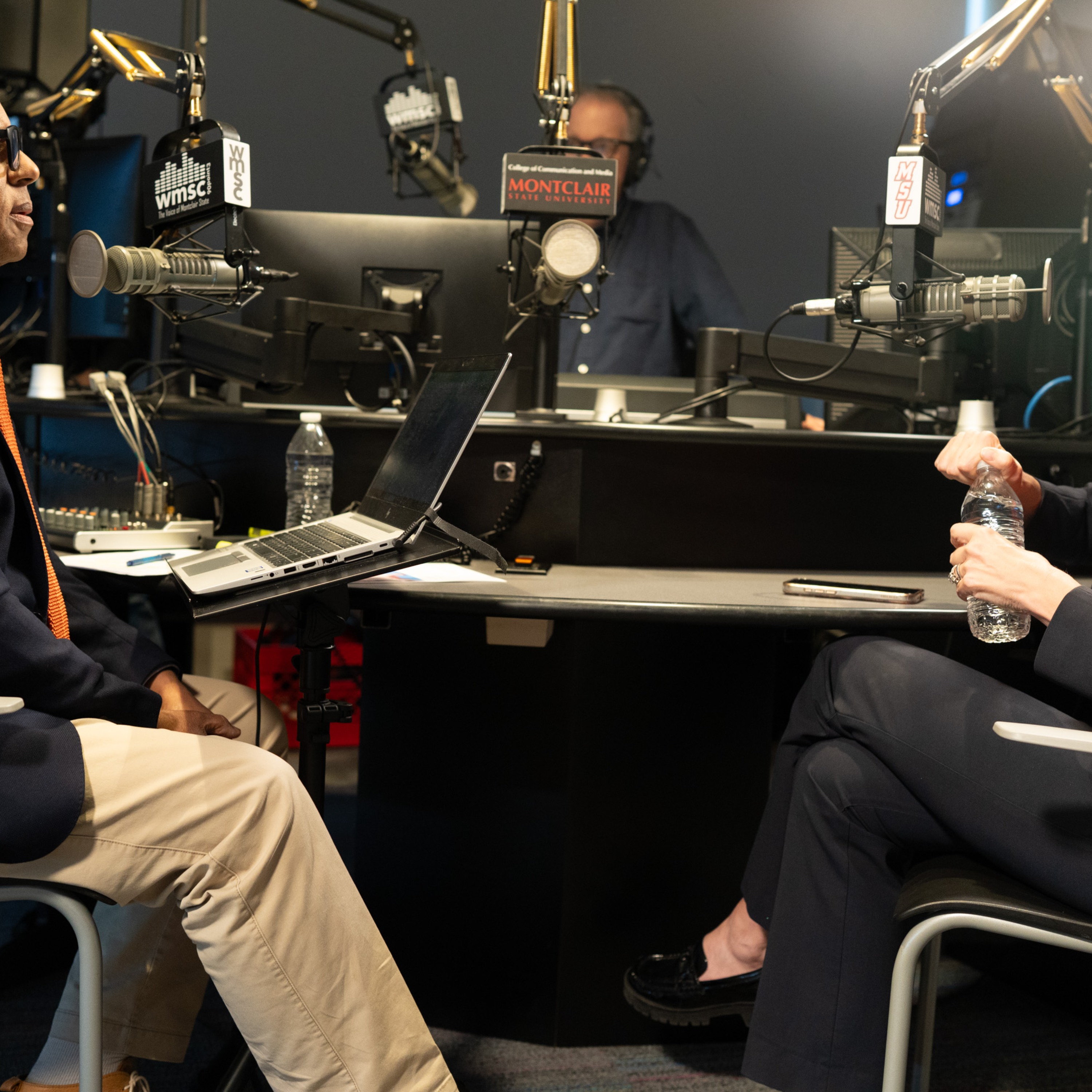
When it comes to celebrity, there is always a person behind the tabloid headlines and late night TV jokes. And, in retrospect at least, the personality (both light and dark) of British singing phenom Amy Winehouse was written right into the lyrics of songs that everyone was dancing along to. The new documentary film Amy explores the story of a young woman caught up in a swirl of outside forces and inner demons, whose life and death exemplifies the dark side of celebrity culture. Soundcheck host John Schaefer talks to Asif Kapadia, the film's director, and Nick Shymansky, Amy’s close friend and first manager, about the singer's private life and public legacy.
Interview Highlights
Nick Shymansky on meeting Amy Winehouse:
I met her when she was 16 years old and I was 19. I had heard her through an artist I was managing. He told me about her and I chased her and eventually got her on the phone which led after quite a few conversations to her posting me a demo tape.
Amy Winehouse on fame:
My music is not on that scale. Sometimes I wish it was but I don’t think I’m going to be at all famous. I don’t think I could handle it. I probably would go mad. You know what I mean, I would go mad
Shymansky on Amy’s ambition:
She had ambitions to make great music and be around musicians and play shows. She wasn’t ambitious to make lots of money and be famous, that was never her drive. Maybe in hindsight it’s more obvious now that that was the case. At the time there were never questions about, “How do I get famous, how do I make money?"
Winehouse on depression:
I don’t think I knew what depression was. I know I felt funny sometimes and different. I think it’s a musical thing, that's why I like music. I’m not like a totally messed up person. There’s a lot of people who suffer from depression who don’t have an outlet like me, where you can pick up a guitar for an hour and feel better.”
Asif Kapadia on her songwriting:
Once you understand her life and the story, you realize every song, every lyric is based on a real person, a real incident and it’s her documenting her life. Every now and then there’s a twist, a line of humor but it’s all based on truth. That’s why it was so heavy to sing these songs later on. It was all her, it was a diary. These albums are her diary and this film is trying to visualize her diary.
Kapadia on Amy’s Bulimia:
It seems so obvious now to see how her body changes. I don’t think it was well known. Toward the ending I remember reading an article where her brother mentioned it. But lots of people had witnessed it separately, but they weren’t talking. People were all in separate little compartments. I think in the end her doctor was telling me, it was the longtime bulimia and alcohol that stopped her heart, and that’s why she died.
Kapadia on talking to Blake Fielder, Amy’s husband:
All of these guys are actually much older than their years because of what they put their bodies through. You hear someone who’s done quite a lot of damage to his voice because of drugs and other things but there’s also a lot of guilt, a lot of pain in the voice as well. He’s not the same person now as he was then. They’re grown up now. They were kids then, they were 22, 23. You think the world revolves around you, you’re an idiot, you’re a kid. And you grow up and you think, "What was I doing?" But somehow everyone got through it and the only person who didn’t was Amy.