Artistic, Ambitious and Addicted
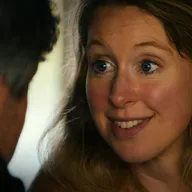
Iranian-American novelist Porochista Khakpour is accomplished at 36 — she is the author of two novels, her essays are often published in The New York Times and she is a writer in residence at Bard College. But for three years, she was addicted to prescription drugs.
“I took Xanax, Ativan, Klonopin, Restoril, Ambien, Lunesta, you name it, I took,” she said.
These are Benzodiazepines, or benzos. They are often used to induce sleep and reduce anxiety. The pills were prescribed to Khakpour by different psychiatrists starting in 2006, as she was struggling with insomnia and depression. The pills made her sleep a bit better, but it created other problems.
“I never felt like writing. I just felt numb, I felt I could barely breathe, barely chew my food, and barely walk across the street,” she said. “I was snorting Ativan in bathrooms at events sometimes and it wasn't like that pop culture of snorting cocaine at a wild party. It was this really sad, desperate thing.”

The deaths of actors Robin Williams and Philip Seymour Hoffman earlier this year linked to drugs and alcohol re-surfaced the question of why artists struggle with substance abuse. Contrary to popular belief, scientific studies say drugs don't increase creativity. But doctors and former addicts say because artists usually work alone, and deal with high pressures to create, they often struggle with emotional issues and substance abuse.
Since she was a child, Khakpour would isolate herself to read and write. She believes that solitude contributed to her depression. And depression probably impacted her addiction, according to Carl Hart, associate professor of psychology at Columbia University.
“When we think about the vast majority of the people who are addicted, many of them have co-occurring psychiatric illness,” he said. “Anxiety, depression, schizophrenia, and wide range of other psychiatric illness and that certainly play a role in their addiction.”
Artists, especially performers, also turn to drugs and alcohol to help them cope with a competitive environment and high expectations, according to Harris Stratyner, a clinical associate professor of psychiatry at Mount Sinai school of medicine who has treated addicts for many years.
“It's very anxiety provoking to perform in front of an audience. To have to travel, to deal with the loneness that an entertainer deals with,” he said. “Using drugs and alcohol might just be a way to deal with the loneness, to deal with the pressure of trying to stay on top.”
Simon Kirke, who was the drummer for the British band Bad Company, agrees. “With any creative artist whether it's a musician, a painter, an actor, whatever he creates as an artist, there is a desire to succeed, to please in a way,” he said.
Kirke was addicted to cocaine and alcohol for many years. He is now a volunteer with Road Recovery, an organization that places artists to work with kids who struggle with addiction. The founder of Road Recovery, Gene Bowen, used to be a tour manager and is a former addict himself. He says artists can speak candidly about an issue that affects many.
“We tried prohibition, and we couldn't do it. You know, by nature, none of us want to feel pain. So we all want to escape it. And we all chose different ways of escaping it,” he said.
Harris Stratyner explained even though it’s true that many artists struggle with substance abuse, they also get more public and media attention than others.
“We don't hear about the lawyers I see, or the physicians I see, or the wall street investors, myriad executives that I see who are addicted to drugs and alcohol.”
782 people died of an overdose in New York City last year. According to the city, that number has grown for three consecutive years. But many addicts recover too. Writer Porochista Khakpour was able to quit her addiction to benzodiazepines through the help of other addicts she found in chat rooms. Now, she won't even take a Tylenol. She says she would rather feel the pain, which is something she couldn't handle before.
“I had to sort of be perfect. I don't have that perfectionism anymore, which I think is something that comes with addiction,” she said. “That is why you do see some very high performing people and artists specially addicted too, because they have so incredibly high standards, they are not in competition with other people, they are in competition with themselves.”
Khakpour is now writing again, and she is turning her experience with addiction into a memoir.

WNYC is funded by sponsors and member donations