Asylum-Seekers Linger Longer Behind Bars
By Mallory Moench
The night that an anti-gay mob burned a man to death on a street corner in Togo, Hafizou Issifou knew he had to flee his homeland, where homosexuality is illegal. The news came from his sister, who texted him a picture of the victim: I think it was your boyfriend, Razak, she wrote. Then Issifou heard that his uncle wanted to kill him as well. He hid in a friend’s house for a year until he received a U.S. tourist visa.
Issifou arrived at JFK airport on March 6 and asked for asylum. Authorities sent him to Elizabeth Detention Facility in New Jersey — where he slept in a room with 43 other detainees for five and a half months, working in the kitchen for a dollar a day, not able to go outside.
A volunteer attorney explained to Issifou that he was eligible to apply for parole under Department of Homeland Security (DHS) policy. He applied in May, but was denied a month later without an interview or an explanation.
“I was completely desperate,” 28-year-old Issifou said in a recent interview. “I knew I couldn’t go back, because I knew that if I went back, they were going to kill me.”
Amid President Trump’s crackdown on immigration, it’s become increasingly difficult for asylum-seekers to be released from detention on parole while their cases are being decided, report attorneys representing detained asylum-seekers in New Jersey and New York.
Issifou’s attorney, Lauren Major, who works for the non-profit American Friends Service Committee, said that all seven of the applications she has filed so far this year on behalf of detainees at the 300-bed detention facility in Elizabeth have been denied.
Major said she lacks the resources to file applications on behalf of another 20 clients, but has little expectation they would fare any better.
"It appears to be futile to apply for parole,” Major said.
Major’s experience follows a national trend since Trump took office, according to advocates. ICE — the federal Immigration and Customs Enforcement agency which oversees parole requests – releases only scant data regarding denials, and the agency was sued last year for failing to respond to Freedom of Information requests. But non-profit organizations have cobbled together statistics from surveys.
A September 2017 report by Human Rights First documented a nationwide drop in parole grants for asylum seekers, including in New York and New Jersey where many asylum requests originate. New York received 11,716 asylum applications in the first six months of 2017 – the second highest number in the country after Miami, with Newark not far behind.
Existing immigration law, bolstered by a 2009 memo issued by the Obama administration, states that asylum seekers are automatically entitled to consideration for parole and eligible if they meet certain criteria. But immigration attorneys say that’s no longer the case.
The current crackdown, advocates report, began with Trump’s executive order on immigration in January, which directed ICE to “end the abuse of parole and asylum provisions.” Parole should only be granted for “urgent humanitarian reasons or a significant public benefit,” the order stated.
A month later, John Kelly — then Secretary of Homeland Security and now White House Chief of Staff – doubled down on the president’s order, issuing a memo stating that “such authority should be exercised sparingly.”
In a hearing before the U.S. Supreme Court this month in the case of Jennings v. Rodriguez, attorneys for the government insisted that eligible asylum-seekers are still automatically considered for parole. Advocates say the reality in detention centers is markedly different.
This summer, the New York Civil Liberties Union filed a lawsuit challenging the parole denial of two detainees in Buffalo Federal Detention Facility in Batavia, one of seven facilities in New York state. According to ICE data obtained in the lawsuit, 88 percent of parole requests were granted in Batavia in 2015. In the one-month period from Dec. 16, 2016 to Jan. 20, 2017, the rate fell to 50 percent. But after Trump’s inauguration until July, it plummeted to 12 percent.
Under the law, asylum-seekers who arrive at U.S. borders or airports must pass an interview to prove they have a credible fear of persecution if forced to return to their home country. According to government reports, 6,922 asylum seekers passed this interview in the first five months of 2017.
Those who pass this hurdle are eligible for parole if they can prove their identity, promise they’ll show up for immigration court, and fall into one of several categories, including a serious medical condition, pregnancy, or if they can demonstrate that their release is in what ICE terms ‘the public interest,’ meaning they aren’t a danger to the community.
ICE officers review each case, and a vast majority of previous requests – 97 percent in the most recently available data from 2009 – were granted in the public interest.
Those rules, however, advocates say, are no longer being followed. At the 650-bed detention facility at Batavia, 32 asylum seekers who passed their credible fear interviews this year were all denied parole, according to documents ICE submitted in court.
“All the steps under the 2009 parole directive were no longer adhered to as of the end of January,” said Paige Austin, an NYCLU attorney on the case. “People were not advised about parole, not interviewed about parole, some people not considered for parole, and the vast majority we spoke with were given no explanation for why they were denied parole.”
After NYCLU filed the lawsuit, the two plaintiffs were released. Batavia’s total parole grant rate climbed back up to 45 percent, according to data that ICE submitted to court at the beginning of September. Since then, NYCLU has submitted statements from 11 more detainees who were denied parole, and two others who were never considered for release.
One of these was 29-year-old Saikou Touray, who fled political violence and police beatings in his native Gambia in June 2016. He stayed in neighboring Senegal for six months before flying to Ecuador and journeying through central America to cross into the U.S. in December 2016. Arrested at the border and detained for a month in Texas, he was transferred to Batavia on January 25 — two days before Trump signed his executive order.
Touray has been deaf in one ear since childhood and suffers pain in the other. He said one doctor who saw him while he was in detention recommended surgery, but Touray was unable to see a specialist for the ailment. If left in detention, he feared he would become totally deaf.
Touray applied for parole in March. A month later, he was denied without explanation. He said he asked the ICE official handling his case the reason for the denial. “He said there’s no parole in Buffalo,” Touray recalls.
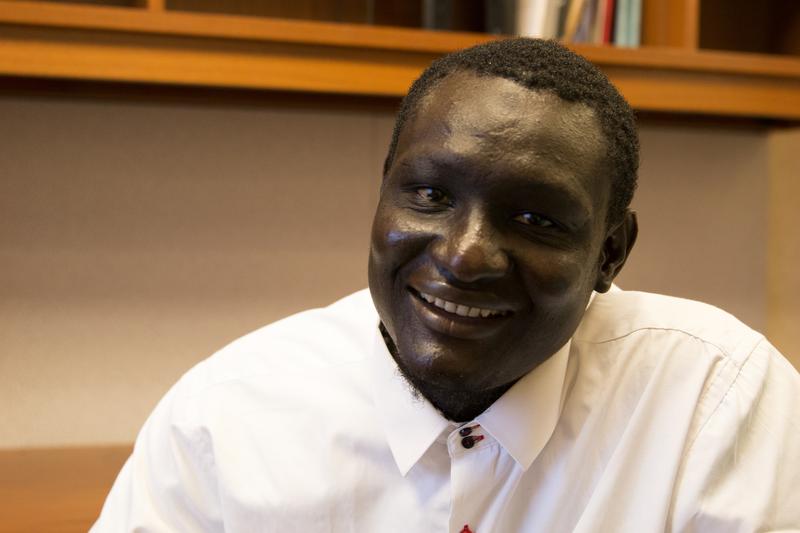
It wasn’t until after Touray filed an affidavit in the NYCLU lawsuit that he was paroled and released on Oct. 6. The letter he received from ICE said that his detention was no longer in the public interest – one of the most common reasons for release.
Touray’s case, attorneys say, exemplifies how Kelly’s memo has affected parole policies for asylum seekers.
“This directive tells people, go ahead, within the pendulum of discretion, you can now exercise it on the harsh end,” said Stacy Caplow, an immigration attorney and associate dean at Brooklyn Law School. “They can’t say no one’s entitled to parole because the statute allows it, but they say it can be exercised sparingly, and once you say that, they’re going to do it.”
The government has argued in court that the case should be dismissed since the two original plaintiffs have been released and that, under law, parole is granted on a discretionary case-by-case basis. Khaalid Walls, spokesperson for ICE in Buffalo, declined to comment about current parole policies, citing the ongoing lawsuit.
Denying parole cuts asylum-seekers’ chances of winning their cases in half, according to a 2016 report by the American Immigration Council. A major obstacle, attorneys explain, is that those who are detained lack access to documentation, the internet and affordable communication. A two-minute phone call in Batavia, detainees report, costs $5 — the total weekly income for a detainee who works for $1 a day inside the facility.
In addition to limiting medical care, prolonged detention can also trigger the same type of trauma that asylum seekers had sought to escape, attorney Austin said. One Somali detainee, she said, received the news that his sister died in the Mogadishu bombing on Oct. 14 — a tragedy he had to bear alone while still arguing his asylum case. Another Batavia detainee, who had been jailed and tortured as a political prisoner in Cuba, found himself reliving past traumatic experiences.
The government also now offers less information about reasons for denials, attorneys say. Prior to Trump’s executive order, detainees received a denial letter with one of several reasons checked. Since then, ICE has substituted a two-line letter that does not state a specific reason - leaving asylum-seekers in the dark about what was missing from their application, according to the attorneys.
While NYCLU was litigating to release Batavia detainees, an immigration judge in New Jersey set Issifou’s court date for Aug. 22. He said he was so scared that he was hospitalized twice and given medication to lower his heart rate. But the same day, the judge granted him asylum and he walked out of Elizabeth Detention Facility a free man.
“It felt like heaven. I was finally free, and I’ve never been so happy in my life,” Issifou said. “That was the best moment of my life.”
He moved in with a friend from Togo in the Bronx and now works in a midtown Manhattan bakery. When he gets his green card, he said, he wants to enter the Marines to thank the U.S. for giving him freedom. But he added that he still thinks about his former fellow detainees who, denied parole in their own cases, remain behind bars.
Hafizou Issifou’s interview translated from the French by Blanche Vathonne