Beyoncé, Taylor Swift and the F-Word
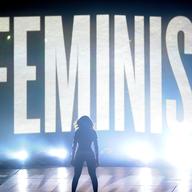
Feminism is having a pop culture moment, and some of the music industry's top performers are leading the way. After years of disavowing the term, Taylor Swift finally embraced the movement in an interview with Maxim magazine in 2015. Beyoncé's performance at the 2014 VMAs — during which she stood in front of a screen emblazoned with the word "feminist" and played an excerpt from Nigerian novelist Chimamanda Adichie's TEDx talk "We Should All Be Feminists" — was one of her most visible statements on the issue to date. Three years earlier, she had released the unabashedly declarative "Run the World (Girls)," a song with such a powerful message of female empowerment that even A-list actor Channing Tatum felt inspired to co-sign with a lip synch performance of his own. Although appropriately celebrated for these moments, Swift and Beyoncé are not the only female singers in recent years to have embraced feminism with their artistry.
Over a decade before Beyoncé proclaimed that girls "run the world" or quoted Adichie in her song "Flawless," Madonna's "What It Feels Like for a Girl" featured Charlotte Gainsbourg, in an excerpt from The Cement Garden, articulating the stark disparity between how boys and girls are perceived. A prospective anthem for modern-day feminists, the song is a grossly discomforting reminder that for all the strides women have made, we still live in a world that frequently — and often, subtly — attempts to undermine our confidence, sense of self, and right to self-determination. The lyrics expertly dissect a society that often forces women to choose between getting what we want in life and giving in to gendered expectations, between being who we want to be and being liked.
On the eve of the Iraq war in 2003, when Natalie Maines of the Dixie Chicks made disparaging remarks about then-president George W. Bush, the group was publicly shamed. It isn't uncommon for artists to make controversial remarks; however, for the Dixie Chicks the backlash that followed was swift, mean and gendered. The country music trio received death threats and were called the "Dixie Sluts" and "stupid broads." Unfortunately, their experience is not an outlier.
In an episode of This American Life, the comedian and writer Lindy West recounted in horrifying detail the online threats she received when she dared to speak out about male comedians' frequently flippant use of rape jokes as comedic material. Studies have shown that when women speak our minds — especially online — the backlash is demonstrably more harsh, evidenced by the disproportionately more severe types of harassment that we receive relative to our male counterparts. And there is a reason for this. The threats, name-calling and harassment, of the kind experienced by both West and the Dixie Chicks, serve the dual purpose of attempting to shut us up and also put us back in our place. In "Not Ready to Make Nice," their first single released after the controversy, the Dixie Chicks fired back and proclaimed they would not just "shut up and sing," but would continue to voice their opinions.
In 2003, Christina Aguilera took aim at society's difficulty in accepting behavior from women that does not adhere to traditional gender norms, when she released "Can't Hold Us Down" featuring Lil' Kim. With lyrics that addressed the double standard that leads to "slut-shaming" and the cultural expectation for women to "be seen [and] not heard," Aguilera highlighted the contradiction in how an individual's behavior is received depending on his or her gender.
This contradiction is especially harmful when it pertains to women in the workplace and leadership roles. Marianne Cooper, a sociologist at the Clayman Institute for Gender Research at Stanford University and lead researcher for Lean In: Women, Work, and the Will to Lead, references numerous studies that show that "high-achieving women experience social backlash because their very success — and specifically the behaviors that created that success — violates our expectations about how women are supposed to behave." Female leaders who engage in similar behavior as men in the workplace — i.e., not conforming to gender norms or as Cooper puts it "acting authoritatively" — are "disliked much more than men."
This cultural double standard may seem trivial when we're talking about song lyrics, but it has real-world consequences. According to recent data, in 2015 there were only 24 elected or appointed female presidents, prime ministers or heads of state holding office worldwide, and only 5% of companies in the Fortune 500 were run by women. In the United States, a woman has yet to shatter the highest glass ceiling by being elected President, and although the 114th Congress consists of a record number of women, they still make up only 19.4% of the entire governing body.
It remains to be seen if this new brand of pop culture feminism can shift these statistics. Swift and Beyoncé have firmly embraced feminism, but they have yet to demonstrate an ability to advance the movement in new and substantive ways. It may be the truest test of their star power. For now, as much as we might want Beyoncé's "Run the World" to be a feminist anthem, it is unfortunately a reminder of how far we still have to go.

WNYC is funded by sponsors and member donations