A Critic Looks at Calatrava's PATH Station
To see whether the new World Trade Center Transportation Hub was worth the $4 billion it cost to build it, WNYC Host Richard Hake sought a professional's opinion: he took a tour of the station the day after it opened with Alexandra Lange, architecture critic for Curbed and author and co-author of several books on architecture and design.
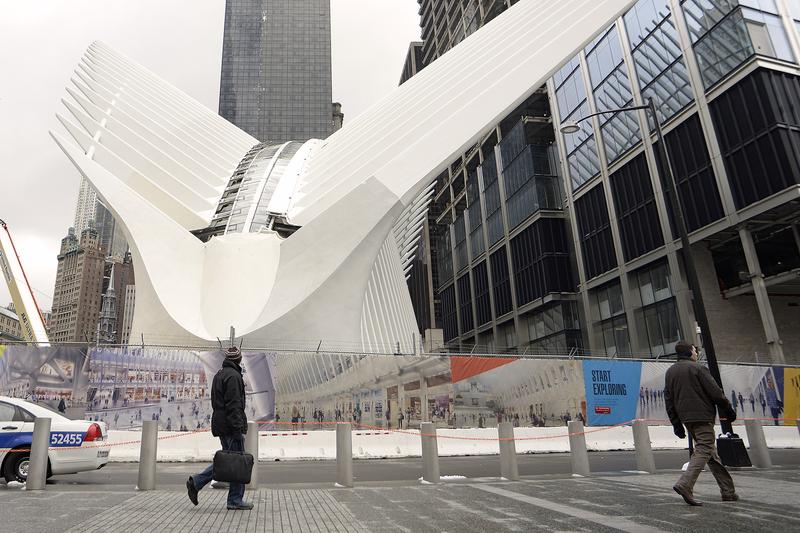
Her first impression was favorable. Starting on Church Street, on the station's east side, she noticed the tips of what architect Santiago Calatrava considered bird wings (but which critics have derided as a dinosaur's rib cage) peeking out from behind some buildings.
"Whichever animal you choose, it has this animal quality, and curves, and lightness that kind of disappears into the sky," Lange said. "And especially when surrounded by all the tall office buildings that you see in Lower Manhattan, it is a striking object that does draw you to it."
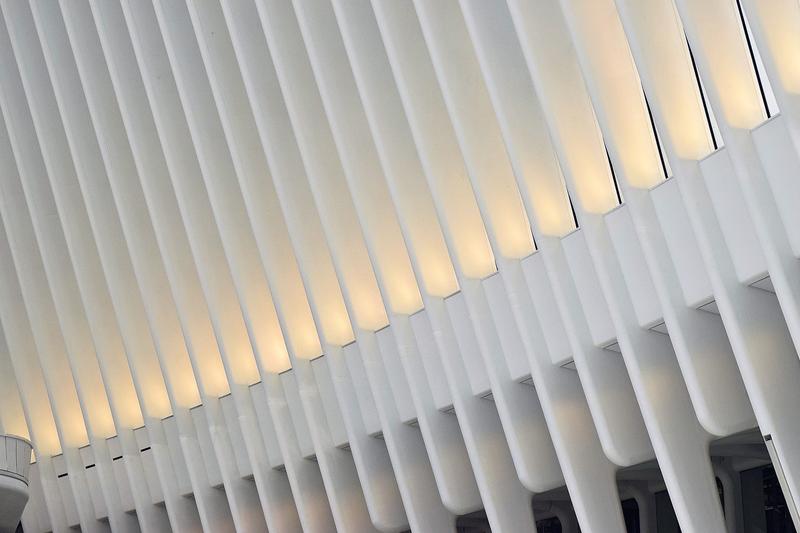
After Lange and Hake took a circuitous route to find the hub's entrance — the World Trade Center area is still very much a construction site — they ended up on the other side, looking at Calatrava's structure from the 9/11 Memorial plaza. Here, the building's whiteness is striking — and somewhat disconcerting.
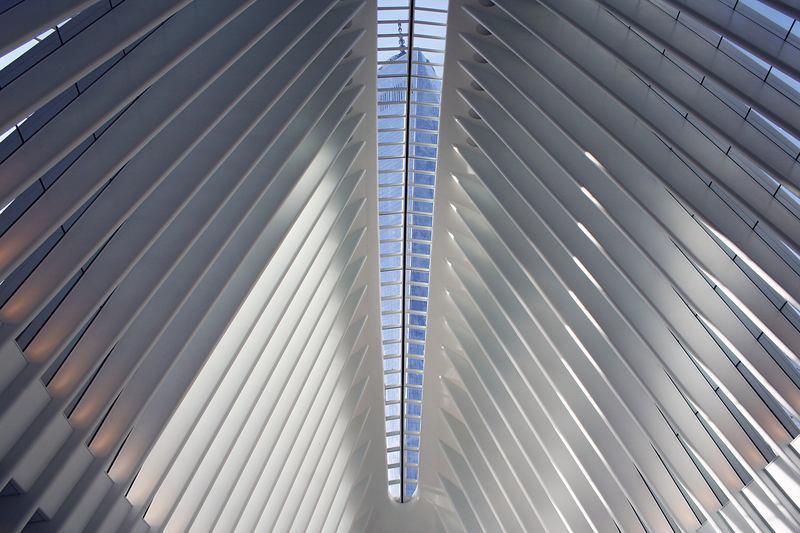
"This is the kind of architecture that benefits from looking perfect," Lange said. "It's supposed to be — "
"Pristine?" Hake offered.
"Pristine," she continued. "And if the white floors, the white exterior starts getting covered in dirt and tape and gum, it's not going to look right."
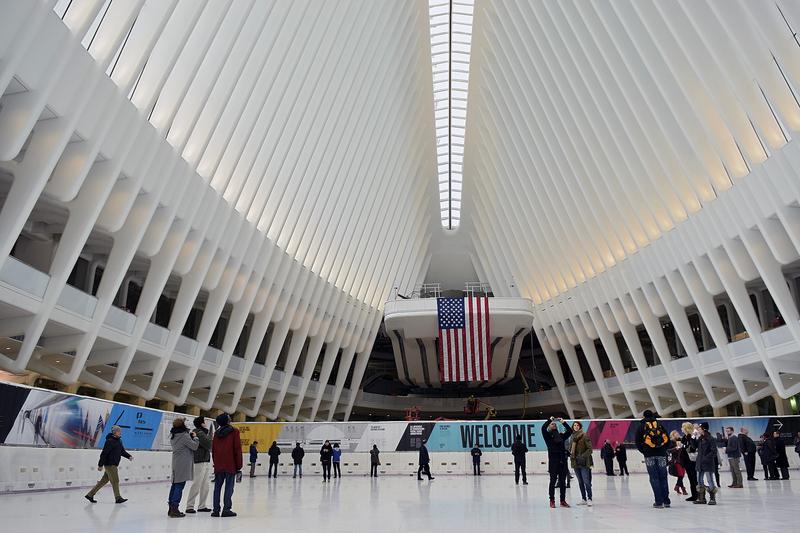
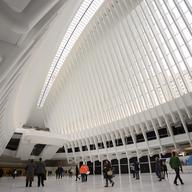
Once inside the hub (where a custodian was already at work mopping the floor), Lange noted that the spaces between the ribs, or wing tips, let plenty of natural light float down to the concourse, glowing on the marble floor.
But given the hub's high cost and the limited purpose it will serve, Lange's overall assessment was lukewarm.
"I think that it is beautiful, it is effective," Lange said, "but the 'why' question is not answered for me by what I see here."