Chancellor to Schools: Focus on Social Studies
The city's Department of Education is updating its social studies curriculum for the first time in nine years, and Chancellor Carmen Fariña made it clear she wants the subject to get more attention.
Fariña said the curriculum needed to be tweaked to match the state's new Common Core learning standards, which put more emphasis on critical thinking and written arguments. But the update is also a chance for schools to improve their focus on social studies.
"Because there was no test, a lot of schools dropped social studies from their curriculum," she explained, referring to the growing emphasis over the past decade on the state math and reading tests. "So we want to say, we need this back."
The Social Studies Scope and Sequence outlines the topics students should learn throughout the year in kindergarten through eighth grade. Most grades will start by exploring geography in September before tackling subjects such as colonization or the structure of government.
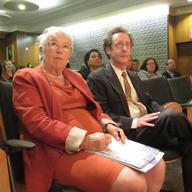
"Our kids don't know the 50 states, they don't know where Europe is, they don't know where Asia is, they certainly don't know where the Mideast is," Fariña told Department of Education staffers during her announcement at the Brooklyn Public Library Wednesday.
She encouraged schools to move away from textbooks and to include more primary sources and literature. "You can't just teach social studies with facts and dates," she said. The chancellor also said weaving literature into social studies would help students develop the skills they need for the state’s reading tests.
The city’s new outline includes essential questions to be covered in each grade. For example, second graders will use the month of March to look at how suburban communities are different from New York City. By eighth grade, they spend March looking at issues of power, wealth and morality in U.S. history by exploring immigration and the treatment of Native Americans.
Anna Commitante, executive director of curriculum, instruction and professional development, described the new framework as more of an update than a full-scale makeover.
“We are taking the units that were already in place and we are revising and updating them so that they are aligned to Common Core, they're aligned to the state frameworks and they include a vaster array of rich resources to draw from,” she explained.
She said 40 teachers in grades 3 to 8 worked on the document over the summer, and that teachers from the earlier grades will continue to work on it this fall.
The chancellor said parent coordinators will take parents on field trips to museums, so they can learn how to make more out of these visits with their own children.
The city will eventually create written units of study, with specific reading materials, for teachers. But Fariña made it clear that she wants principals and teachers to start taking the new recommendations seriously this year by using whatever they already have.
"This is not going to be something that's optional," she said. "I want to see maps in classrooms, I want to see kids talking about event, I want to see a lot of discussion on what the world is and could be, because that's the only way you're going to grow global citizens who don't think everything begins and ends in their local neighborhoods."

WNYC is funded by sponsors and member donations