Chancellor's New Rating System Puts Her Mark on City Schools
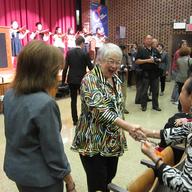
During her speech on Wednesday, announcing the change in the school report card structure, Chancellor Carmen Fariña referred several times to “a new era” for education in New York City. At one point she stated, “You notice I’m smiling. I’ve been dying to do this.”
Fariña’s overhaul to Mayor Michael Bloomberg’s data-driven school report cards was a long-awaited change. Fariña was a deputy Chancellor during the Bloomberg years. She left partly because of differences in opinion about the city’s reliance on test scores.
During her speech at the shared complex for P.S. 503 and P.S. 506 in Brooklyn, she said the A-F letter grades for schools were too simplistic and misleading because they relied so heavily on student progress on state tests. She described visiting a school that received an A.
“I was horrified when I opened those doors and saw not very good classroom instruction, and that collaboration was missing, and in many cases there were totally silent classrooms,” she told the audience.
Conversely, she described visiting a school that received a D but which had very strong examples of student work. She also didn’t like the way the city graded schools on a curve, awarding A’s to a fixed percentage of those at the top, which she said encouraged competition more than collaboration. Meanwhile, schools that got D’s and F’s were often targeted for closure.
But those old report cards also awarded low-performing schools that showed progress, or made gains with struggling populations such as special education students. This is why members of the Bloomberg administration took pride in their carefully designed system. They believed it allowed them to compare schools with similar populations, and crack the mysteries of why some schools did better than others. Likewise, they said it pushed even high-performing schools to do better if they saw similar schools that were making more progress.
Fariña’s new system scraps the letter grades in favor of descriptive summaries, some of which include ratings on a scale of poor to excellent. She chose to focus on six areas, including leadership and community ties, that researchers say are key to successful schools.
“Schools have unique qualities that cannot be captured in a letter grade,” she said, “they are not restaurants.”
But without an overall number, symbol or even a color — like the red, yellow, green systems used in other districts — parents might find the new reports a little too subtle. The three-page snapshots include descriptions of overall quality, student progress, student test scores, the environment and how a school is doing at closing the achievement gap. It’s up to parents to decide which factors they value the most.
Fariña also said the new snapshots, and the longer and more details school guides, will help her administration figure out how to improve struggling schools. But she has yet to say how that will happen. Officials said details will come in January.
Pedro Noguera, a professor of education and sociology at New York University who often criticized Bloomberg’s approach to the schools, said he likes the new Chancellor’s overall framework. But he agreed that it now needs to move in the direction of “capacity building.”
“The major flaw with the Bloomberg grading system is that it didn't come with a plan for helping schools to improve,” he said. “Chancellor Fariña needs an explicit plan for this.”

WNYC is funded by sponsors and member donations