City Makes the Case for Public Broadcasting
WNYC went on the air for the first time on July 8, 1924, at 570 kc (kilocycles). It was a plum spot on the dial, the first station on the AM band. So it was no surprise that WNYC's control over such a desirable frequency would be challenged if those running the station were not vigilant. Radio, after all, was the ascendant media platform of its day, and competition for a finite number of frequencies was keen. WMCA owner Donald Flamm sought the coveted location and argued that WNYC was not adequately utilizing this slim portion of the radio spectrum.
On November 11, 1928, the Federal Radio Commission (FRC, the FCC's predecessor agency) granted WMCA approval to use 570 kc, thus forcing WNYC into a time-sharing arrangement. Though not uncommon at the time, the compact proved to be fraught, and by July 1929, Flamm filed a complaint with the government maintaining that WNYC frequently delayed "signing off, thus destroying the promptness and regularity of WMCA's broadcasting schedule." A protracted battle for control of the valuable frequency followed, and then, on April 30, 1932, the FRC ruled that WNYC had to give up 570 kc and move up the dial to 810 kc.
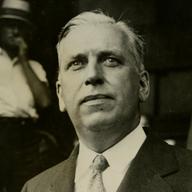
Led by City Corporation Counsel Arthur J. W. Hilly, (pictured above), the City of New York appealed the decision, countering WMCA's claims and arguing that "the need of the people for municipal services is greater than their need of more commercial broadcasting." An abstract of Hilly's brief to the FRC follows in which he passionately makes the case for public broadcasting. It was originally published in Education By Radio, the monthly newsletter of the National Committee for Education by Radio in its August 18, 1932 edition.
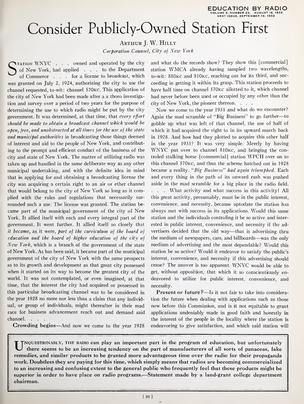
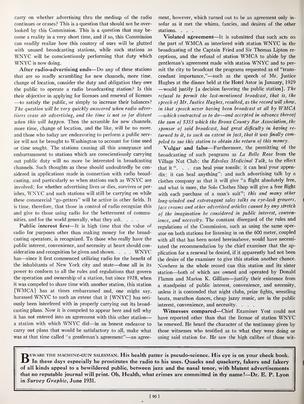
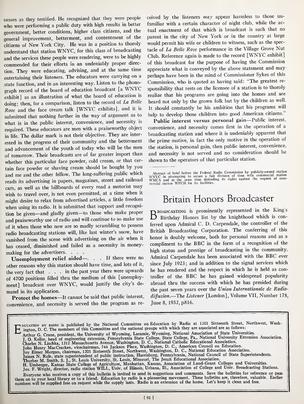
However, Hilly's effort failed: the appeals court refused to rule on the issue of commercial versus non-commercial interests, and ordered the frequency shift had to take place on June 5, 1933 —thus setting the stage for a whole new struggle between WNYC and WCCO in Minneapolis. But that's another blog piece to be written.

WNYC is funded by sponsors and member donations