Longtime Residents Witness Brooklyn Waterfront’s Changing Fortune
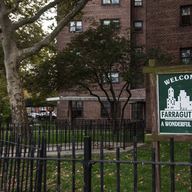
The older residents of Farragut Houses are the ones who remember what the neighborhood smelled like when there was a chocolate factory operating nearby.
"This neighborhood always smelled edible," said Anita Ravenell, who has lived in the public housing complex next to the Brooklyn Navy Yard since 1952, the year it opened.
Much of Brooklyn's larger manufacturers left Dumbo by the 1950s, but smaller companies kept the neighborhood's factories and warehouses active for years.
It was a time when the streets of Dumbo and Vinegar Hill, and indeed Brooklyn Heights, did not feel as separate from Farragut as they do now.
Stanley Wright, 65, grew up in Farragut and remembered wandering down to the East River when he was young.
"That was our beach," he said. "We used to go swimming in the river."
But in the late 1990s, Dumbo started to turn residential. Developers converted many of the factories and warehouses to luxury residences, dotted with galleries and high-end shops, which stand in contrast to Farragut Houses.
Nearly 100 percent of the people living in Farragut Houses are black and Latino, and the median household income is close to $17,000, according to census figures. The New York City Housing Authority reported the average rent at Farragut was about $460.
The area of Dumbo and Vinegar Hill, according to the census, is about 75 percent white. The median household income is close to $194,000 and rents, naturally, match: the median rent price in Dumbo is almost $4,700, according to the real estate site Zillow.
And while a revitalized, polished Dumbo is open to anyone — like the adjacent Brooklyn Bridge Park — many Farragut residents said they felt that development and progress have bypassed their community.
"Having black people in places is a different issue than addressing equality of resources between communities," said Mark V.C. Taylor, pastor of the Church of the Open Door, and a vocal advocate for Farragut residents and nearby public housing projects.
Farragut residents talked to WNYC about the disrepair of their buildings, like elevators and intercom systems that don't work.
And while low-income residents living adjacent to Dumbo and Brooklyn Heights may sometimes appreciate new amenities along the waterfront, they said they had other pressing concerns.
"We need a barbershop," said Wright. "We need a supermarket."
One of the places where Dumbo and Farragut residents may truly intertwine is the local public school, P.S. 307 Daniel Hale Williams.
The school, across the street from Farragut, is at the center of a city rezoning proposal to include families from Dumbo and Vinegar Hill. The school's zone currently includes only Farragut Houses although students also come from outside the zone for some of its programs.
If the proposal passes, and if parents from Dumbo and Vinegar Hill choose to enroll their children, city projections show the school could go from about 5 percent white, as it is now, to up to 45 percent white.

WNYC is funded by sponsors and member donations