Cracking Cold Cases With Forensic Sculpture
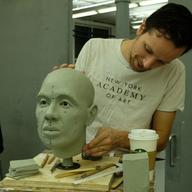
Every spring semester, forensic sculpture students at the New York Academy of Art put their creative license aside in order to take on cold cases from the New York City Office of the Medical Examiner. Starting with skull replicas made by a 3-D printer, the students painstakingly recreate the faces of people whose names they may never know. The goal is to make the faces so realistic that a viewer could help identify someone who died long ago.
"We're trying to limit our artistic license," said student Michael Fusco, "to arrive at something that will not be exactly who that person was, or exactly what they looked like, but is close enough that it could trigger a recognition."
This year, the Academy expanded their forensic efforts to work with officials in Pima County, Arizona. They're helping to reconstruct the faces of the roughly 1,000 unidentified people who have died while crossing the U.S.-Mexico border.
"We're kind of the last resort," said John Volk, Director of Continuing Studies at the school. If a person cannot be identified through DNA or dental records, Volk said, the medical examiner hopes someone will recognize a facial reconstruction.
"So really, this is the skeleton's last chance to get identified," Volk told WNYC's Jami Floyd.
The forensic reconstructions from the 2018 workshop can be seen at the New York Academy of Art until March 29. Photos of the reconstructions will also be added on the website for the National Missing and Unidentified Persons System (NamUs).
You can also hear more about the effort to identify migrants who've died after crossing the U.S.-Mexico border in Radiolab's "Border Trilogy."

WNYC is funded by sponsors and member donations