De Blasio's Plan to Get Traffic Moving
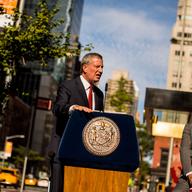
Standing on the corner of East 54th Street and Third Avenue, Mayor de Blasio presented a plan on Sunday to reduce congestion on the city’s busiest streets, often competing with the wailing sirens, blaring horns and thundering truck traffic.
City officials said the average speed in midtown Manhattan was 6.5 miles per hour five years ago and dropped to 5 miles an hour last year. Under the mayor's plan, they hope to increase those speeds by 10 percent by the end of 2018.
"We know we can make the city less congested, we know we can speed up people's rides," said de Blasio.
His plan, which takes effect in January, includes new restrictions along 11 crosstown streets in Manhattan, limiting deliveries to one side from 6 a.m. to 7 p.m.
There will also be a six-month pilot program that would ban curbside deliveries during peak commuting times in three additional commercial corridors: Manhattan (Midtown), Brooklyn (Flatbush Avenue from Grand Army Plaza to Tillary Street) and Queens (Roosevelt Avenue, from Broadway to 108th Street).
During the pilot, businesses will be able to receive deliveries from 10 a.m. to 4 p.m. and during the evening and overnight hours. “But why on earth should deliveries be made at the exact time that most New Yorkers are trying to get to and from work?” de Blasio said.
The NYPD will play a heightened role in traffic enforcement under the plan. The city will add 160 new officers to enforce the new delivery restrictions and a pet peeve of the mayor’s — people who block the box at intersections.
"New Yorkers hate when someone blocks the box and messes up their life. It's as simple as that," said de Blasio, "but we need enforcement."
The city will target additional traffic enforcement in hot-spots outside Manhattan in Flushing and Downtown Jamaica in Queens, the North Shore of Staten Island, and Hunts Point in the Bronx.
De Blasio said he also plans to convene a task force with state officials to address persistent congestion on highways that fall outside the city’s jurisdiction.
Earlier this month, Governor Cuomo announced a task force to study congestion pricing. He’s expected to announce a version of that plan in his State of the State address in January. The mayor said his congestion plan had already been in the works for months.
Advocates for Move NY gave the mayor’s proposal a tepid response.
"Move NY, and congestion pricing in general, is the only approach that will not only bust traffic but raise substantial revenue to rescue our failing subway and transit system and the beleaguered New Yorkers who depend on it," Move NY said in a statement.
De Blasio has long been a critic of congestion pricing, calling it a regressive tax that hits poor people the hardest.
Stronger criticism for the plan came from Nicole Malliotakis, the mayor's Republican opponent in the November 7th election. She issued a statement that said the mayor's plan relies too heavily on fines, and should instead focus on high tech solutions to traffic congestion, including Smart Light technology.
"Let's stop penalizing motorists and start investing in infrastructure, providing transportation alternatives and using common sense to keep up with economic and population growth," Malliotakis said.

WNYC is funded by sponsors and member donations